
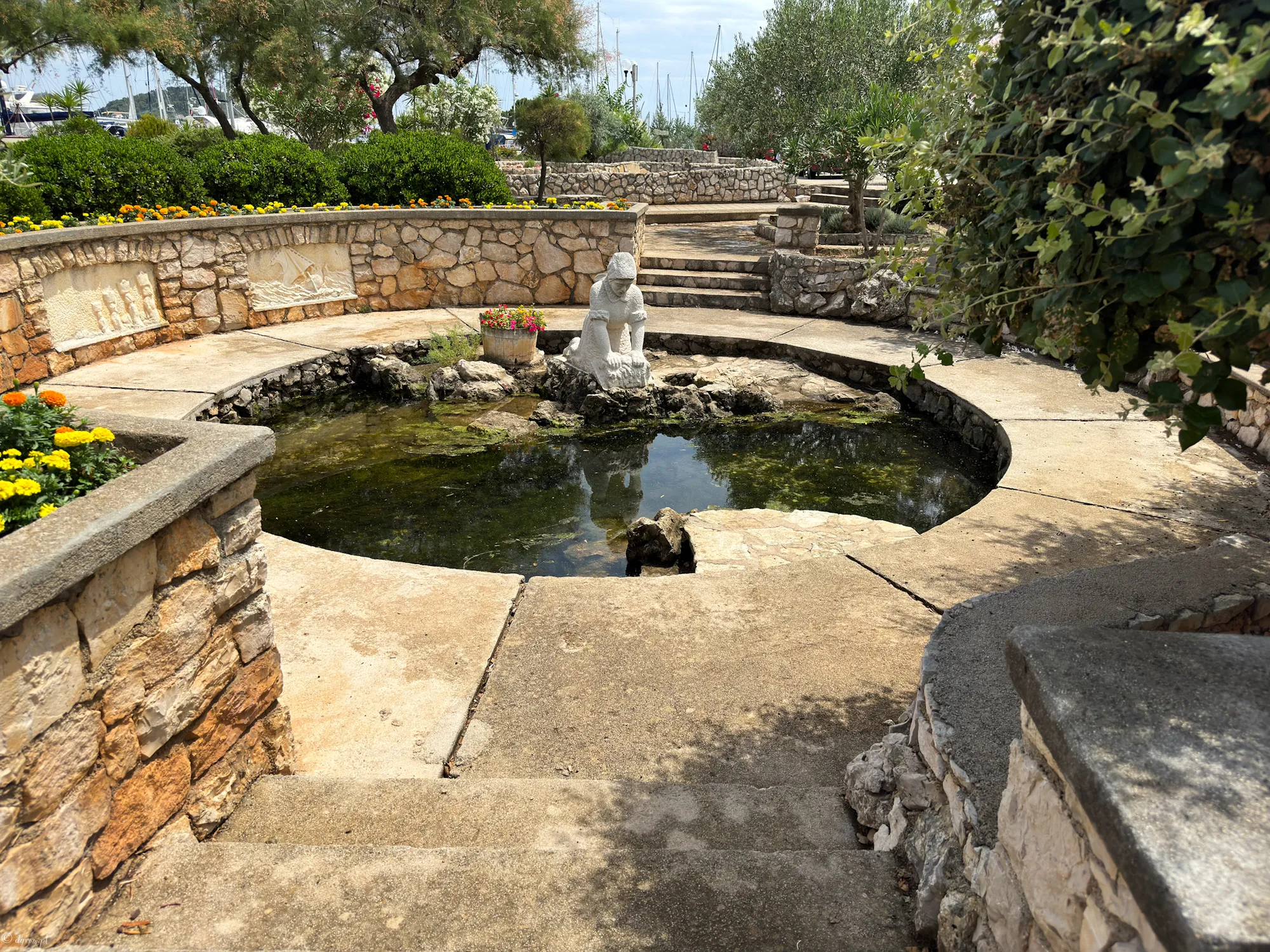
The Preko Tragedy
On the morning of 2 November 1891, 24 women and 7 men set off from Preko toward Zadar. Their gajeta, weighed down with freshly washed laundry, had only a short, few-kilometer crossing ahead. Unfortunately, the unpredictable force of nature proved stronger than man.

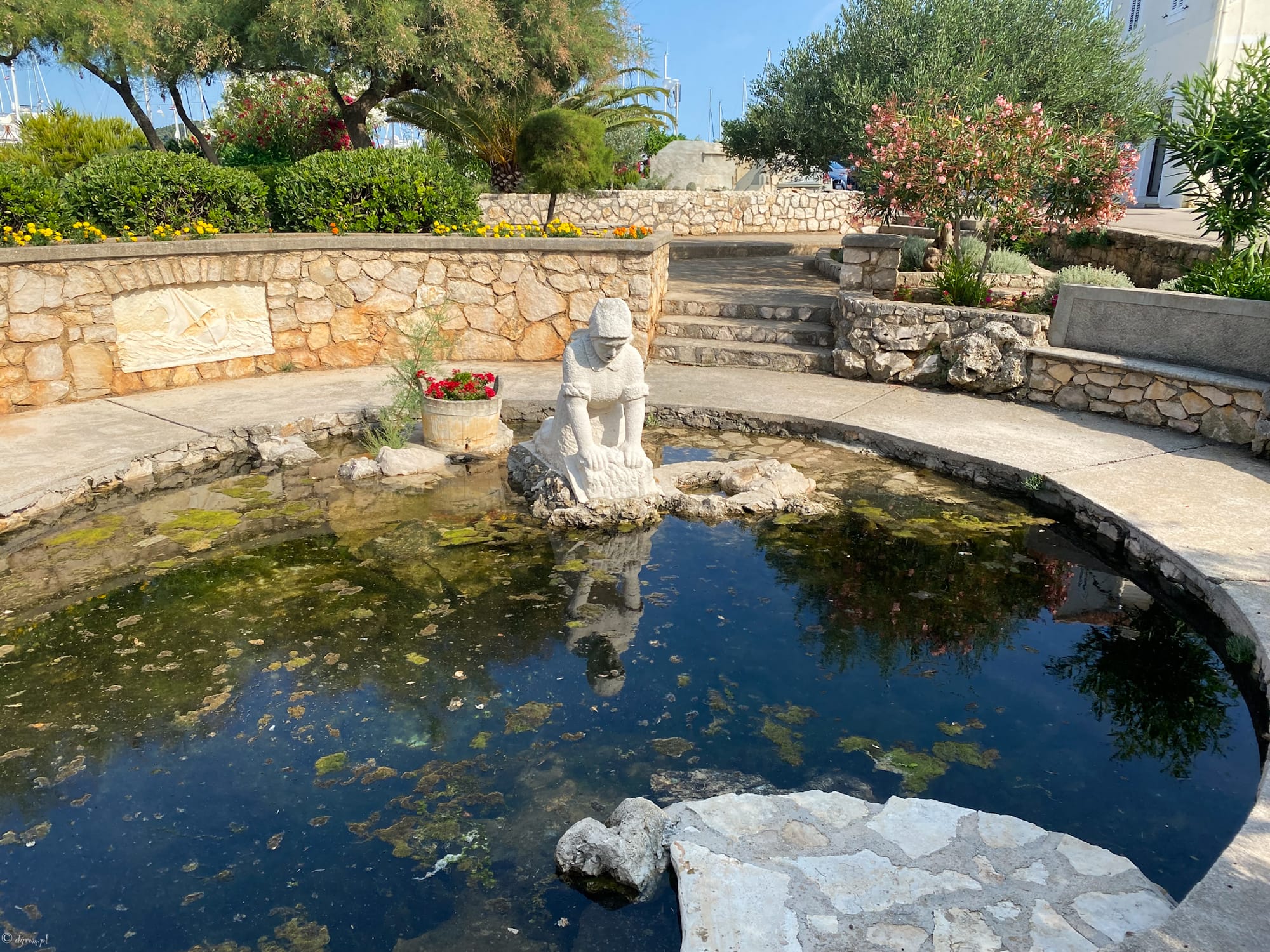
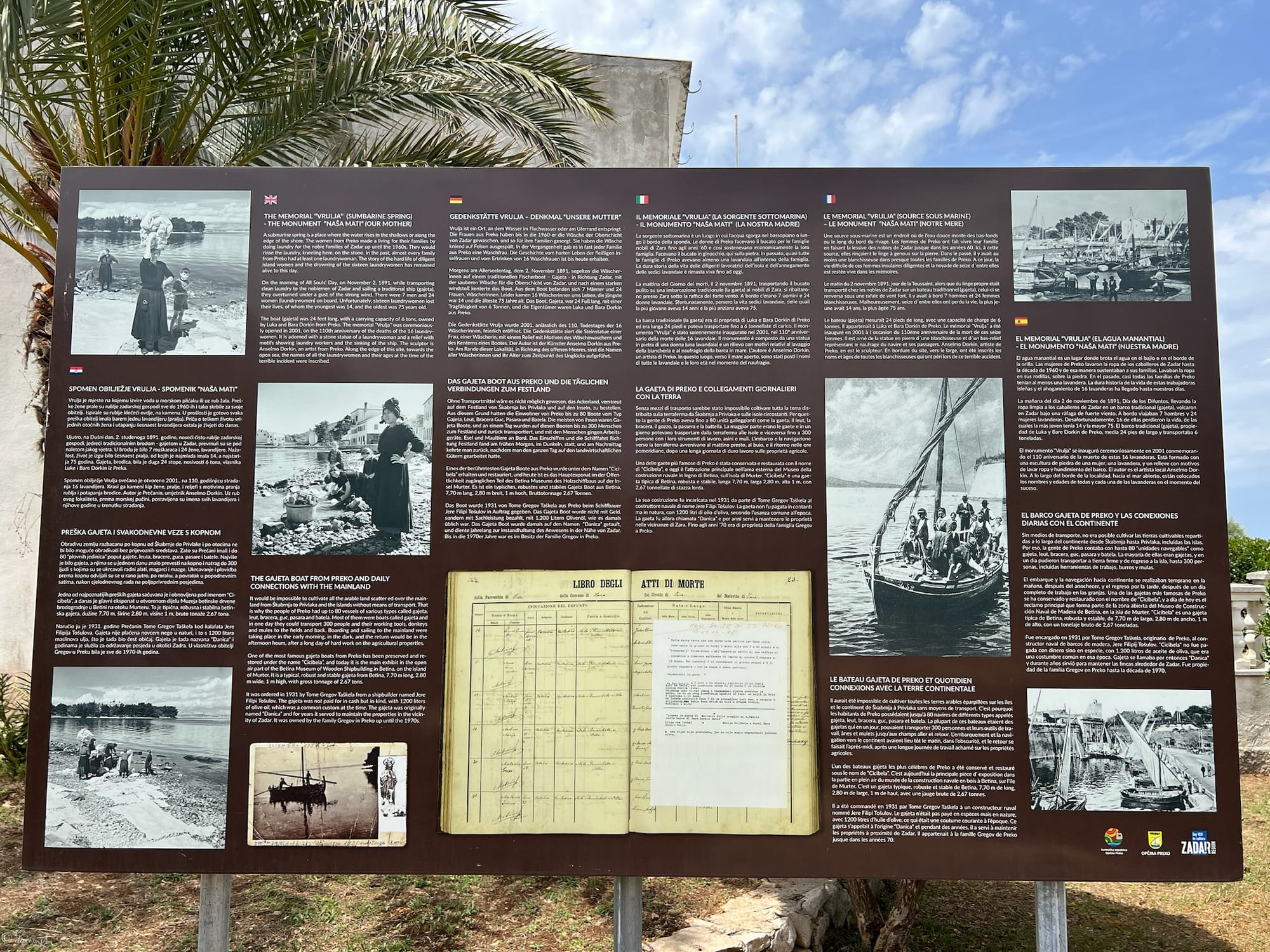
At first glance life on the Dalmatian islands may seem idyllic – sun, blue sea, charming stone houses. But beneath that picturesque surface lies a history of hard work and a daily struggle for survival. One of the places that reminds us how hard life was for island women is the memorial Vrulja in the town of Preko. It commemorates sixteen washerwomen who tragically lost their lives in the waters of the Adriatic on 2 November 1891.
Laundry, which today we associate with the push of a button on a washing machine, used to be an exhausting, hours-long task. Women from Preko supported their families by washing linen for wealthy households in nearby Zadar. Kneeling on the stones by the stream, they scrubbed fabrics and then rinsed them in crystal-clear water. Every family had at least one woman doing this work – it was not only a way to make a living but also an essential contribution to the household budget.
Their work did not end with washing. The clean linen still had to be delivered to the noble houses in Zadar. Transport took place by the traditional boat, gajeta – a wooden vessel 7 meters long, capable of carrying a load of up to 6 tons. Crossings through the treacherous waters of the Adriatic were an everyday occurrence, but one day everything went tragically wrong.
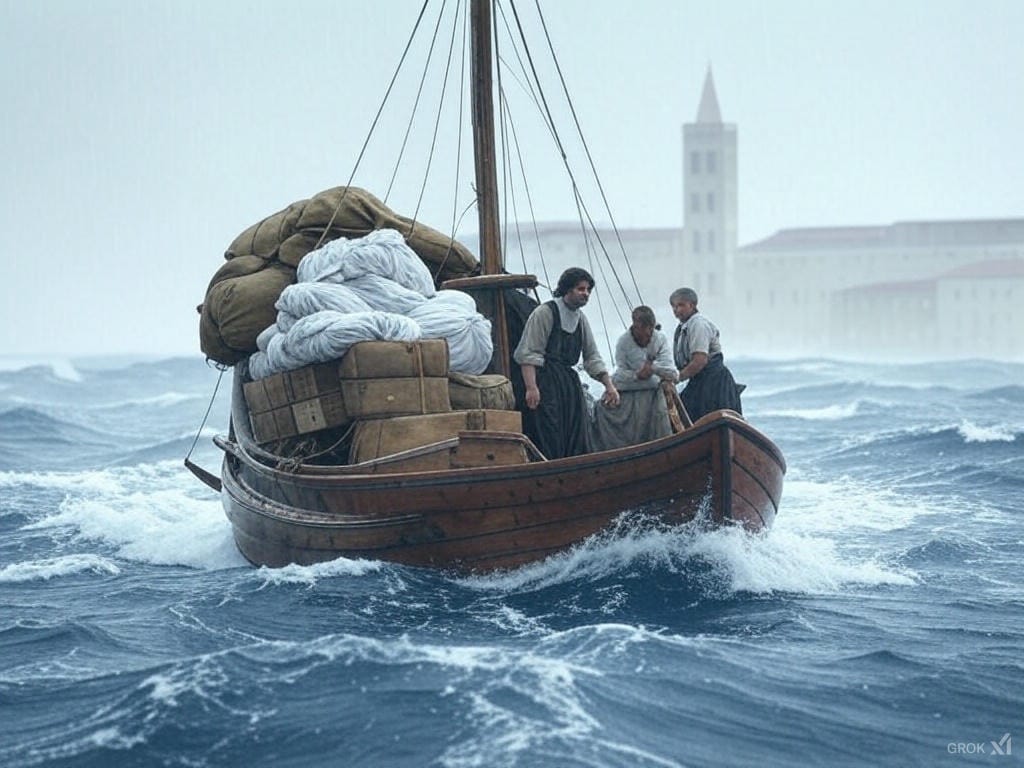
On the morning of 2 November 1891, 24 women and 7 men set off from Preko toward Zadar. Their gajeta, laden with freshly laundered clothes, had only a short, few-kilometre voyage ahead. Unfortunately, the unpredictable force of nature proved stronger than people. When a sudden, powerful gust of wind struck the sails, the vessel capsized and the passengers fell into the icy water. Despite the proximity of land and help from fishermen from nearby islands, sixteen washerwomen drowned. The youngest was only 14, the oldest 75. The loss was unimaginable — for the community of Preko it meant the deaths of mothers, daughters, sisters, women who were the backbone of domestic life.
Despite the passage of years, the story of this tragedy has not been forgotten. In 2001, on the 110th anniversary of the disaster, a memorial was unveiled Vrulja. Sculptor Anselmo Dorkin created a stone sculpture depicting a washerwoman, as well as a bas-relief showing scenes from their lives and the moment the ship sank. Along the coast, facing the open sea, the names of all the washerwomen and their ages at the time of death were carved. Next to the memorial there is also a monument Naša Mati (Our Mother) – a symbol of the devotion and indomitable strength of the women who for centuries carried the burden of life on their shoulders. It is a tribute to those whose daily work and sacrifice went unrecognized in their lifetimes but remain part of the history and identity of Preko.
Today, when we walk along the Dalmatian coast, it’s easy to be captivated by its beauty and to forget those who for centuries struggled for every day. The story of the washerwomen of Preko reminds us that behind simple, everyday tasks lie human lives, tragedies and acts of heroism.
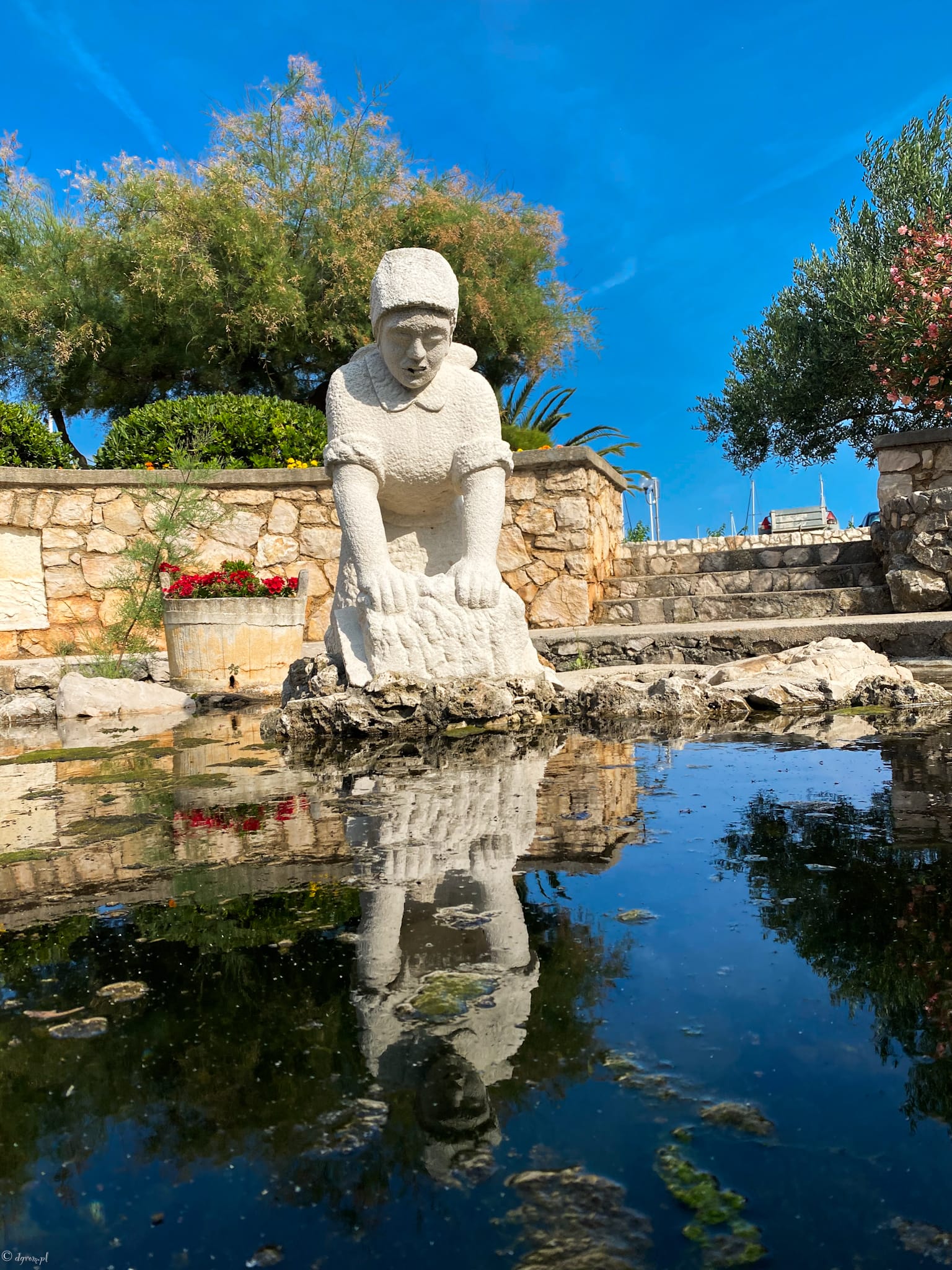
Continue reading in this gallery
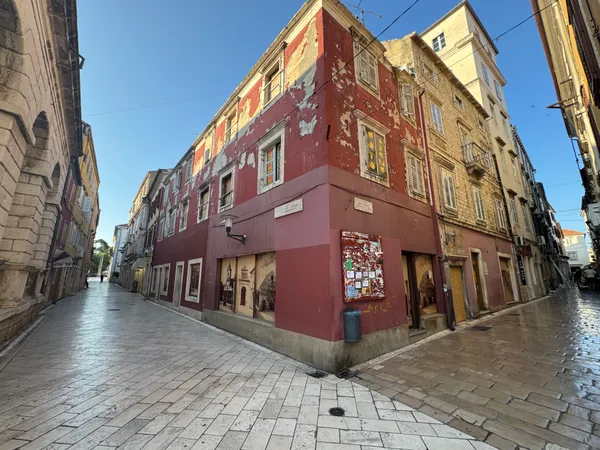
Croatia
Reconstruction of Zadar.
I paired each photograph of the current state of these places with an alternative version — created using artificial intelligence. It's a visualization of how they might have looked in their heyday.
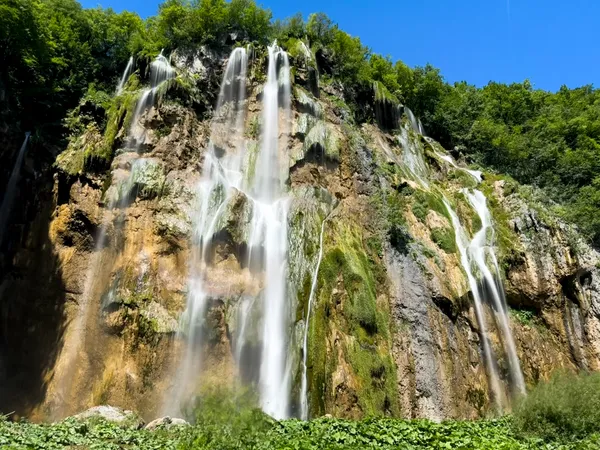
Croatia
Plitvice Lakes
Croatia is a country full of surprises, but none of the guidebooks I read prepared me for what I experienced at Plitvice Lakes National Park. It felt like discovering a completely new world — one that seemed too beautiful to be real.
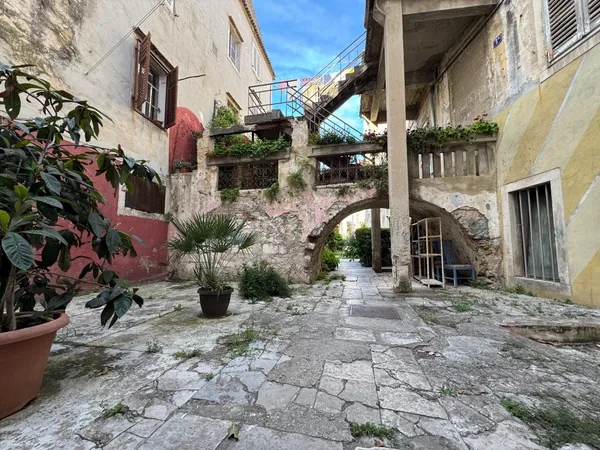
Croatia
In the Labyrinth of Zadar's Alleyways.
Zadar, located on the Adriatic, is a place where history intertwines with everyday life, and its old streets and stone buildings, though weathered by time, exude an incredible charm. I like to think these places have a soul — a little worn, but full of stories.
Croatia
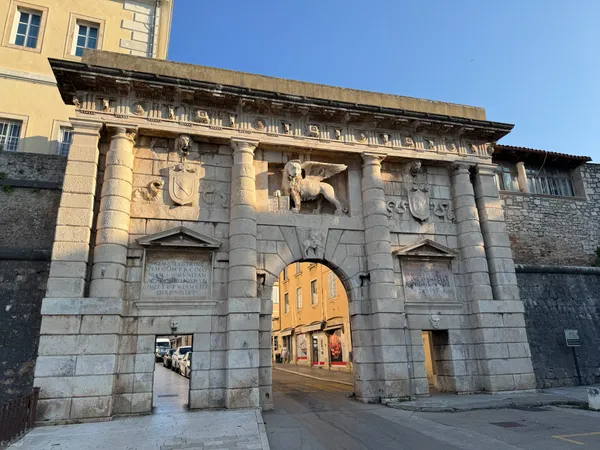
Gate to the city of Zadar
From afar you can already see that this is no ordinary city gate. Monumental, built of light-colored stone, adorned with columns and numerous details. Above the main archway proudly stands the winged lion of St. Mark – the symbol of Venetian power that ruled Zadar for centuries.