
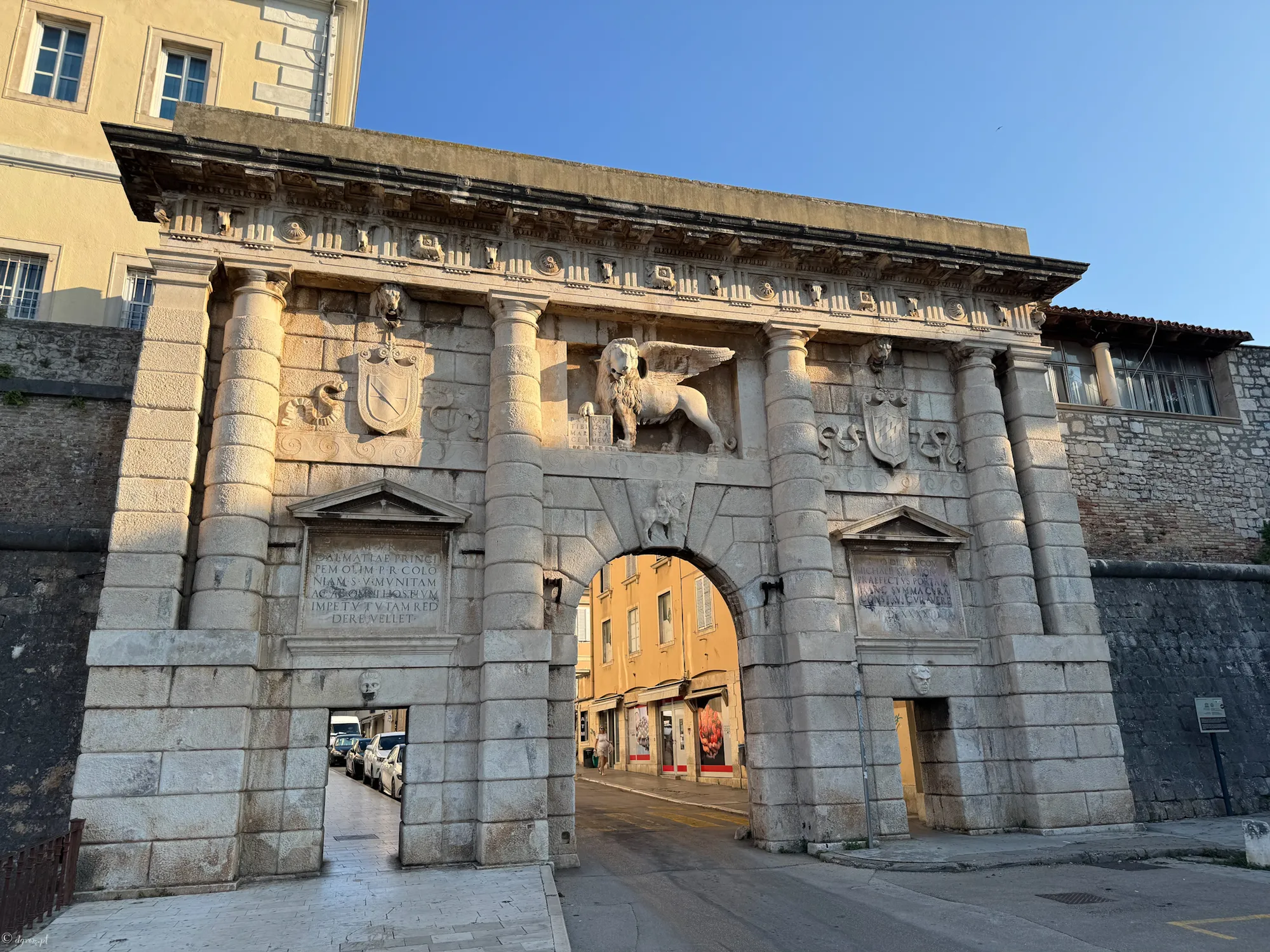
Gate to the city of Zadar
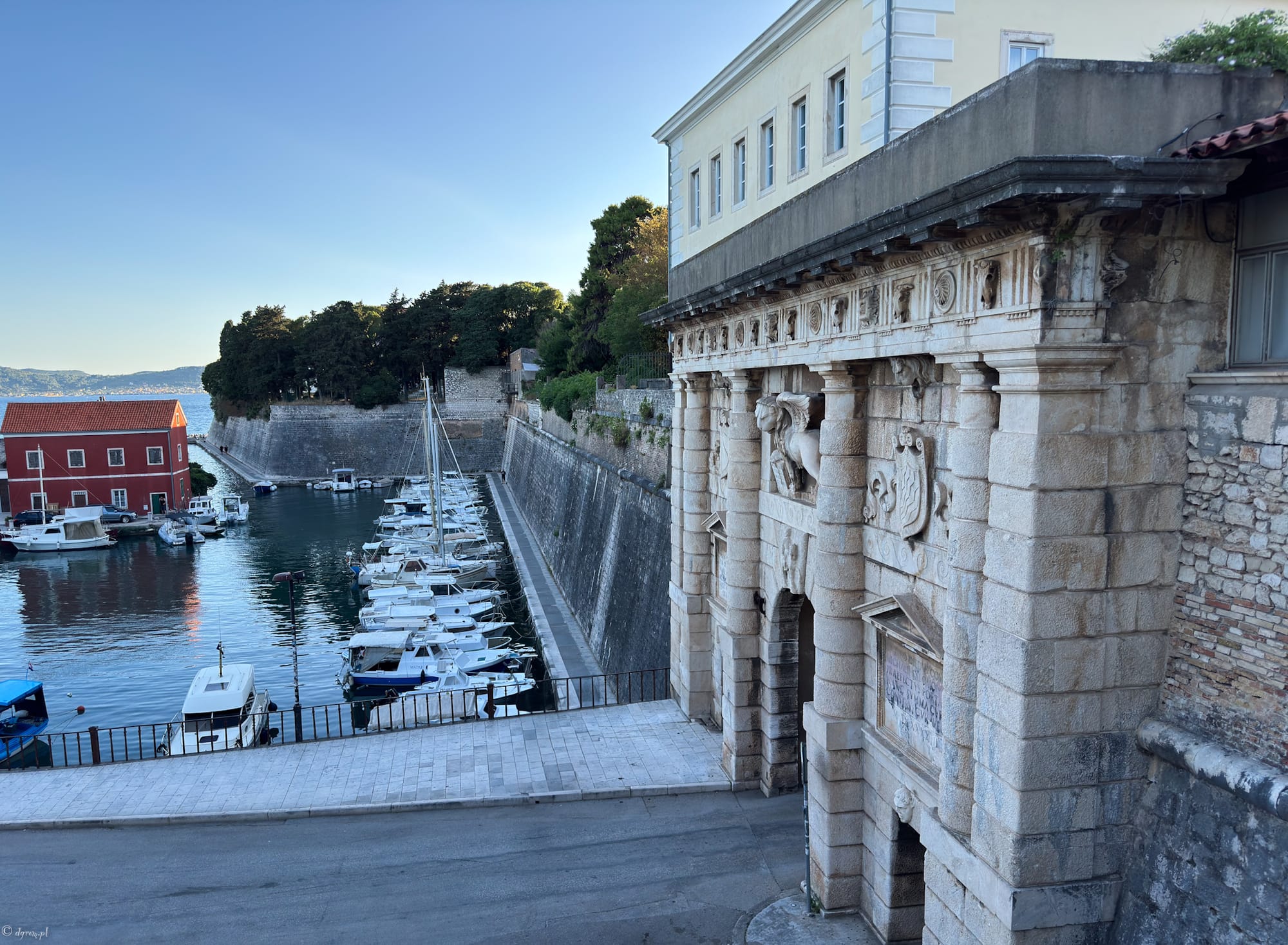
From afar you can already see that this is no ordinary city gate. Monumental, built of light-colored stone, adorned with columns and numerous details. Above the main archway proudly stands the winged lion of St. Mark – the symbol of Venetian power that ruled Zadar for centuries.

The Land Gate in Zadar – a stone reminder of Venice on the Adriatic
Even from a distance you can tell this is not an ordinary city gate. Monumental, light, elegant and full of detail, it looks more like a triumphal arch than a simple entrance to the city. You can pass the Land Gate in Zadar in a hurry while heading toward the old town, but it's worth stopping here for at least a few minutes. It's one of those places where stone not only decorates the space but tells a story of power, fear, ambition and survival.
The Land Gate, known in Croatian as Kopnena vrata and in Italian as Porta Terraferma, was completed in 1543. This was a time when Zadar was under the rule of the Republic of Venice. Venice then was not just a romantic city of canals, gondolas and palaces. It was a maritime, commercial and military power that controlled key points on the Adriatic. Zadar, strategically located on the Dalmatian coast, was of great importance to it. It was a port, an administrative center and one of the most important bastions on the eastern Adriatic.
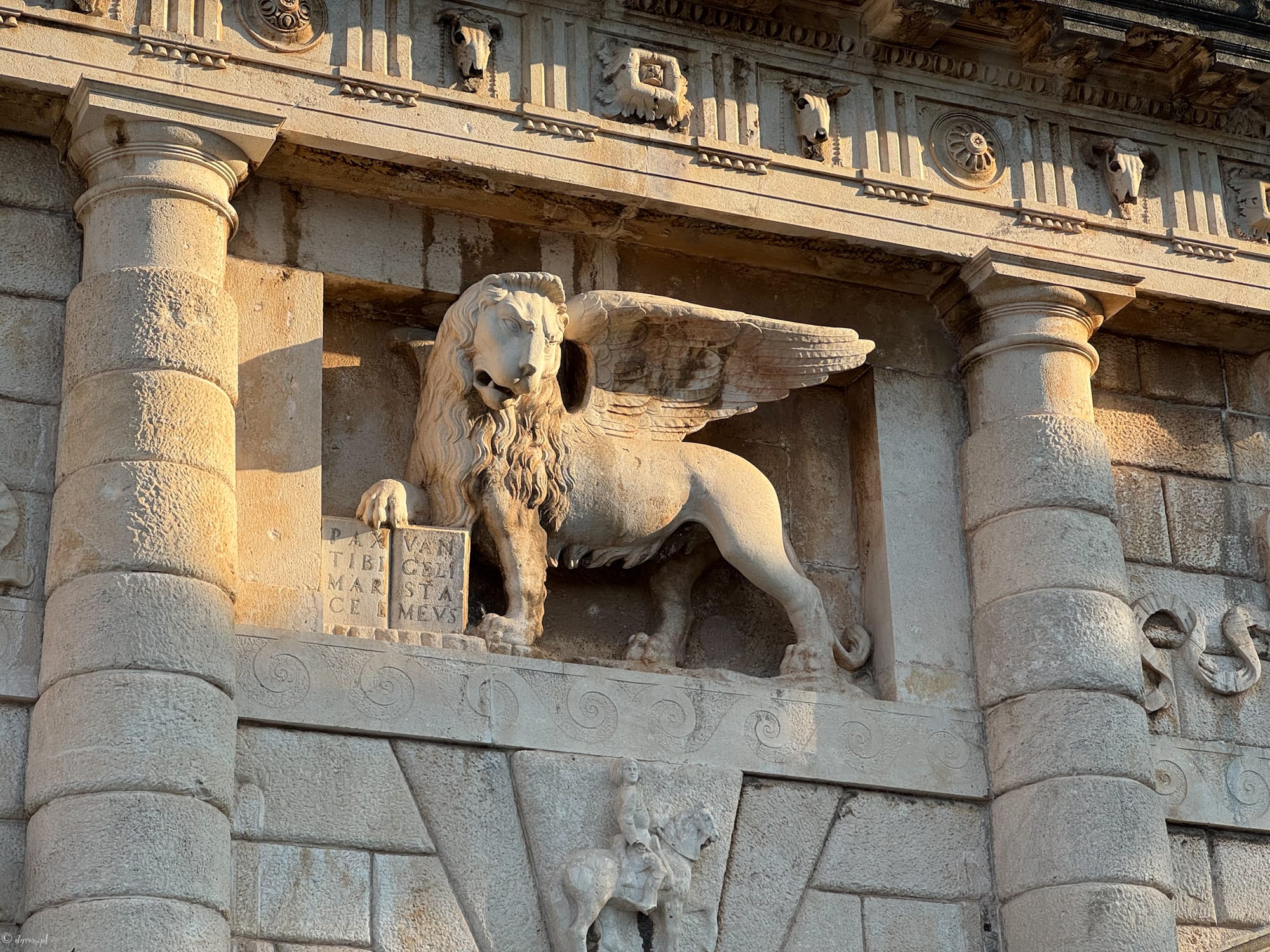
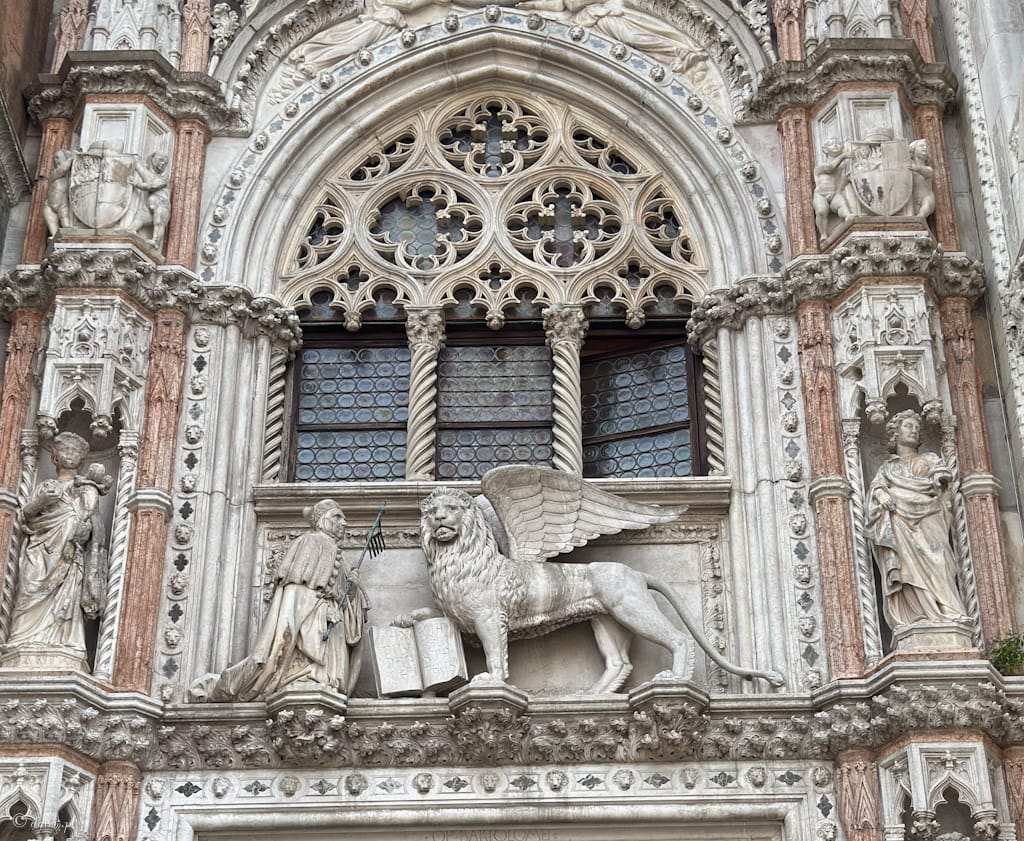
Above the gate's main passage stands the winged lion of St. Mark — the symbol of Venice and the former Republic of Venice. This is not a random decoration. It is a political emblem, placed high, deliberately and unmistakably. The lion holds an open book, which is often read as a sign of peace, although in Zadar's history one should be cautious. The city's relations with Venice were not always peaceful. Zadar repeatedly rebelled against Venetian influence, and its history includes conflicts, sieges and changes of rule. In 1409 the city was sold to Venice by Ladislaus of Naples, along with rights to parts of Dalmatia. This event tied Zadar to the Republic of Venice for many centuries.
In the 16th century the situation in the Adriatic grew increasingly tense. The Ottoman Empire was extending its influence deeper into the Balkans, and Dalmatian towns found themselves under real military pressure. Venice had to protect its ports, trade routes and maritime possessions. For that reason Zadar was strengthened with a modern system of fortifications adapted to the gunpowder age, cannon fire and sieges. High medieval walls were no longer enough. Thick bastions, low massive structures and solutions capable of withstanding artillery bombardment were required.
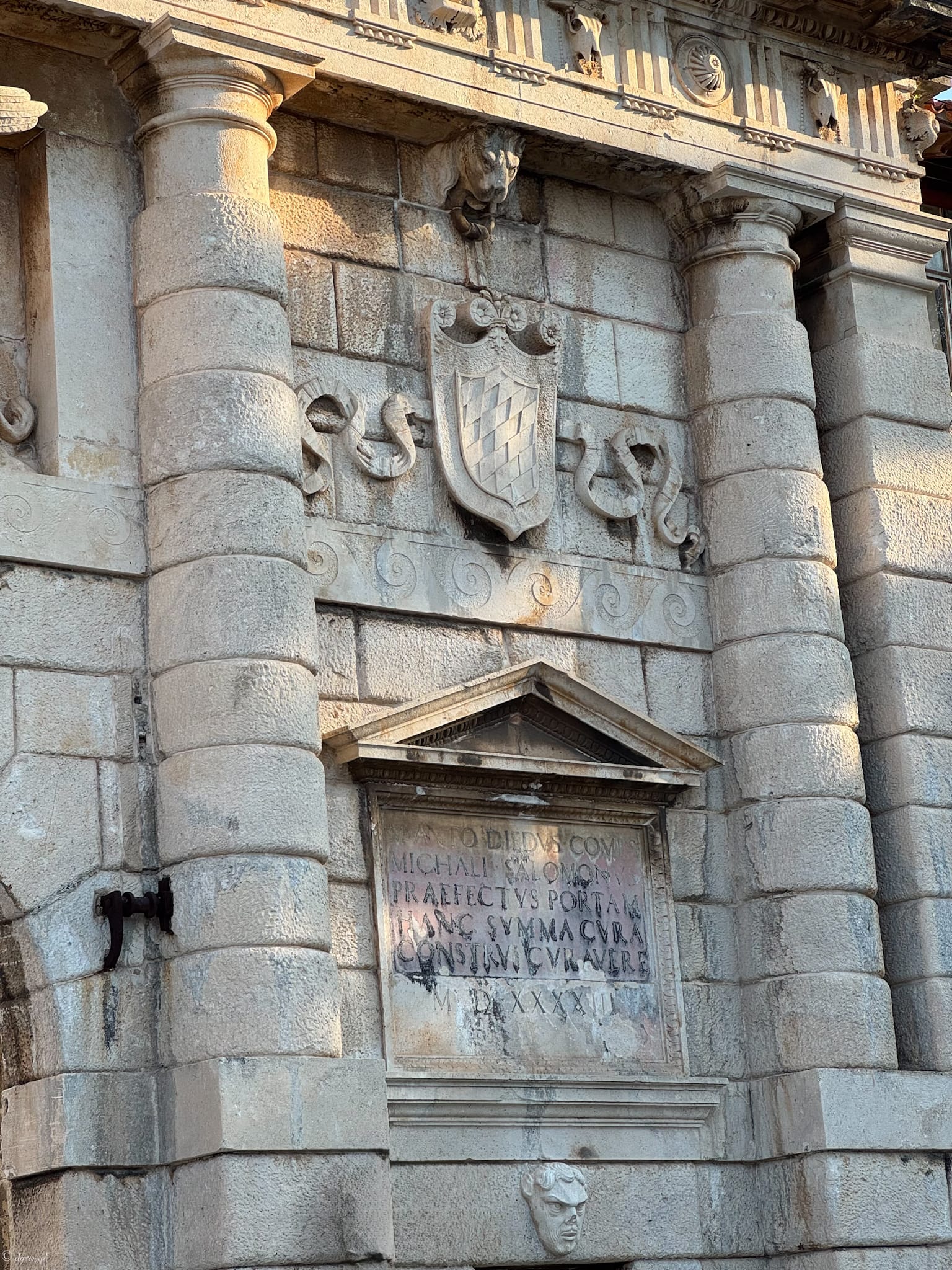
It was in this context that the Land Gate was constructed. It was not merely an entrance to the city. It was part of a larger defensive system and at the same time a display of Venetian confidence. Its design is attributed to Michele Sanmicheli, an outstanding architect and military engineer associated with Venice. Sanmicheli worked on fortifications across the Venetian world, and his solutions combined practicality with Renaissance harmony. In Zadar he created a gate meant to defend, regulate traffic and impress.
The gate’s layout is very clear. The central, larger passage served carriages and wheeled traffic. The side, smaller openings were intended for pedestrians. This simple solution shows that the gate used to be a point of control in everyday life. Merchants, soldiers, officials, residents and travelers entered through it. Today we pass through it freely, but formerly every movement mattered. The city’s entrance was regulated, observed and protected.
In front of the gate there was a moat and a system of bridges, wooden and drawbridges. Today’s surroundings seem calm, almost like a promenade, but once they were part of a precisely planned defensive zone. Foša Port, which today is one of the most picturesque spots in Zadar, also had a strategic function. Water, walls, gates, bastions and controlled passages together formed the landscape of the fortress-city.
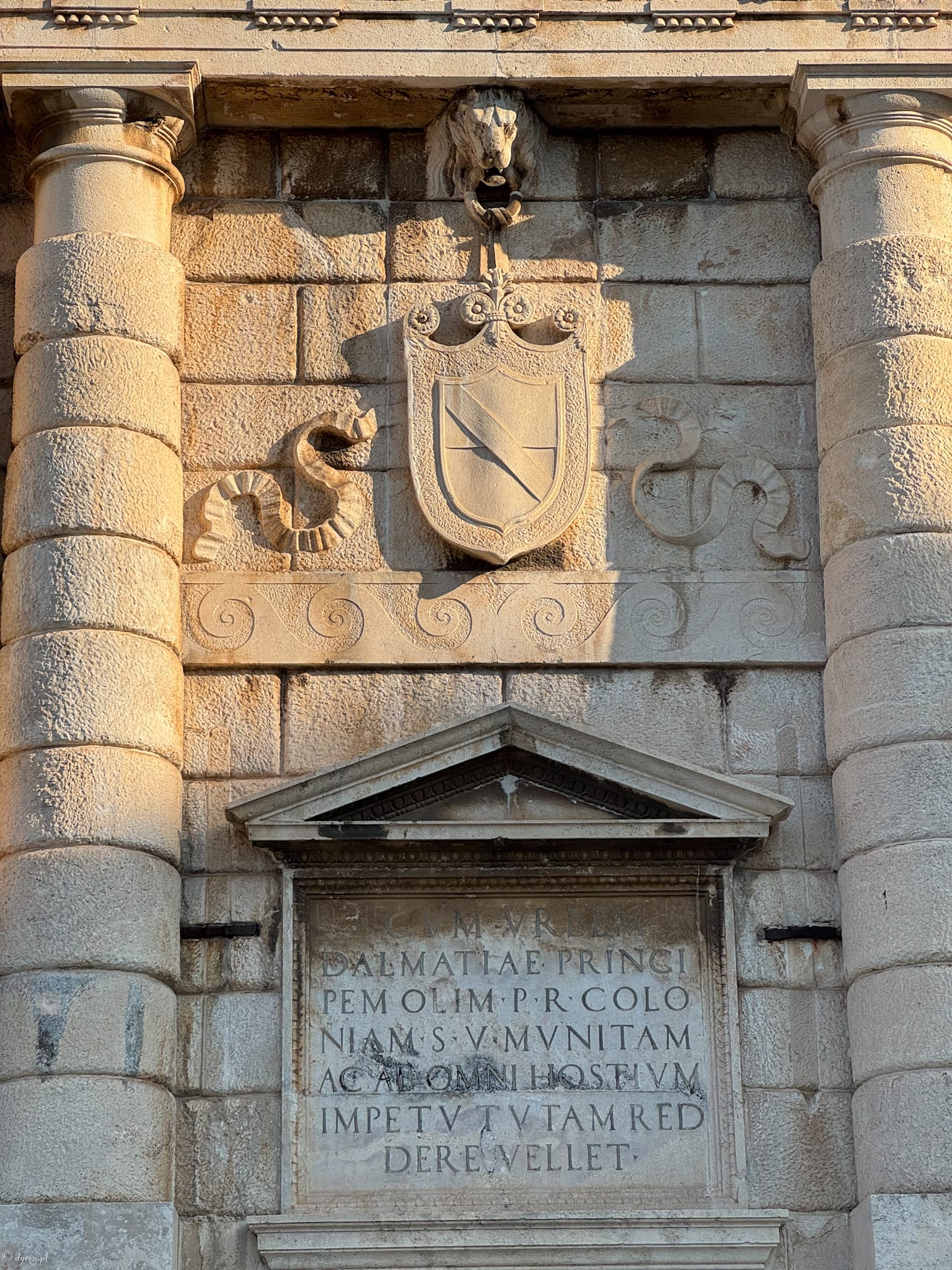
On the gate’s façade, alongside the Lion of St. Mark, we can also see coats of arms and the figure of St. Chrysogonus, one of Zadar’s patrons. It’s an interesting combination. Venice’s symbol recalls political dominance, while the local saint evokes the city’s spiritual identity. In one stone composition two layers of history meet: Venetian power and Zadar’s memory. That is what makes the Land Gate so interesting. It is not solely a monument of imposed power, but also a place where local tradition survived under the sign of a larger empire.
Today the Land Gate is one of Zadar’s most important symbols and is part of the area included in the UNESCO listing "Venetian Works of Defence from the 16th and 17th centuries." This inscription covers several sites in different countries: in Italy, Croatia and Montenegro. It shows how extensive the defensive system of the Republic of Venice was and how strongly Venice influenced Europe’s military architecture. In that sense Zadar is not just a local monument. It is a fragment of a larger map of the old world in which the Adriatic was a route for trade, war, diplomacy and culture.
The gate is also a great starting point for exploring the old town. Right next to it are Foša Harbor, Five Wells Square and Queen Jelena Madijevka Park, from where you can view the marina and the walls from a different perspective. It's worth walking this way in the morning, when the light gently falls on the stone and highlights the sculptural details. Then the gate looks especially beautiful. It isn't overwhelmed by the bustle of the tourist day; it quietly reveals its character.
What makes the biggest impression, however, is the awareness that we're passing through the place that for centuries served as the city's entrance. It's a portal between the old world of defensive walls and today's Zadar full of cafés, music, sea and strolls. The Land Gate can be treated as a beautiful frame for a photograph. But it's better to see something more in it: a stone trace of Venice, a reminder of the Ottoman threat, a symbol of municipal control and one of Dalmatia's most beautiful Renaissance gates.
If you find yourself in Zadar, be sure to stop by — it's not just a piece of history but also a place that lets you feel the city's unique atmosphere. I'll definitely be back!
Continue reading in this gallery
Croatia
Reconstruction of Zadar.
I paired each photograph of the current state of these places with an alternative version — created using artificial intelligence. It's a visualization of how they might have looked in their heyday.

Croatia
Plitvice Lakes
Croatia is a country full of surprises, but none of the guidebooks I read prepared me for what I experienced at Plitvice Lakes National Park. It felt like discovering a completely new world — one that seemed too beautiful to be real.
Croatia
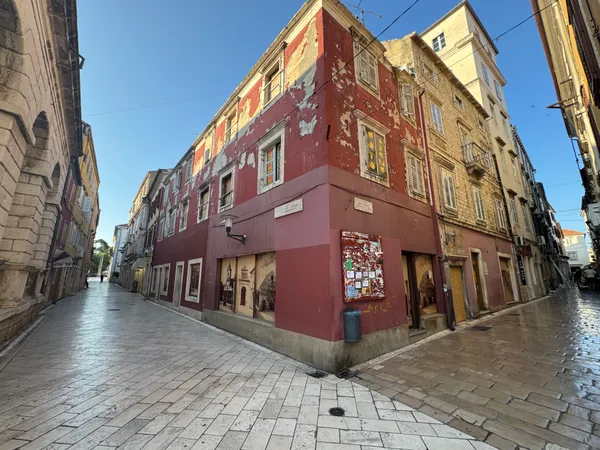
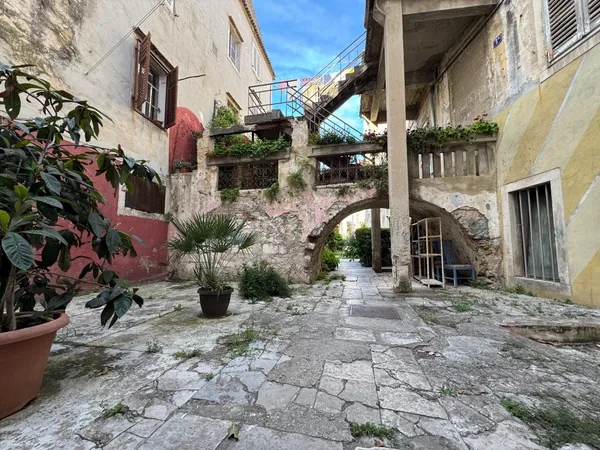
In the Labyrinth of Zadar's Alleyways.
Zadar, located on the Adriatic, is a place where history intertwines with everyday life, and its old streets and stone buildings, though weathered by time, exude an incredible charm. I like to think these places have a soul — a little worn, but full of stories.
Croatia
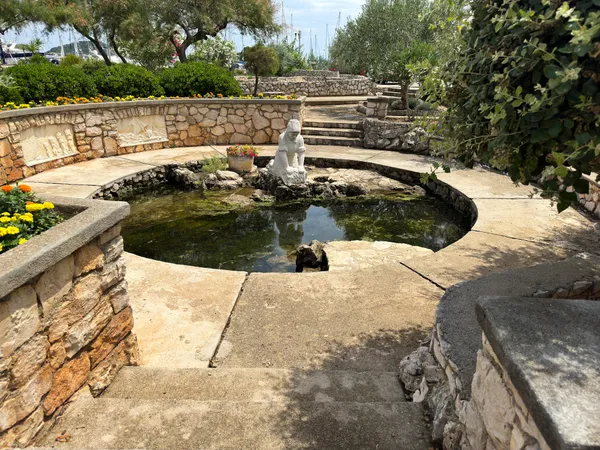
The Preko Tragedy
On the morning of 2 November 1891, 24 women and 7 men set off from Preko toward Zadar. Their gajeta, weighed down with freshly washed laundry, had only a short, few-kilometer crossing ahead. Unfortunately, the unpredictable force of nature proved stronger than man.