
Reflections
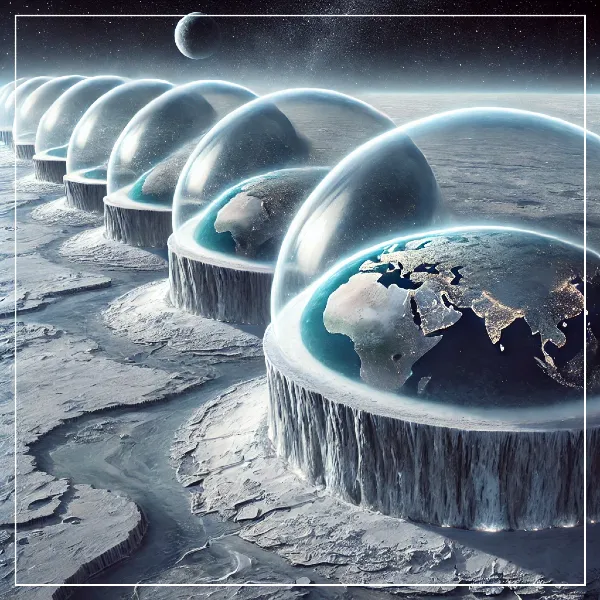
We are temporarily staying on this planet — on a cosmic scale we are here only for a brief moment. We are very lucky, because the Earth is an extraordinarily beautiful place that gives us everything we need to live in health and harmony.

We are temporarily on this planet — on a cosmic scale we appear here for only a short while. We are incredibly fortunate, because the Earth is an exceptionally beautiful place, giving us everything needed to live in health and harmony. Unfortunately, not everyone wants to preserve this harmony. There are people among us consumed by a lust for power and money who — instead of caring for the common good — want to destroy it for their own benefit. It has been this way for centuries, although many of us believed that humanity would reach a higher level of consciousness, leaving behind the old mindset based on violence and selfishness.
I believed that along with the development of science and technology we would also move forward spiritually — that we would start to prioritize cooperation in pursuit of the common good. Unfortunately, watching the modern world, I have the impression that governments do not necessarily represent the interests of their peoples. Their duty should be to provide us with security and a dignified life, yet it seems that politicians use their power to destroy us, intimidate us, and subjugate us. Instead of seeking peace and reconciliation, they increasingly fan conflicts and escalate tensions.
The world currently faces many wars and crises. Instead of sitting down for peace talks, politicians call for further rearmament, which only leads to more victims — both among soldiers and innocent civilians. It's hard not to think about how much good we could achieve together if funds spent on armaments were directed to education, the advancement of science, medical research, or healthcare. Can you imagine how much our whole society could then develop?
Of course, the development of military technology may be necessary — but only for one purpose: to defend Earth against any external threat, should one ever arise. We should not, however, use that potential against each other. Unfortunately, we observe the opposite trend — humanity is destroying itself, and our so‑called 'leaders' seem to be complicit in the process. Can they really be called 'ours'? After all, the last pandemic showed that decisions are made further up the chain, and individual leaders merely implement top‑down recommendations. It's astonishing that governments around the world reacted almost identically: some countries introduced certain measures earlier, others later, but the pattern was similar everywhere. It's impossible not to wonder who stands behind these global decisions.
The view that we are being poisoned — through food, air, and water — is becoming increasingly widespread. More and more people look up at the sky and understand what's happening. They see that the sky is no longer the same as it used to be. In addition, further uncontrolled waves of migration are being brought to us from regions many times larger than Europe, burdening our public finances. Instead of investing in the development of society and improving living conditions, governments redirect huge sums to war and armaments. As a result, we are funding our own destruction.
Even more disturbing are the voices of some influential people who speak openly about the need to depopulate the planet — that is, to actually exterminate a significant portion of humanity. Despite such drastic statements, these people are still treated as important authorities and invited to conferences and the media. Looking at this, it's hard not to conclude that the world we live in is heading in the wrong direction. Yet such words should immediately provoke widespread opposition and real consequences for those promoting such anti‑human approaches.
So how can we oppose this situation? Perhaps the key lies in education and shaping social awareness so that we can recognize the true intentions of those who govern us. We must promote cooperation, empathy, and care for the common good — because only in this way can we save our planet and preserve its beauty for future generations. Earth is our common home: for a moment we were here, and someday others will come after us. It's worth doing everything in our power not to leave them a legacy of chaos, destruction, and hostility, but a world in which one can live in peace and mutual respect.
Continue reading in this gallery
AI Gallery
Cosmic Existence
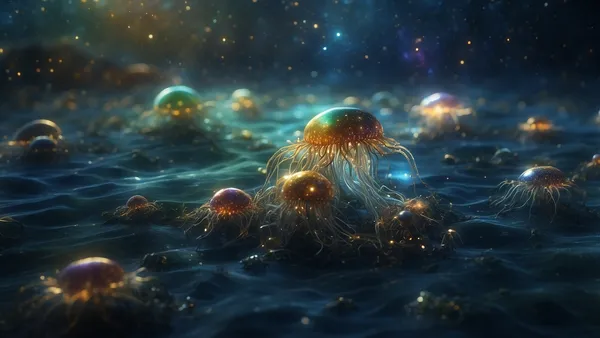
Many times I have wondered whether, in the vast expanse of space, there could exist beings that resemble nothing we know here on Earth. When I look at the starry sky at night, I cannot shake the feeling that the cosmos is not entirely empty.
AI Gallery
Are We a Reflection of the Universe?
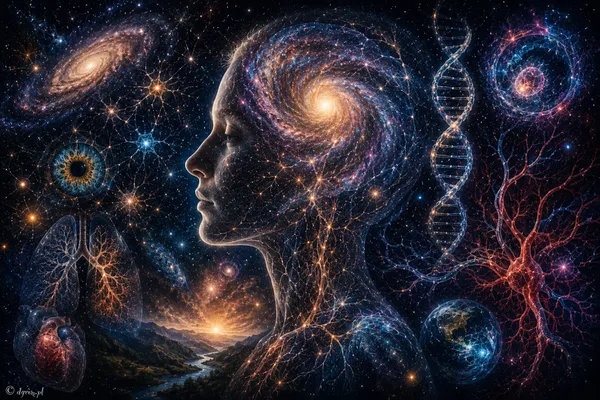
Look up at the night sky. Stars. Nebulae. Galaxies. An endless cosmos stretching billions of light-years in every direction. Its sheer scale is almost impossible to comprehend.
AI Gallery
Crimson in the Forest
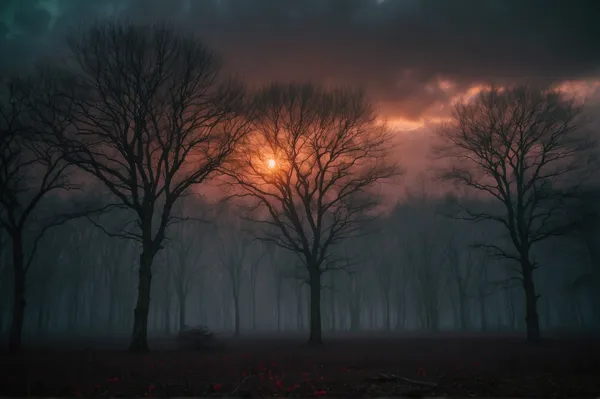
From behind the black crowns of the trees a dim sun emerges. Painful beams of light caress dead bodies. The blood-stained earth washes wounds with rain. Pale with fear, the sky veils the sight of death in mist.

AI Gallery
Escape to Paradise
The photo shows a view that feels like a mixture of dreams. We see majestic mountains in the distance, their peaks covered in mist that gives the place an aura of mystery. Wallpaper for phone and computer.