
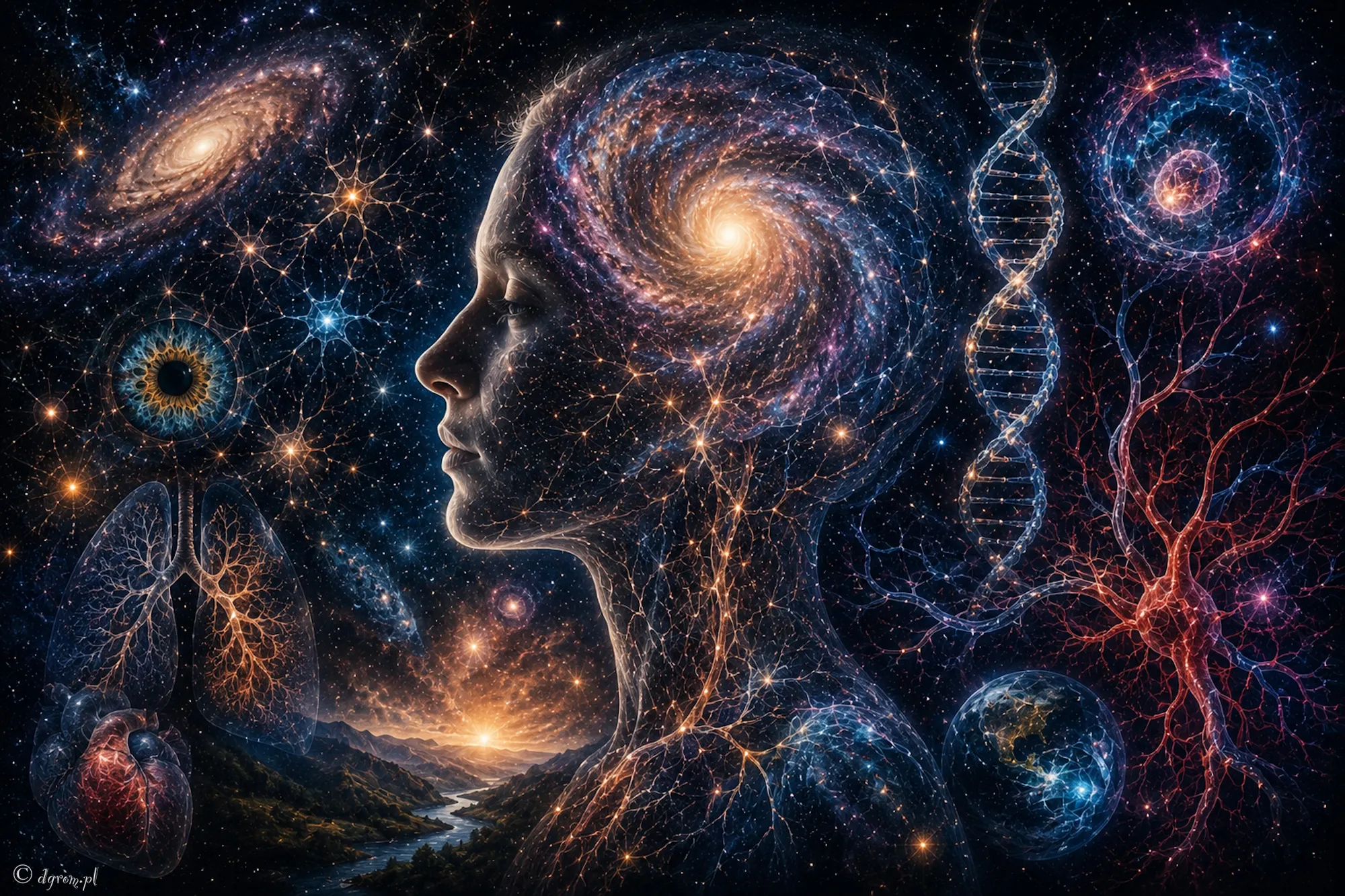
Are We a Reflection of the Universe?
Look up at the night sky. Stars. Nebulae. Galaxies. An endless cosmos stretching billions of light-years in every direction. Its sheer scale is almost impossible to comprehend.

Are We a Reflection of the Universe?
Look up at the night sky. Stars. Nebulae. Galaxies. An endless cosmos stretching billions of light-years in every direction. Its sheer scale is almost impossible to comprehend.
Now consider something remarkable.
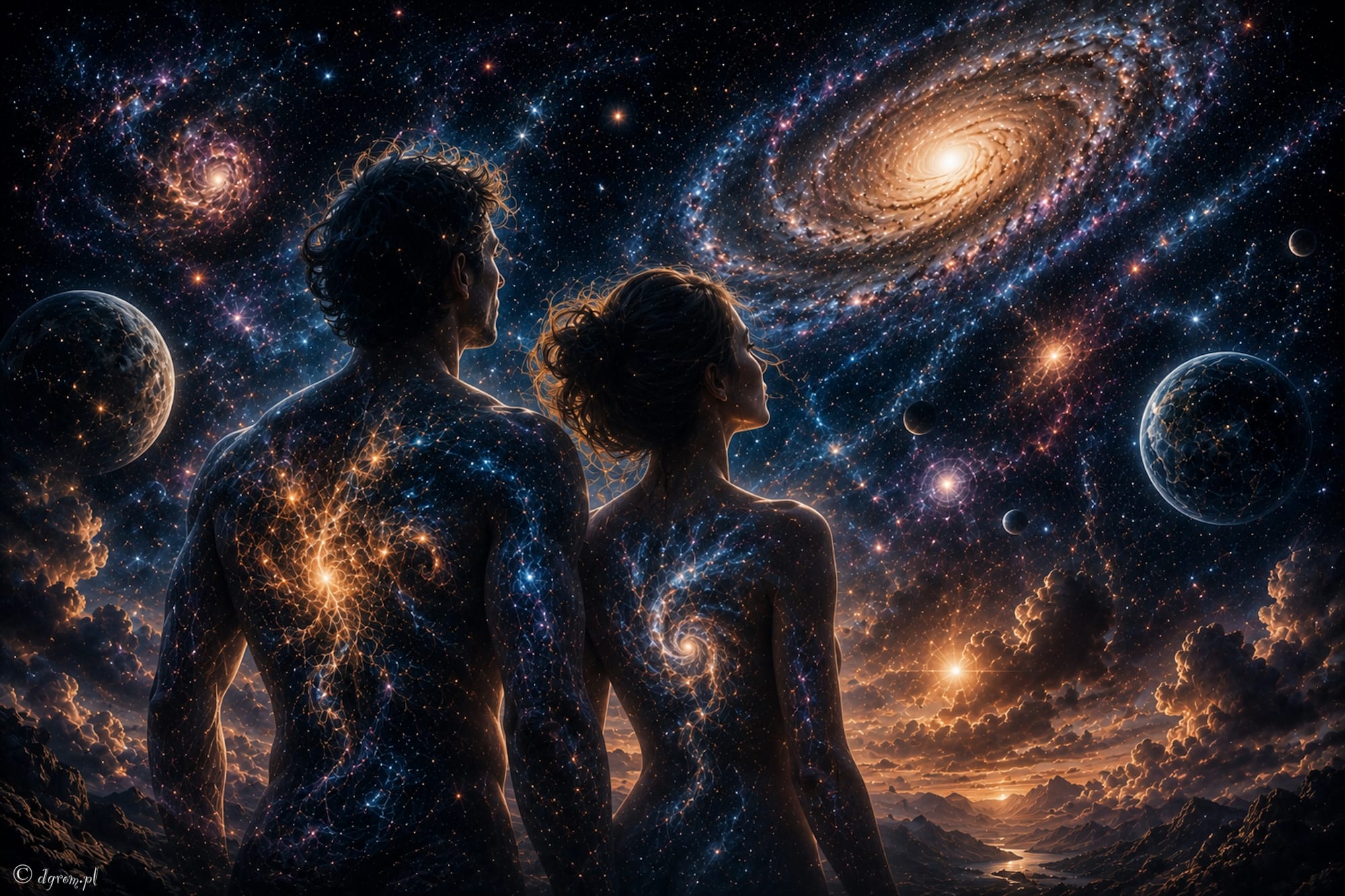
Everything you see above you—and everything that makes you who you are—comes from the same fundamental ingredients. The atoms that form your body were forged inside ancient stars. The calcium in your bones, the iron in your blood, the oxygen you breathe all originated long before Earth even existed.
In a very real sense, we are children of the stars.
Science has uncovered fascinating similarities between human beings and the universe. This does not mean that we are miniature copies of the cosmos, but some of these parallels are truly thought-provoking.
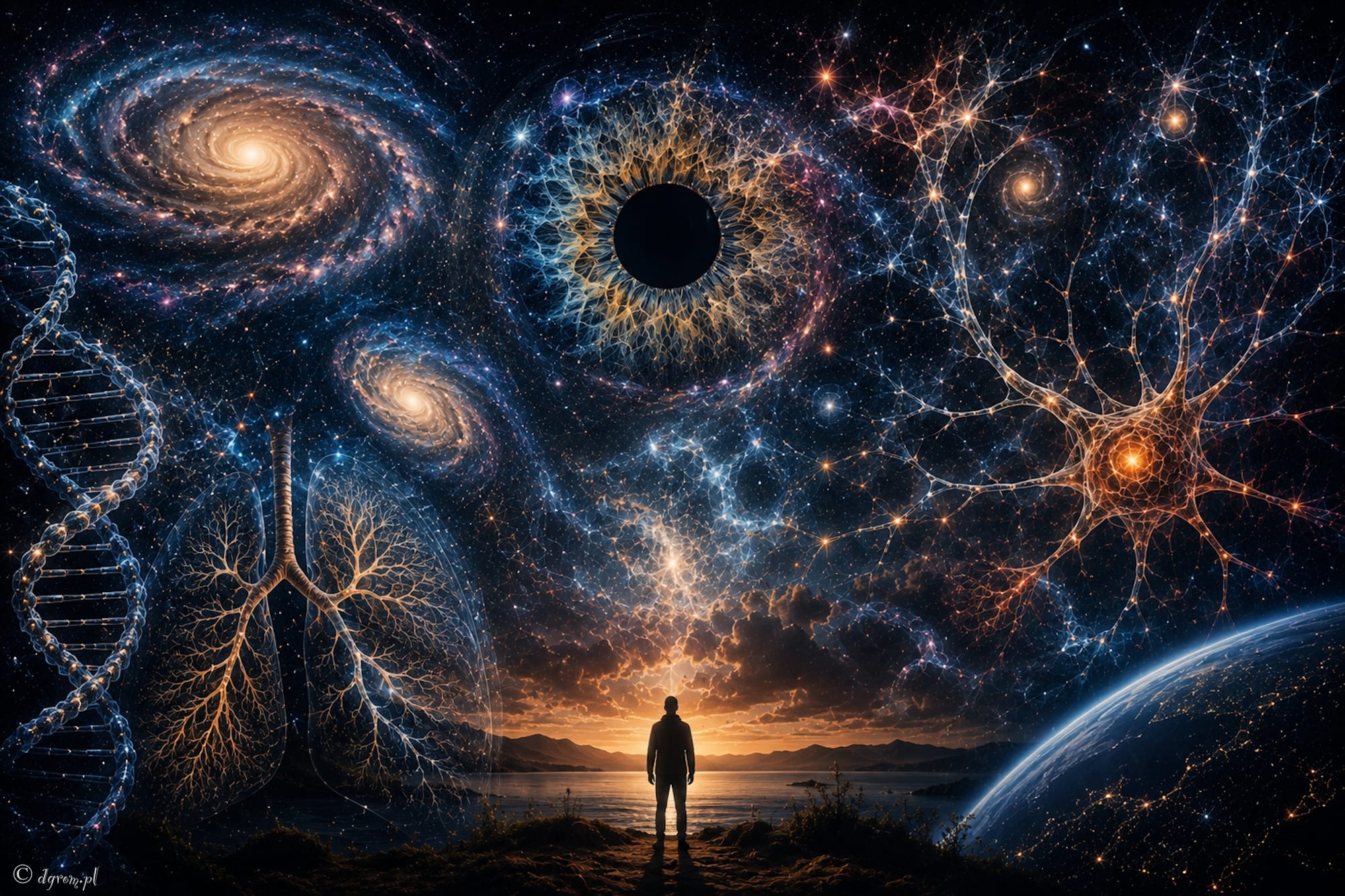
The human brain contains approximately 86 billion neurons. Each neuron forms connections with countless others, creating one of the most complex networks known to exist. When astronomers study the large-scale structure of the universe, they observe immense cosmic filaments connecting galaxies across vast distances, forming networks that can appear surprisingly similar to neural structures.
These systems are fundamentally different and operate according to entirely different mechanisms. Yet the visual resemblance is striking. It is almost as if nature prefers certain patterns and reuses them wherever they prove effective.
The same idea can be found throughout the human body.
Our lungs branch into thousands of increasingly smaller airways. Our circulatory system forms an intricate network of blood vessels reaching nearly every cell. Tree roots, river systems, lightning bolts, and even some cosmic structures display remarkably similar branching patterns.
The mathematics behind these structures often turns out to be surprisingly alike.
Even more fascinating is the concept of fractals. Fractals are patterns that repeat themselves across different scales. We see them in snowflakes, coastlines, trees, clouds, blood vessels, and many other natural systems.
It is as though the universe speaks a common mathematical language, whether it is creating something microscopic or something unimaginably vast.
Spirals are another recurring theme. They appear in seashells, hurricanes, spiral galaxies, and even in the double helix of DNA. Not because these things are the same, but because certain forms are exceptionally efficient and stable.
Nature has a habit of repeating what works.
The more we learn, the more astonishing it seems that from a handful of physical laws emerged stars, planets, oceans, life, and eventually beings capable of questioning their own existence.
And here we encounter one of the greatest mysteries of all.
How does matter become aware of itself?
For billions of years, the universe evolved according to the laws of physics. Stars formed and died. Galaxies collided and expanded. Entire worlds appeared and vanished. Then, at some point, human beings emerged, looked up at the sky, and began asking questions.
Where did we come from?
Why does anything exist at all?
What is the purpose of our existence?
Science helps us understand how the universe works. It explains the life cycles of stars, the formation of galaxies, and the processes taking place inside the human brain. Yet questions of meaning and purpose remain open.
That is why, throughout history, humanity has also turned to philosophy and religion.
Some people see the extraordinary order and beauty of the cosmos as evidence of God. Others believe that the universe itself is the ultimate mystery and requires no supernatural explanation. Still others suggest that consciousness may be part of something far greater than we currently understand.
Perhaps the question is not simply, “Does God exist?”
Perhaps a more intriguing question is this:
If the universe has produced beings capable of observing, understanding, and questioning reality, has it—in some sense—become aware of itself?
We do not know the answer.
And perhaps that is part of what makes the question so beautiful.
The next time you look up at the night sky, remember that you are not merely an observer. You are part of the same story. You are made from matter born in ancient stars. You carry within you patterns that appear throughout nature. And your consciousness is one of the most extraordinary phenomena we know.
Maybe that is why the cosmos fascinates us so deeply.
Because when we gaze into the universe, we may also be gazing—at least in part—into ourselves.
Continue reading in this gallery
AI Gallery
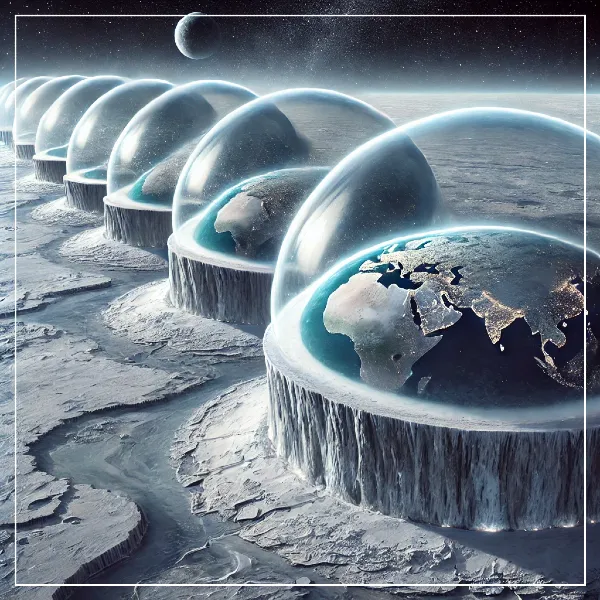
Reflections
We are temporarily staying on this planet — on a cosmic scale we are here only for a brief moment. We are very lucky, because the Earth is an extraordinarily beautiful place that gives us everything we need to live in health and harmony.
AI Gallery
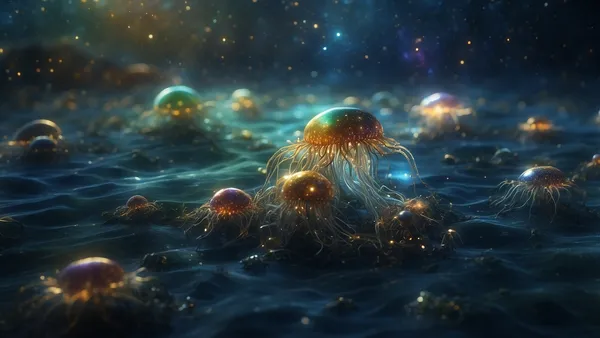
Cosmic Existence
Many times I have wondered whether, in the vast expanse of space, there could exist beings that resemble nothing we know here on Earth. When I look at the starry sky at night, I cannot shake the feeling that the cosmos is not entirely empty.
AI Gallery
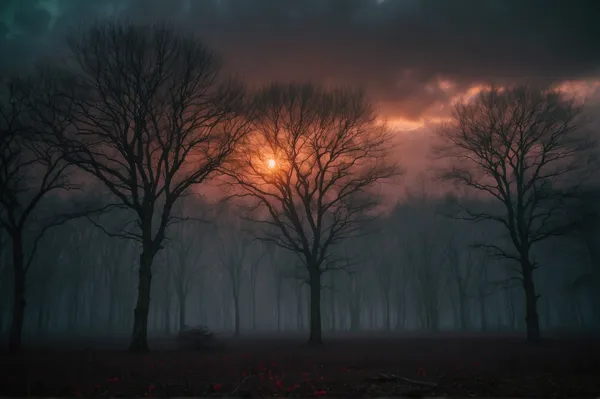
Crimson in the Forest
From behind the black crowns of the trees a dim sun emerges. Painful beams of light caress dead bodies. The blood-stained earth washes wounds with rain. Pale with fear, the sky veils the sight of death in mist.
AI Gallery
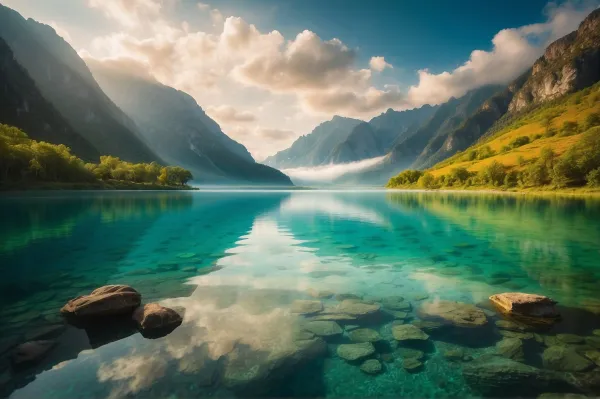
Escape to Paradise
The photo shows a view that feels like a mixture of dreams. We see majestic mountains in the distance, their peaks covered in mist that gives the place an aura of mystery. Wallpaper for phone and computer.