
Edinburgh
It's well known that Edinburgh is a beautiful and almost tangibly magical city. It's one of those places where the boundary between the present and the past seems particularly thin. Numerous tales

It's well known that Edinburgh is a beautiful and almost tangibly magical city. It's one of those places where the boundary between the present and the past seems particularly thin. Numerous tales that wind along the cobbled streets remind us that ghosts, witch trials and the dark days of the plague were once a sad everyday reality here.
Although the city is full of iconic landmarks, it's the less obvious spots that form its unique backbone. While recently going through photos, I paused on two places that left a strong impression on me. They're not only photogenic but also somewhat hidden from the main tourist flow, despite being a stone's throw from the bustling centre.
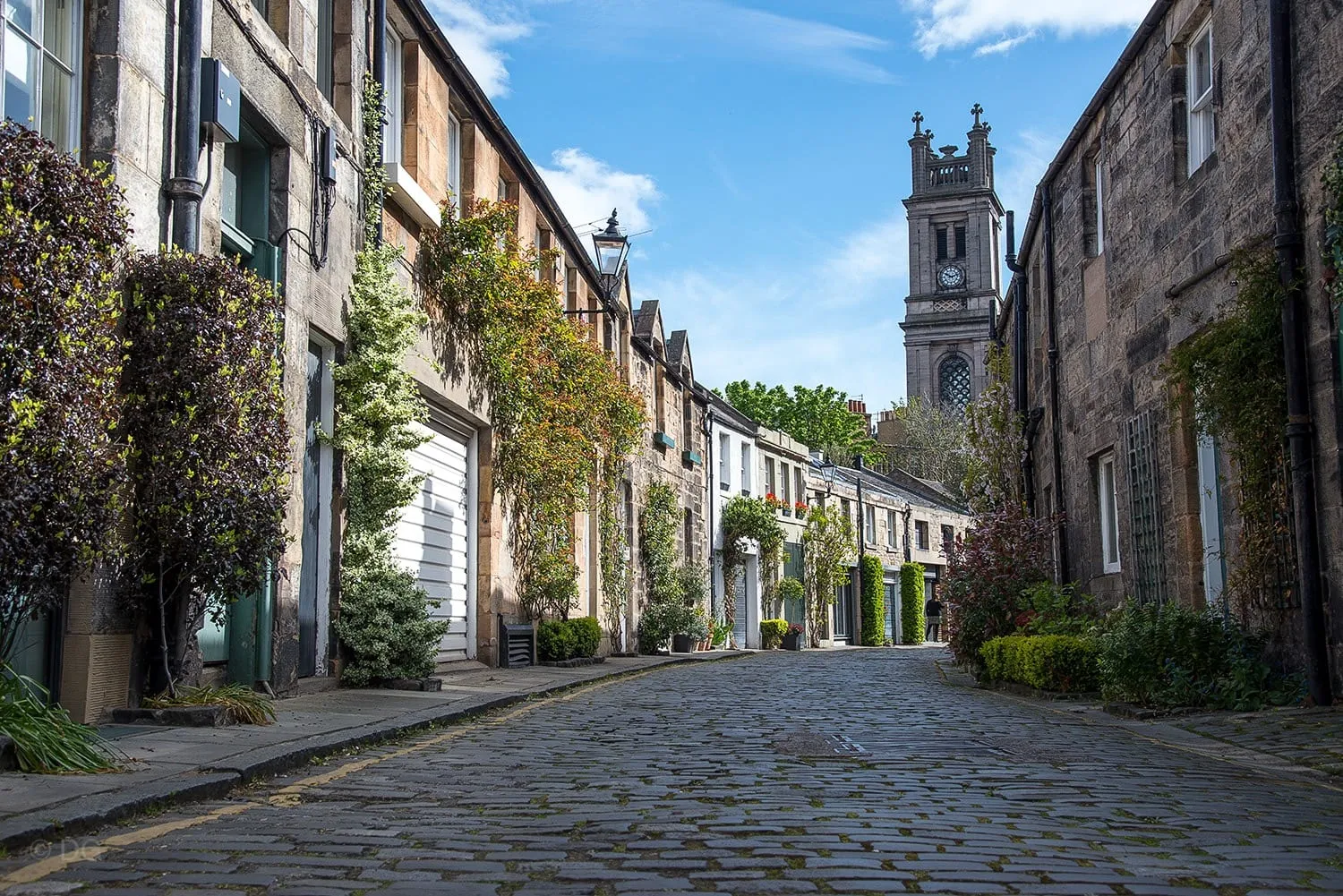
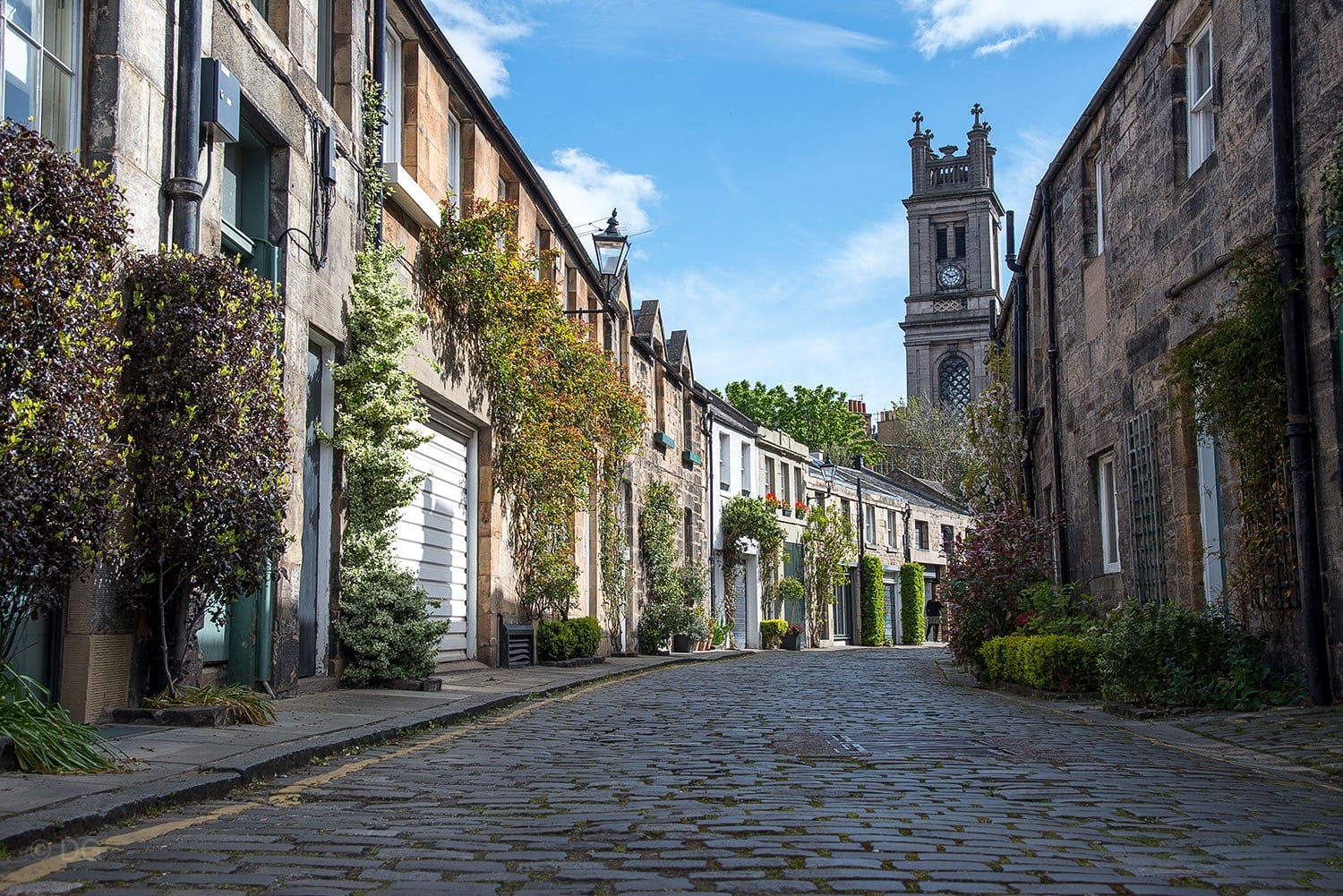
Circus Lane is one of the most beautiful and most photogenic streets in Edinburgh, hidden in the charming Stockbridge district.
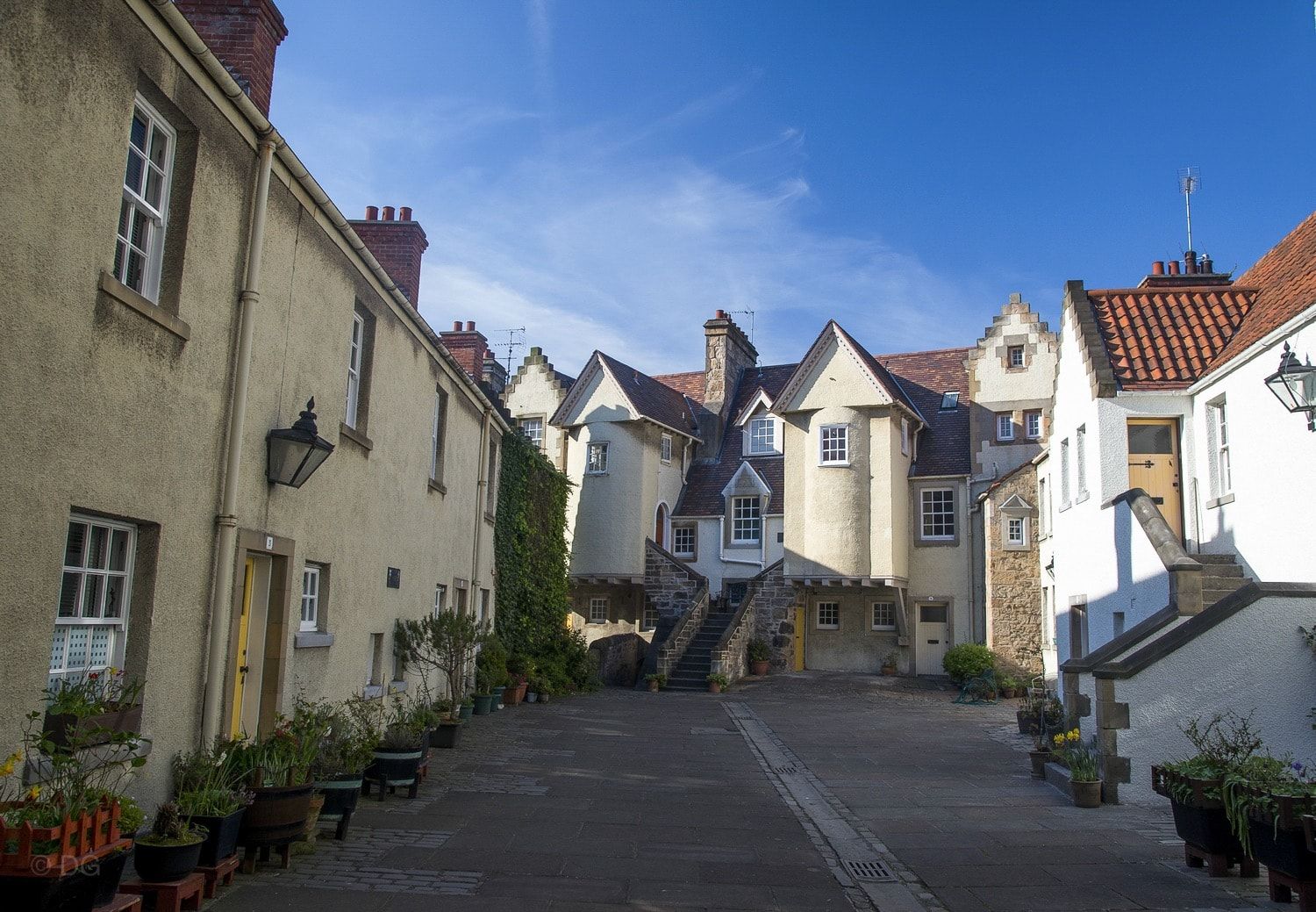
White Horse Close is a charming historic courtyard at Canongate, at the foot of the Royal Mile in Edinburgh — just near the Palace of Holyroodhouse and opposite the Scottish Parliament building.
Circus Lane – the most beautiful lane in Edinburgh
If you've ever had the chance to stroll through Stockbridge — one of Edinburgh's most charming neighbourhoods — you've probably come across Circus Lane. It's a short, cobbled lane that at first glance looks like a fairy-tale setting. The houses on both sides are covered in ivy and flowers, plant pots stand by every gate, and the cobbled pavement gives the place a unique, almost medieval character. Circus Lane is one of those spots that remind you why Edinburgh is so beloved by photographers and travellers from around the world.
History and character of Circus Lane
Circus Lane was created in the 19th century as part of the developing Stockbridge district. Originally these were stables and service buildings serving the nearby residences. Over time they were converted into cosy homes, preserving the original cobbles and distinctive architecture. Today Circus Lane is one of the most sought-after addresses in Edinburgh — many artists, writers and creative people live here, valuing the peace and unique atmosphere of the place. The lane is especially beautiful in summer, when plants bloom and climb over the facades, but it is just as charming in autumn, when the ivy leaves turn deep red and gold.
Circus Lane as a photography spot
Circus Lane has become a true paradise for photographers and social media content creators. The lane appears in countless Instagram photos, and each season of the year offers a completely different take on the place. In spring, blooming plants give it a romantic feel; in summer, lush greenery makes it truly fairytale-like; in autumn, the warm colours of the leaves create a magical atmosphere; and in winter — especially when it snows — the lane turns into a postcard straight out of a Christmas card. The best light for photography comes early in the morning, when the lane is still empty and you can compose shots without crowds of tourists.
How to get to Circus Lane?
Circus Lane is located in the Stockbridge district, about a 15–20 minute walk from Edinburgh city centre. The easiest way is on foot from Princes Street, walking via Howe Street or Frederick Street towards Stockbridge. The lane is right by Royal Circus — one of the loveliest squares of the New Town. Near Circus Lane it's also worth visiting other Stockbridge attractions: the Botanic Gardens, the Water of Leith and the numerous cafés along the district's main street. It's an ideal destination for a relaxed Sunday stroll with a camera in hand — away from the busy centre, yet in the heart of one of Europe's most interesting cities.
White Horse Close – a historic courtyard on the Canongate
At the very bottom of the Royal Mile, right by the Canongate and adjacent to the Palace of Holyroodhouse, lies one of the most charming and least-known corners of Edinburgh – White Horse Close. It is a picturesque, enclosed 17th-century courtyard entered through an unassuming gate in a wall. Once inside, time seems to slip back several hundred years – you are surrounded by low, whitewashed houses with stone steps, flower boxes on the windowsills and a worn cobbled surface. The whole place is so well preserved and so photogenic that it is hard to believe you are in the heart of one of the main streets of Scotland's bustling capital.
History of White Horse Close
White Horse Close was established in the 17th century as an inn for travellers arriving in Edinburgh. The name comes from the white horse – the favourite mount of Queen Mary Stuart (Mary, Queen of Scots), who lived in the nearby Palace of Holyroodhouse. According to local tradition, it was here that the queen's horses and retinue were quartered during her stays in Edinburgh. For centuries the inn served the stagecoach connection between Edinburgh and London. In 1745 officers of Bonnie Prince Charlie were quartered in White Horse Close during the unsuccessful Jacobite expedition – the last attempt by the Stuarts to regain the British crown. This makes the place one of the most historically resonant corners of Edinburgh.
White Horse Close today
By the mid-20th century White Horse Close had fallen into a lamentable state – the buildings had become dilapidated and faced demolition. Fortunately, in the 1950s a thorough restoration was carried out and the courtyard was returned to its former glory. Today White Horse Close serves as a residential area – private residents live in the restored tenements. As a result, the place retains its authentic character and has not been turned into a commercial tourist attraction. Access is free and open around the clock, although it should be remembered that it remains private property inhabited by people – it is worth keeping quiet and respecting the residents' privacy. For a photographer it is a real treasure – especially early in the morning or in the evening, when the side light beautifully illuminates the whitewashed facades and highlights the texture of the stone cobbles.
White Horse Close and the Scottish Parliament
One topographical curiosity is that White Horse Close sits literally opposite the modern building of the Scottish Parliament, opened in 2004. The contrast is striking – on one side a 17th-century courtyard full of history, on the other the avant-garde architecture of Enric Miralles, designed as a symbol of the new Scotland after devolution. The juxtaposition of these two buildings in a single frame – old and new – perfectly captures the duality that is at the heart of Edinburgh. The city both lives by its rich past and boldly looks to the future. White Horse Close, in all its 17th-century modesty, is the best example of that.
Continue reading in this gallery
Scotland
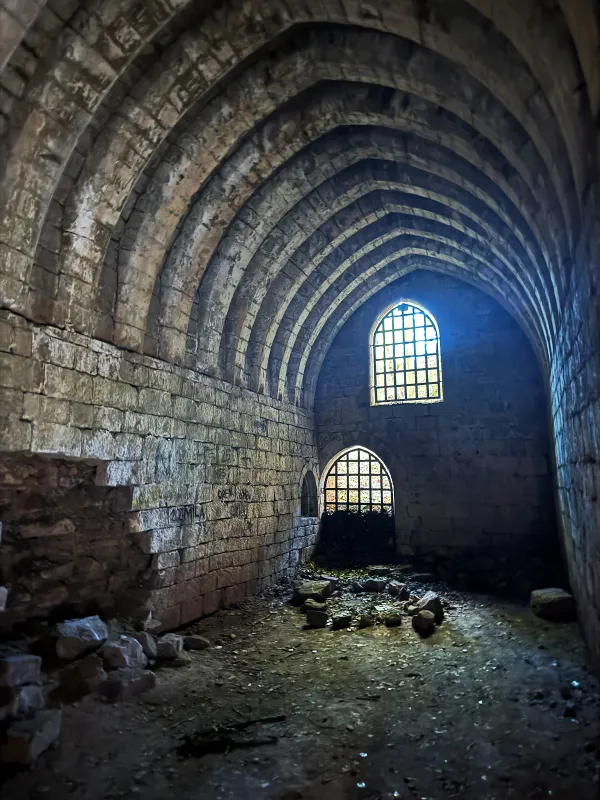
Goblin Hall
Deep within a Scottish woodland lies an extraordinary medieval chamber. According to legend, it was not built by human hands but by demons summoned by a powerful wizard. The place is known as Goblin Hall, and for nearly eight centuries, its story has captured people's imaginations.

Scotland
Scottish Castles-new website
Castles have featured in my photos and here on the blog for a long time. Eventually, I felt I wanted to give them more space and a place of their own, beyond individual blog posts.
Scotland
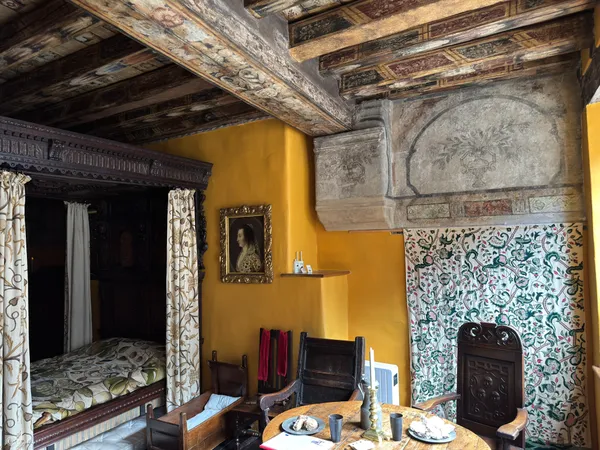
Gladstone’s Land
There’s something about Edinburgh’s Royal Mile that always draws me back. The crowds, the tartan shops, the sound of bagpipes, and the old stone buildings that seem as though they’ve stood here forever. Most of them have been altered so many times over the centuries that very little of the original
Scotland
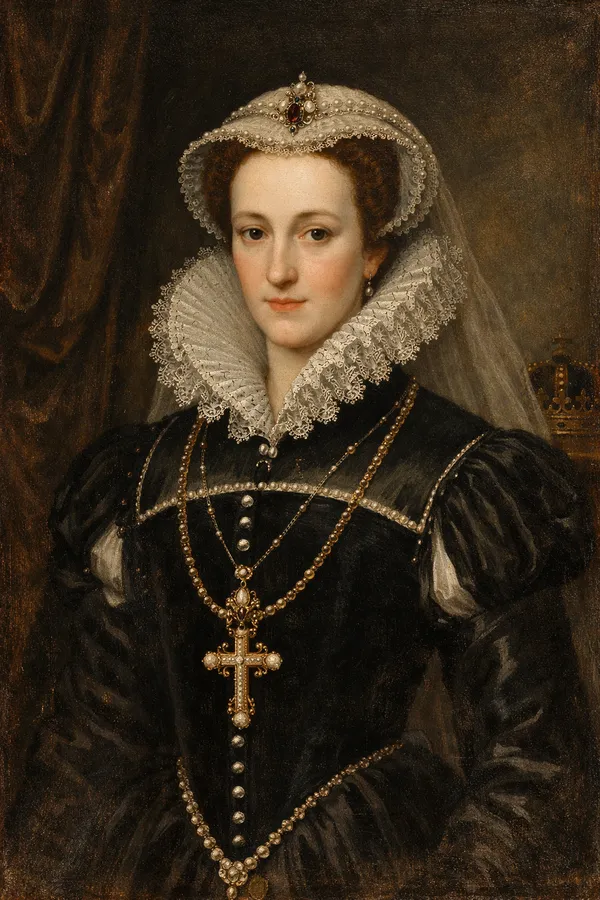
In the Footsteps of Mary, Queen of Scots
Scotland has something magical about it. Mists, castles, hills – and of course legends. One of the most fascinating figures in Scottish history is Mary Stuart, better known as Mary, Queen of Scots.