
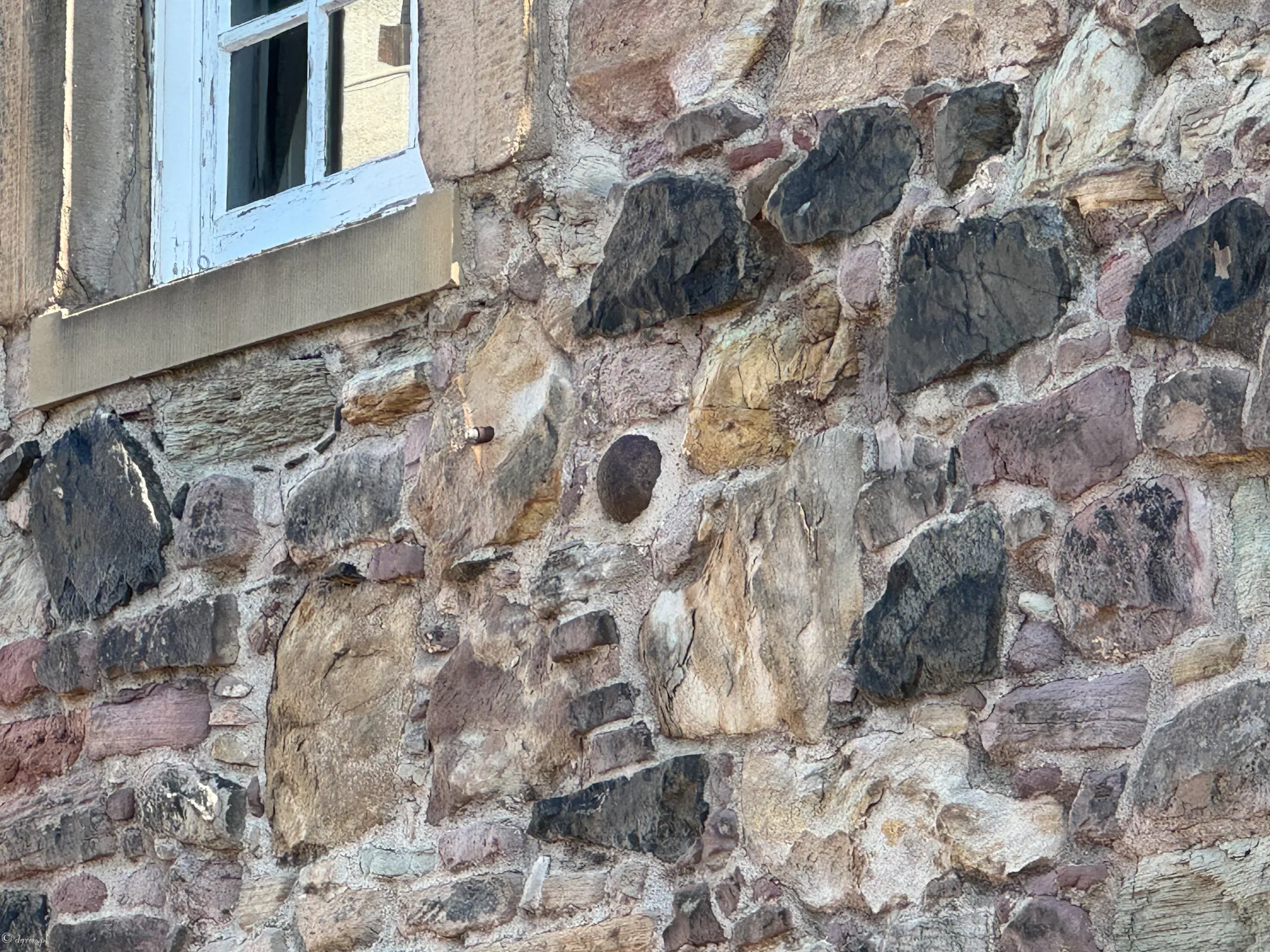
Cannonball in the building
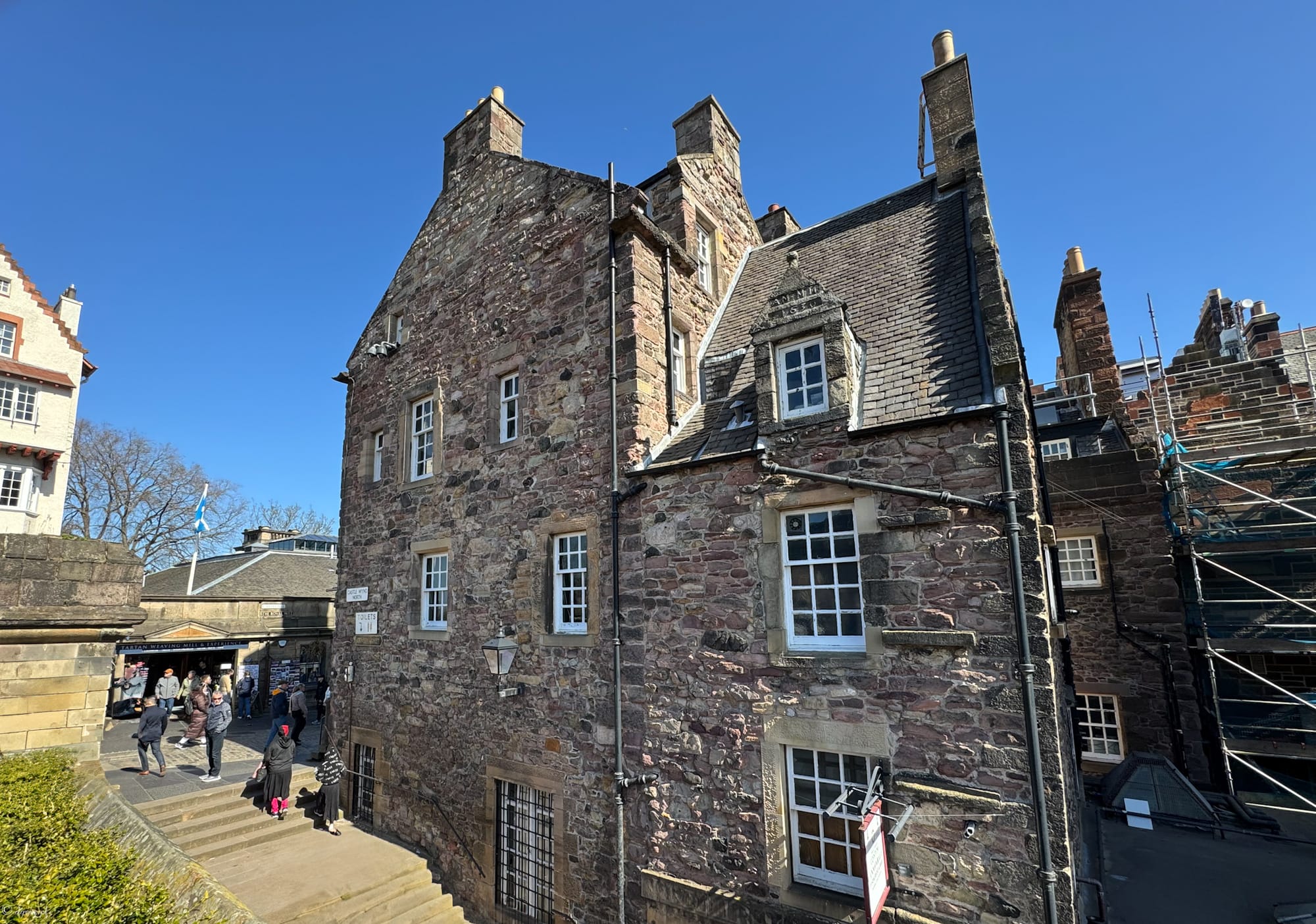
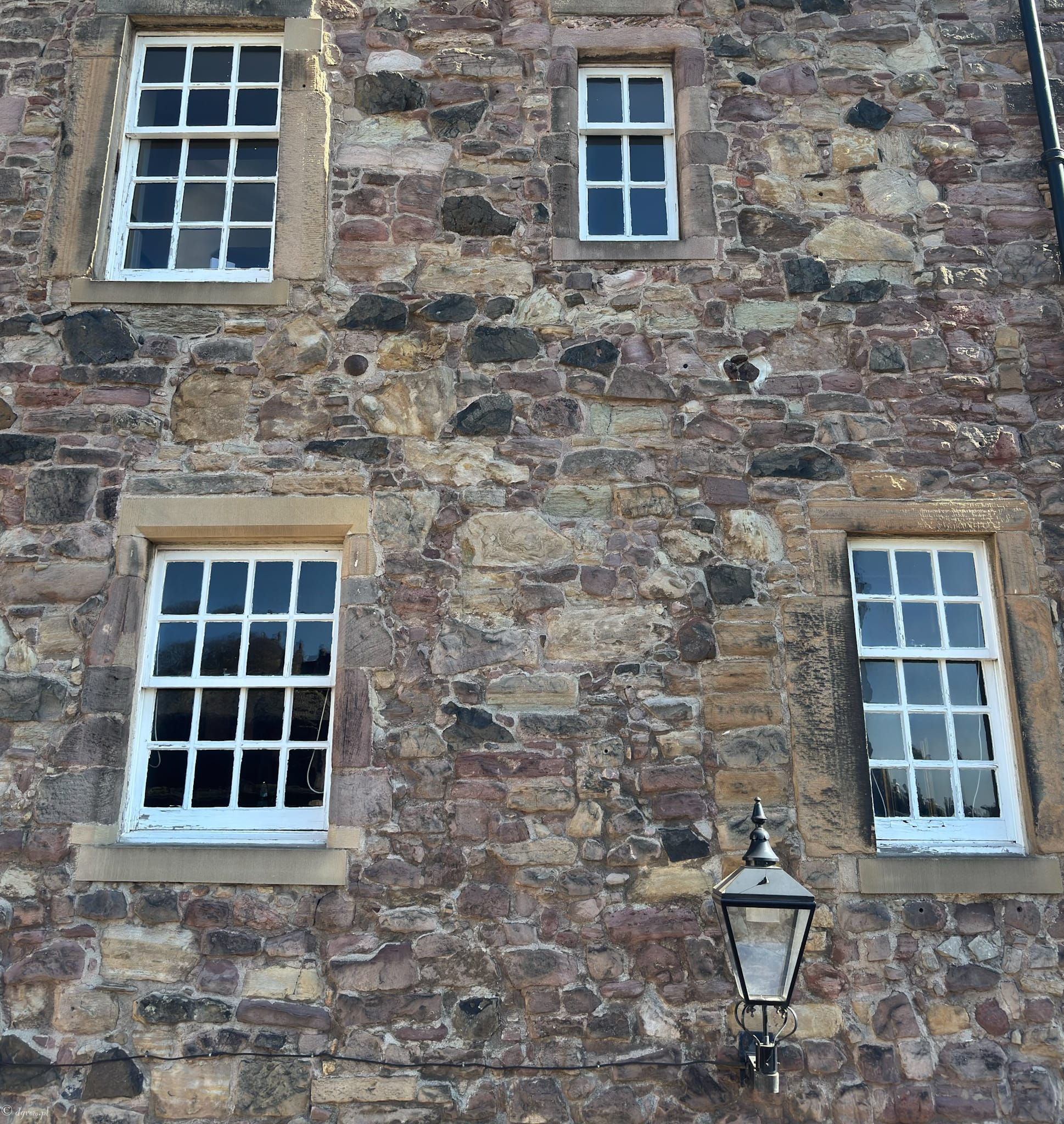
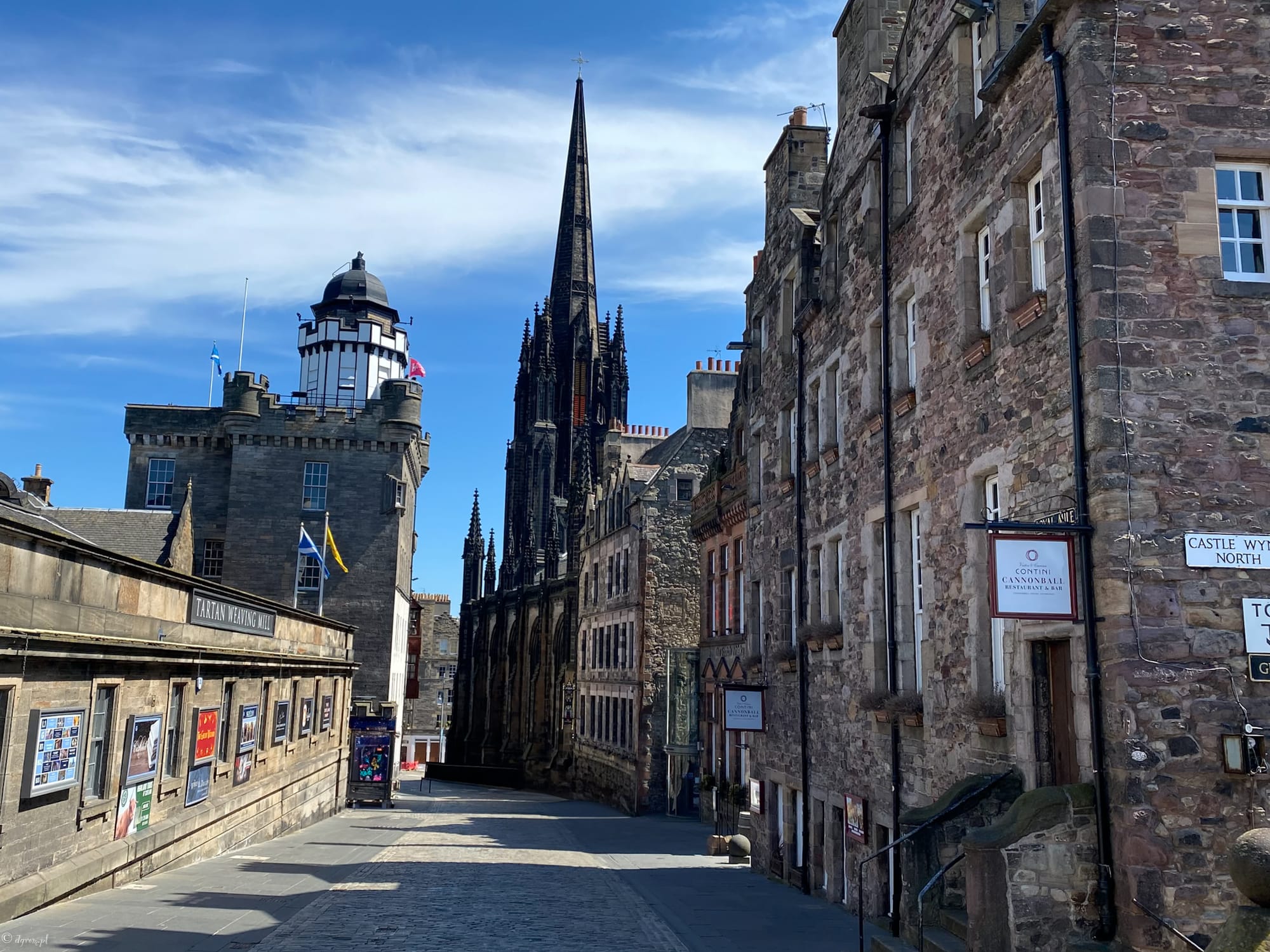
Cannonball House is a 17th-century building located on the Royal Mile in Edinburgh, Scotland, just next to the entrance to the esplanade of Edinburgh Castle. It was built in 1630 for Alexander Mure, a furrier and leather merchant, and takes its name from a cannonball lodged in its west wall.

Cannonball House is a 17th-century building located on the Royal Mile in Edinburgh, Scotland, just next to the entrance to the esplanade of Edinburgh Castle. It was built in 1630 for Alexander Mure, a furrier and leather merchant, and takes its name from a cannonball lodged in its west wall. The building has been protected as a Category A listed building by Historic Environment Scotland since 1970.
The history of Cannonball House is rich — after a period of neglect in the late 17th century it underwent renovation, and further alterations were made in the mid-19th century. In 1913 the building was thoroughly renovated by architect John Carfrae for the nearby Castlehill School. From 1947 to 2013 it served as a meeting place for guides organising Royal Mile tours as part of the Edinburgh International Festival. Since 2014 it has housed a restaurant offering Scottish cuisine and views of the castle.
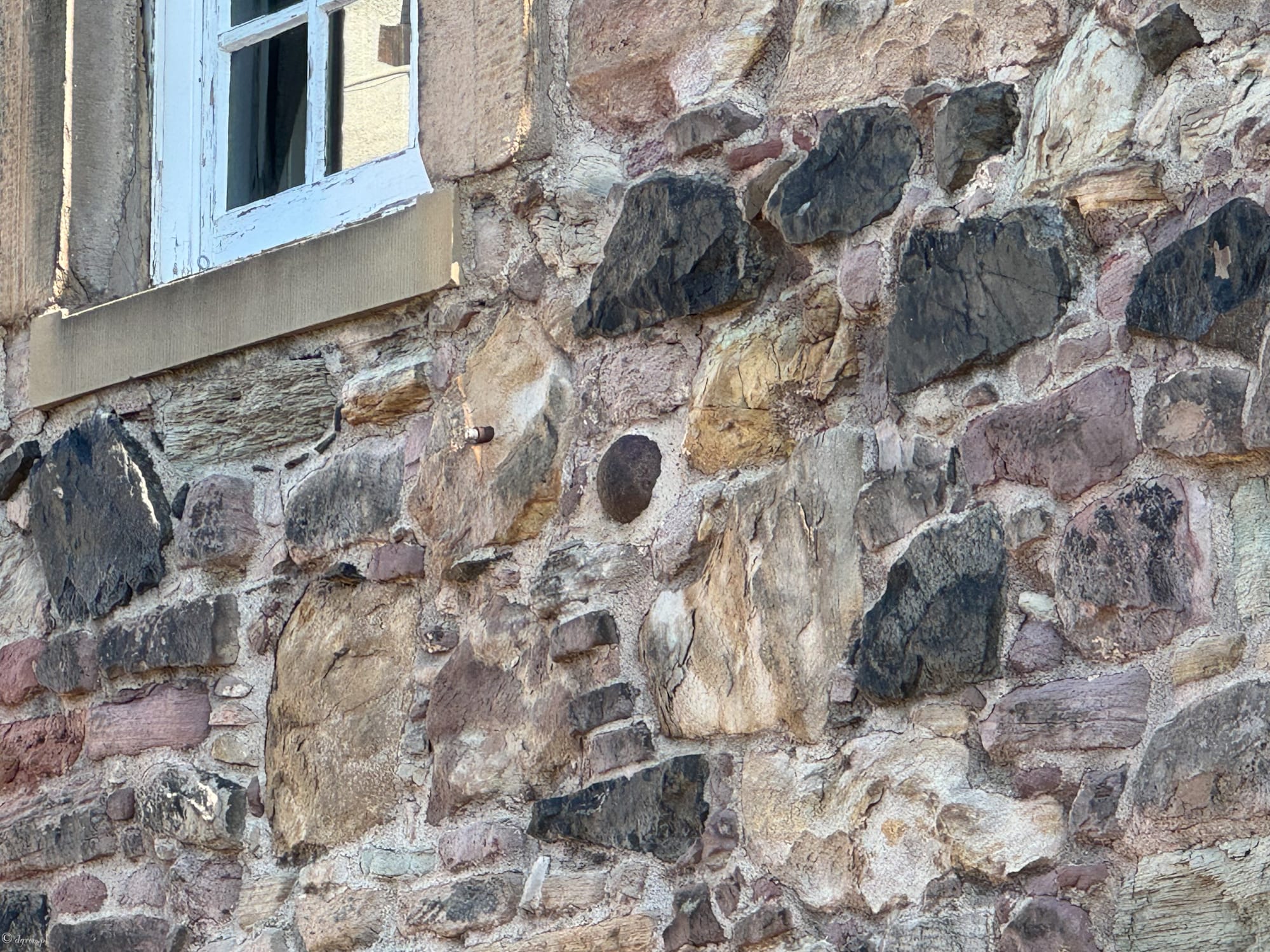
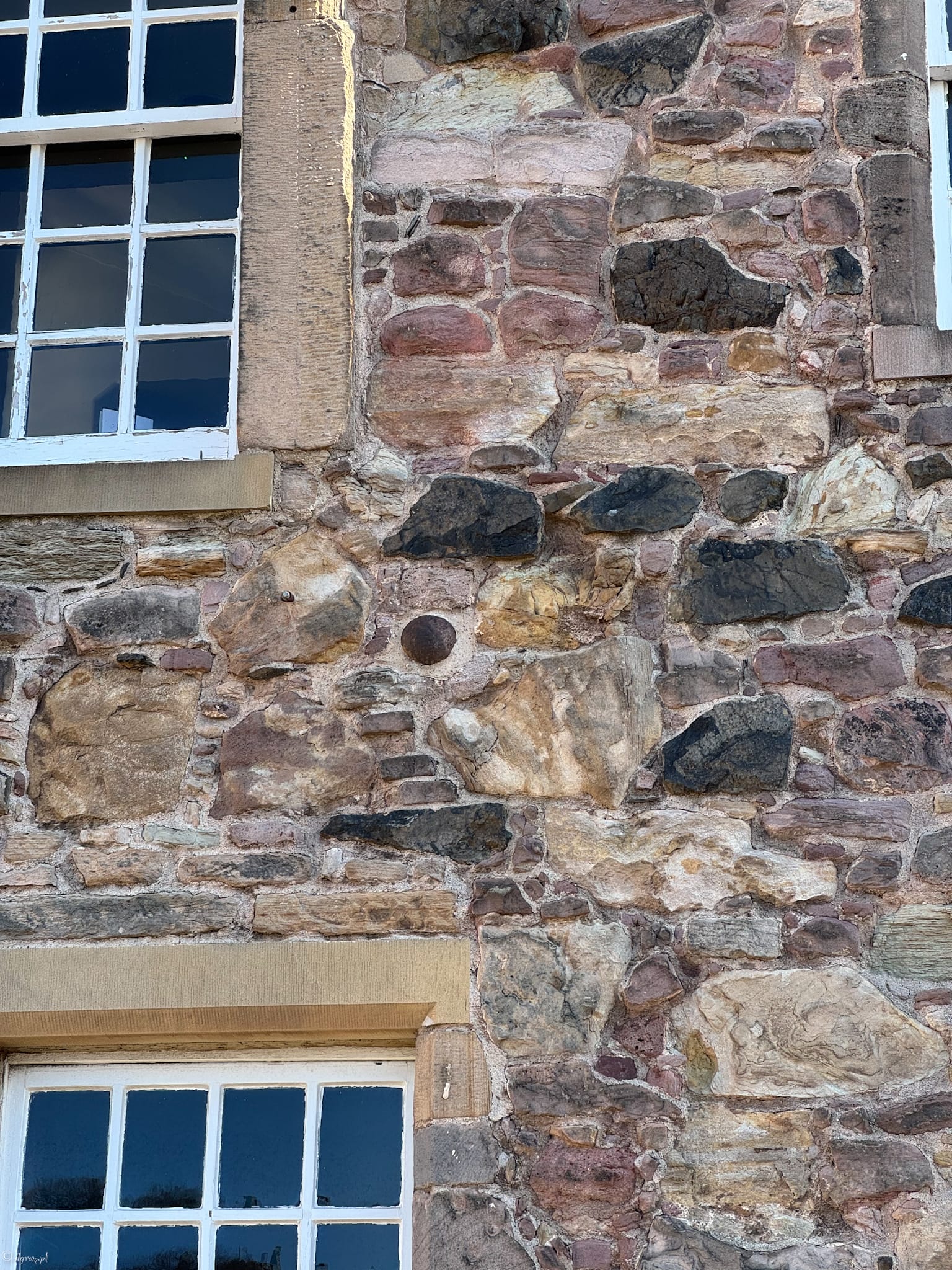
As for the cannonball, there are two theories (the official one and one of my own) about its origin. One says it was fired from the castle during the Jacobite rising of 1745 by the forces of General Preston. The second, more likely, suggests it was placed deliberately as a marker of the gravity head for Edinburgh's first water supply system, supplying the nearby Castlehill reservoir with water from the Comiston hills. My personal theory is simply that someone embedded it there as a joke. To the right of the cannonball you can see what looks like a second one, but already damaged.
The building has two main storeys, a half-basement and an attic, and its Castlehill-facing façade is distinguished by three gables and wooden doors reached by short stone steps. Above one of the windows is the inscription "AM MN 1630", representing the initials of Alexander Mure, his wife Margaret Niellems, and the year of construction and their marriage. If you're in Edinburgh, it's worth taking a look at this historic building — it's a true gem of the Royal Mile!
Continue reading in this gallery
Scotland
Goblin Hall
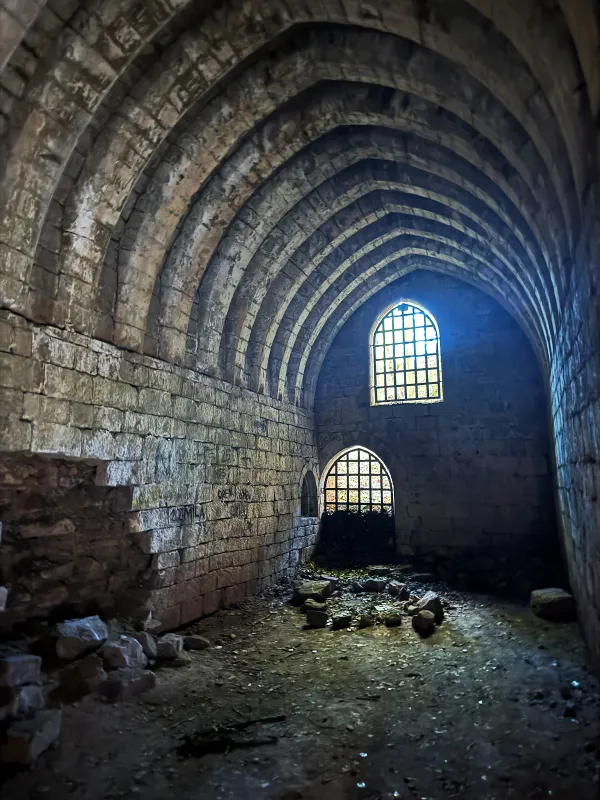
Deep within a Scottish woodland lies an extraordinary medieval chamber. According to legend, it was not built by human hands but by demons summoned by a powerful wizard. The place is known as Goblin Hall, and for nearly eight centuries, its story has captured people's imaginations.
Scotland
Scottish Castles-new website
Castles have featured in my photos and here on the blog for a long time. Eventually, I felt I wanted to give them more space and a place of their own, beyond individual blog posts.
Scotland
Gladstone’s Land
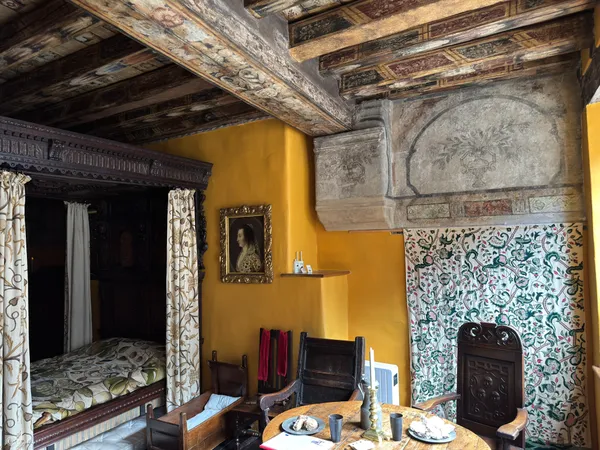
There’s something about Edinburgh’s Royal Mile that always draws me back. The crowds, the tartan shops, the sound of bagpipes, and the old stone buildings that seem as though they’ve stood here forever. Most of them have been altered so many times over the centuries that very little of the original
Scotland
In the Footsteps of Mary, Queen of Scots
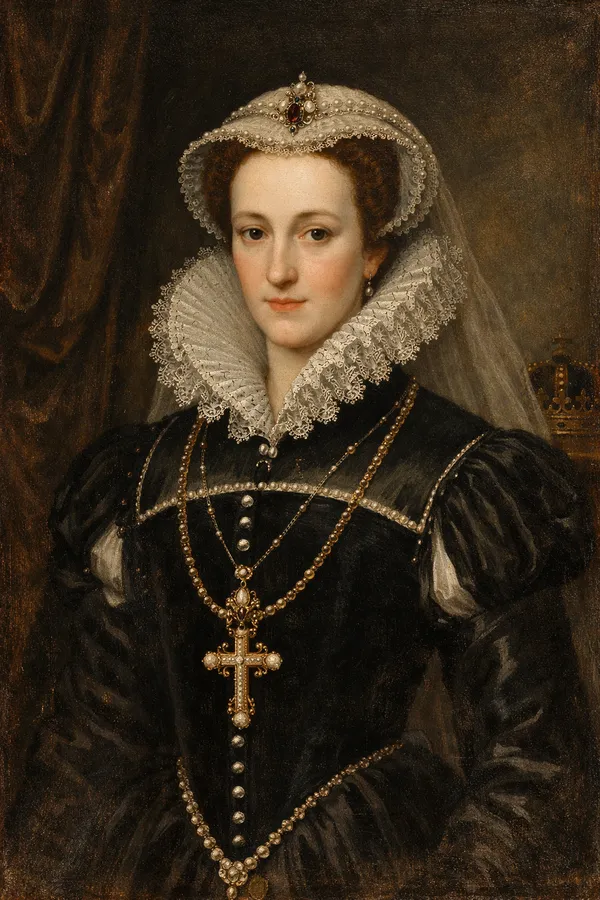
Scotland has something magical about it. Mists, castles, hills – and of course legends. One of the most fascinating figures in Scottish history is Mary Stuart, better known as Mary, Queen of Scots.