
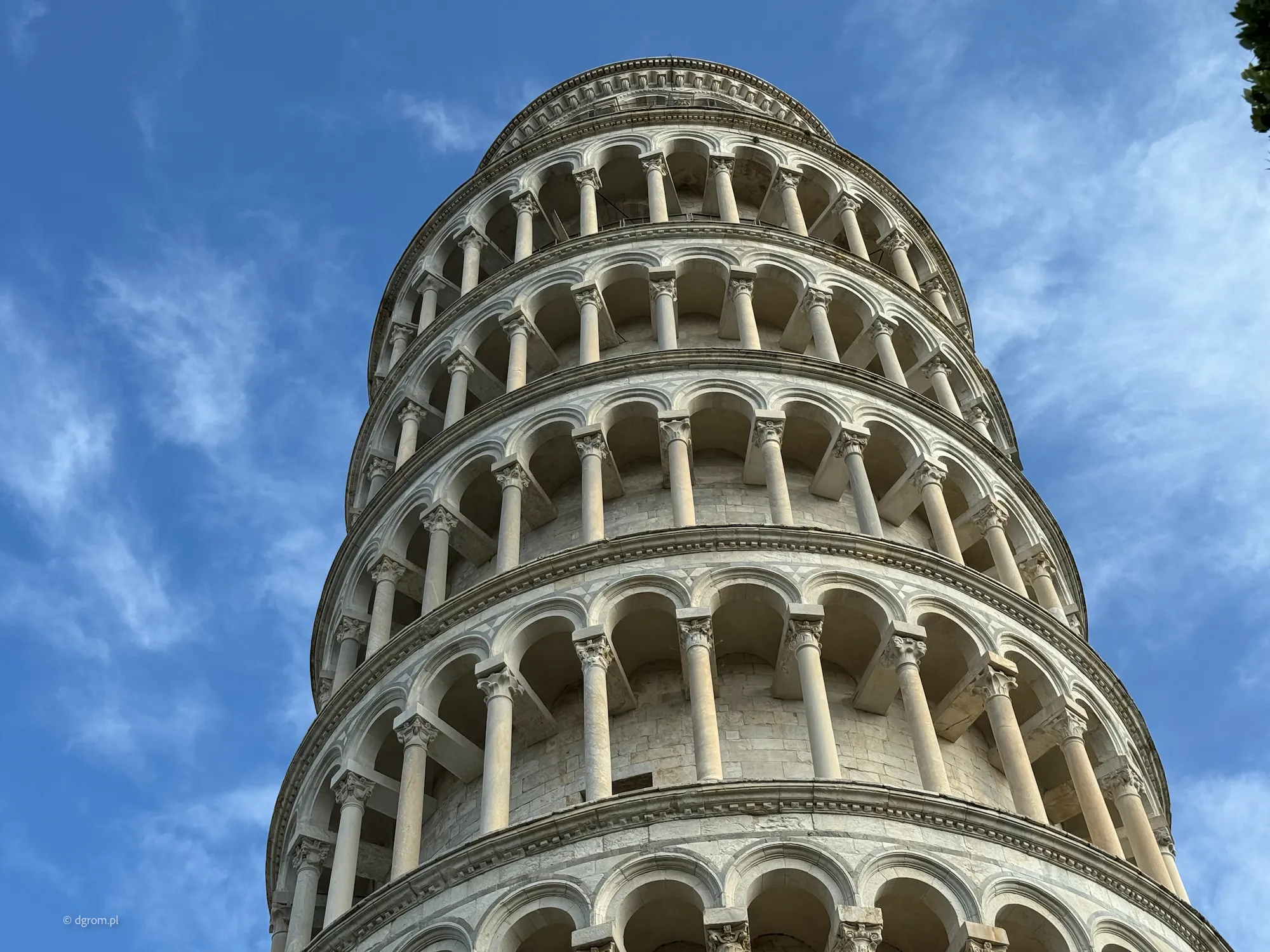
Tower - the crooked one ( Pisa )
Construction of the tower began in 1173, but soon after work started the ground began to subside, causing it to tilt. Work was halted for 100 years to allow the ground to stabilize.

The Leaning Tower of Pisa - History, fun facts and my impressions
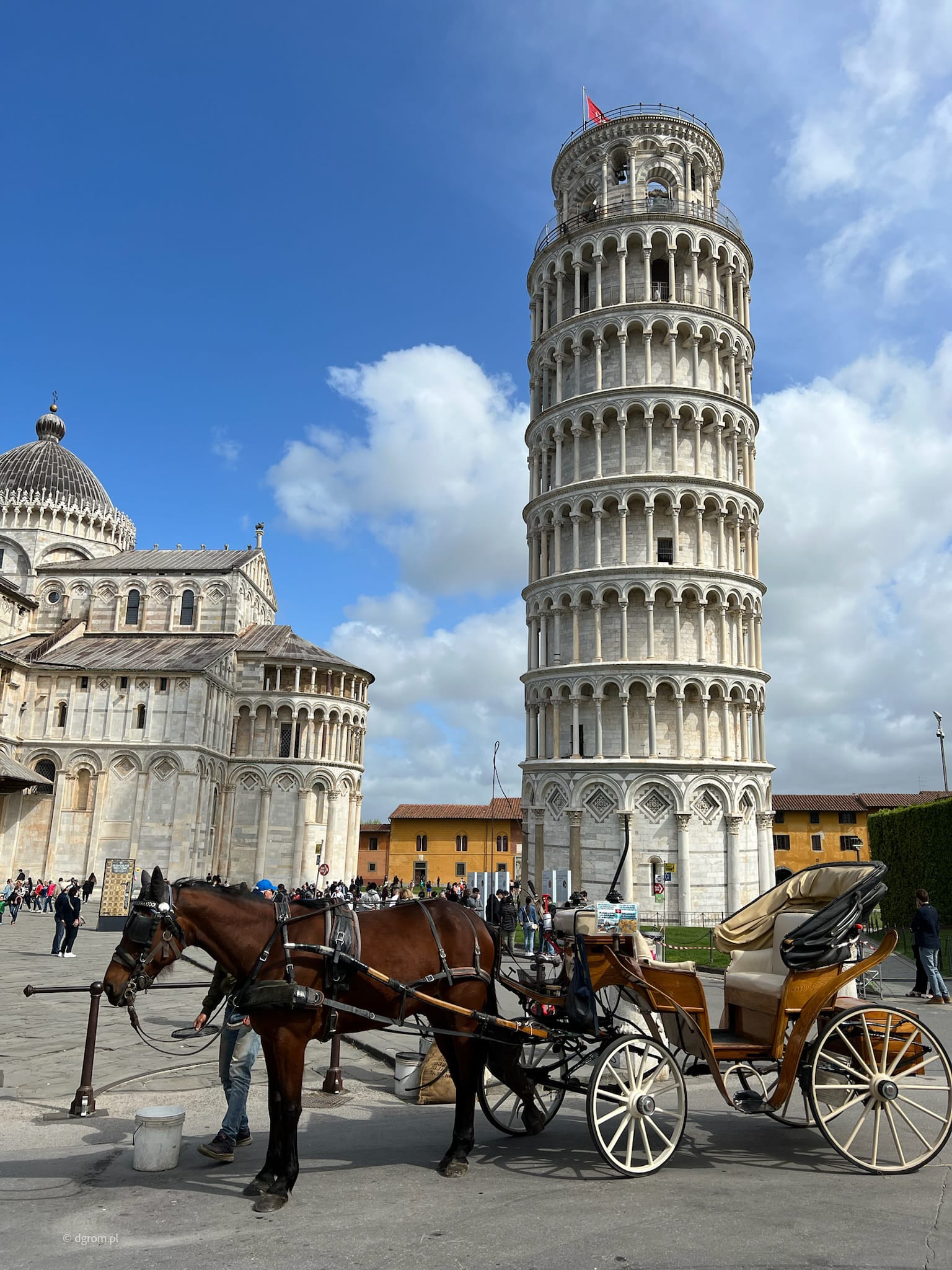
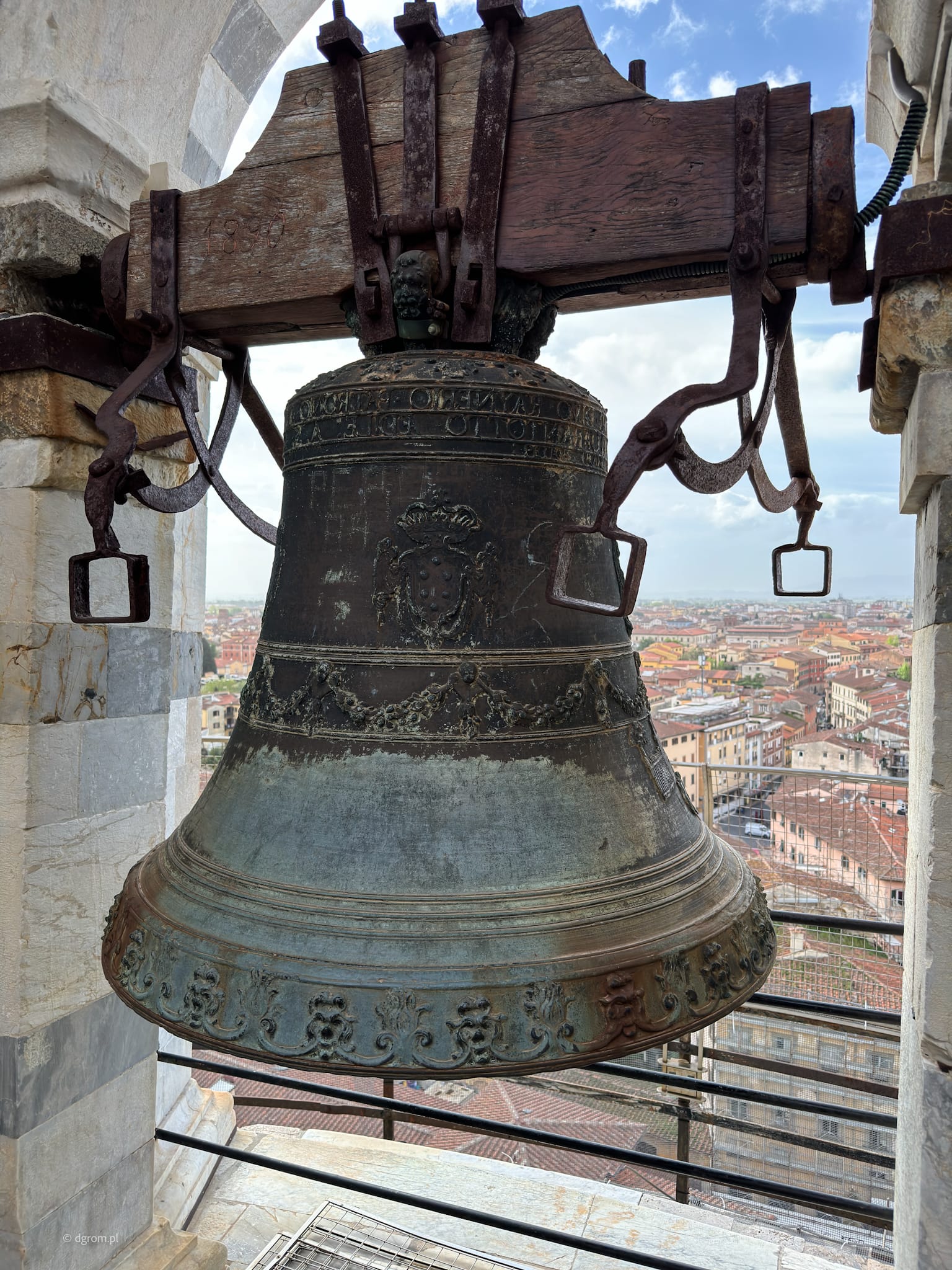
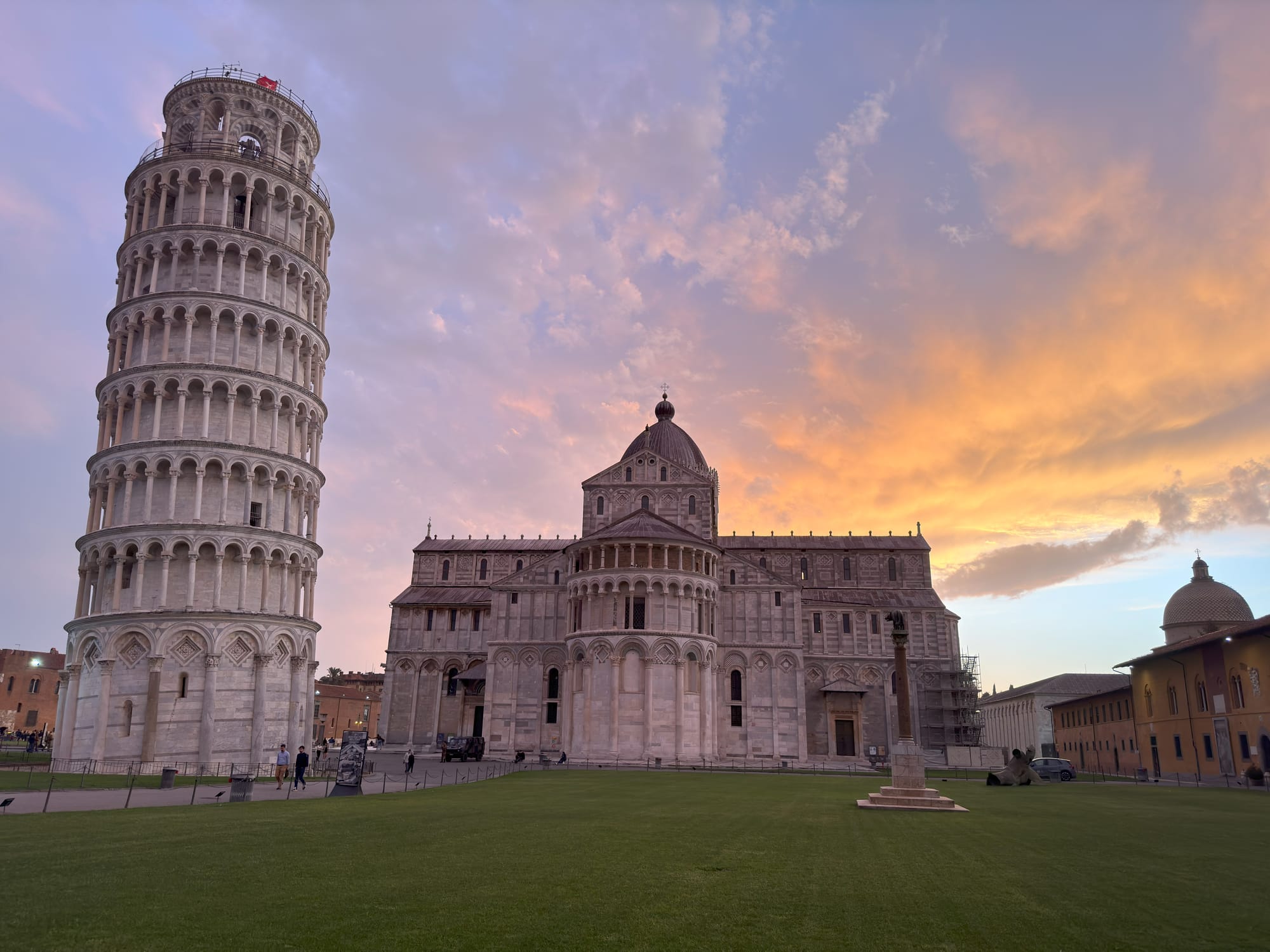
Recently I had the chance to visit one of the most iconic places in the world - the Leaning Tower of Pisa. I had been fascinated by this impressive monument for a long time, and its history and construction commanded my respect. I had heard a lot about this tower, but no photo conveys the impression it makes when you see it in person. Its tilt is truly noticeable. While there, I also recommend climbing the tower. The views are impressive. A ticket costs 21 euros per person.
Construction of the tower began in 1173, but soon after work started the ground began to subside, causing it to tilt. Work was halted for 100 years to allow the ground to stabilize. It resumed in 1272 with a modification to the design intended to counteract the tilt. The tower was finally completed in 1372.
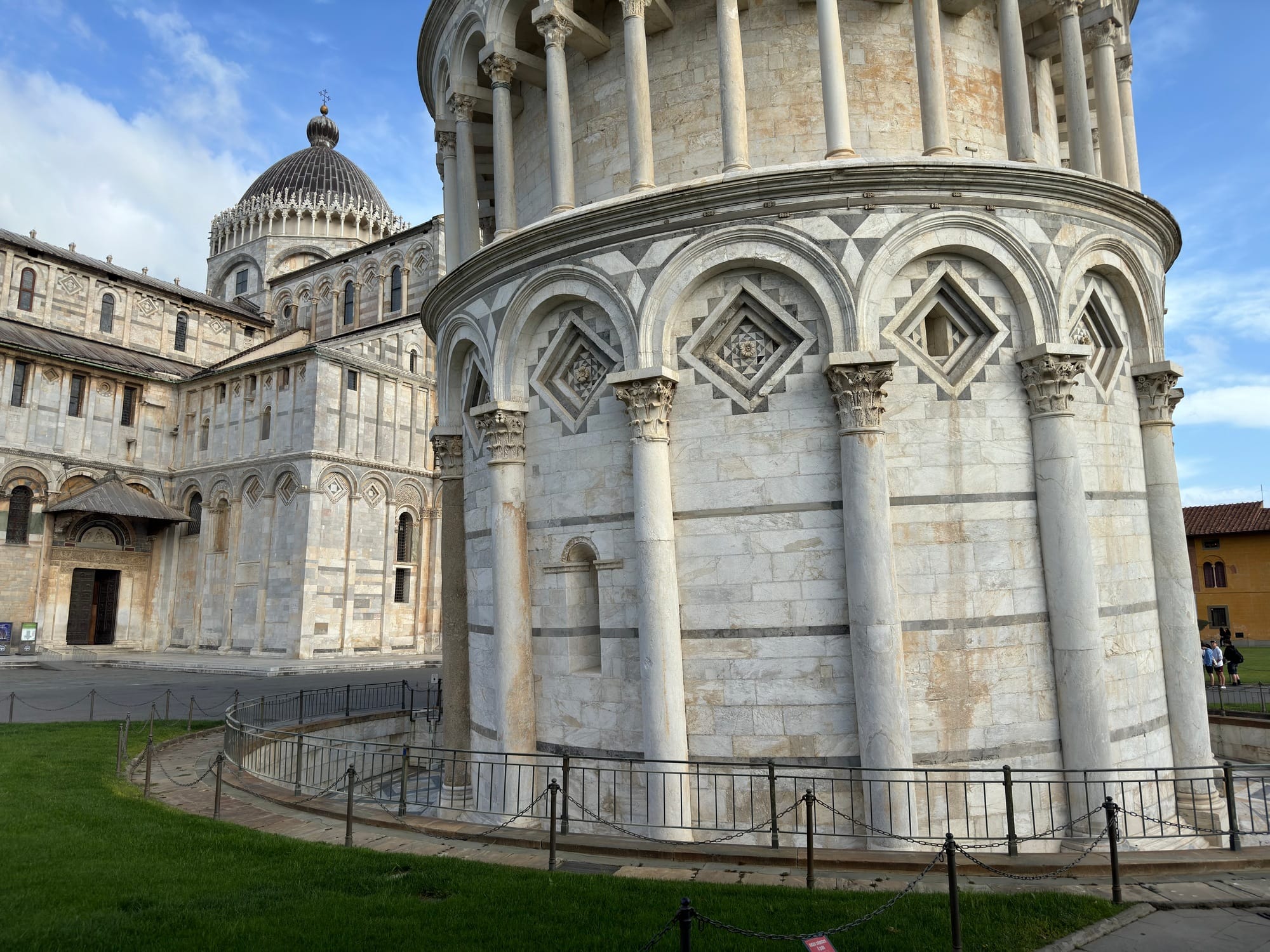
The genius of Bonanno Pisano, the presumed architect of the tower, is evident in his use of innovative structural solutions such as arcades and ribs that strengthen its structure. The white marble from which the tower is built gives it elegance and lightness, and its 8 stories rise to a height of 56.67 m on the higher side and 55.86 m on the lower side.
Over the centuries the Leaning Tower of Pisa has become a symbol of the city and one of the most recognizable monuments in the world. Although in 1990 the tower was closed to visitors due to safety concerns, after extensive restoration and ground stabilization it was reopened to visitors in 2001. Currently the tower's deviation from vertical is about 3.9 degrees, which is an impressive figure considering its age and history.
Besides the Leaning Tower of Pisa, it's also worth seeing other monuments in the city, such as the Cathedral, the Baptistery, the Camposanto Monumentale, and the Piazza dei Miracoli.
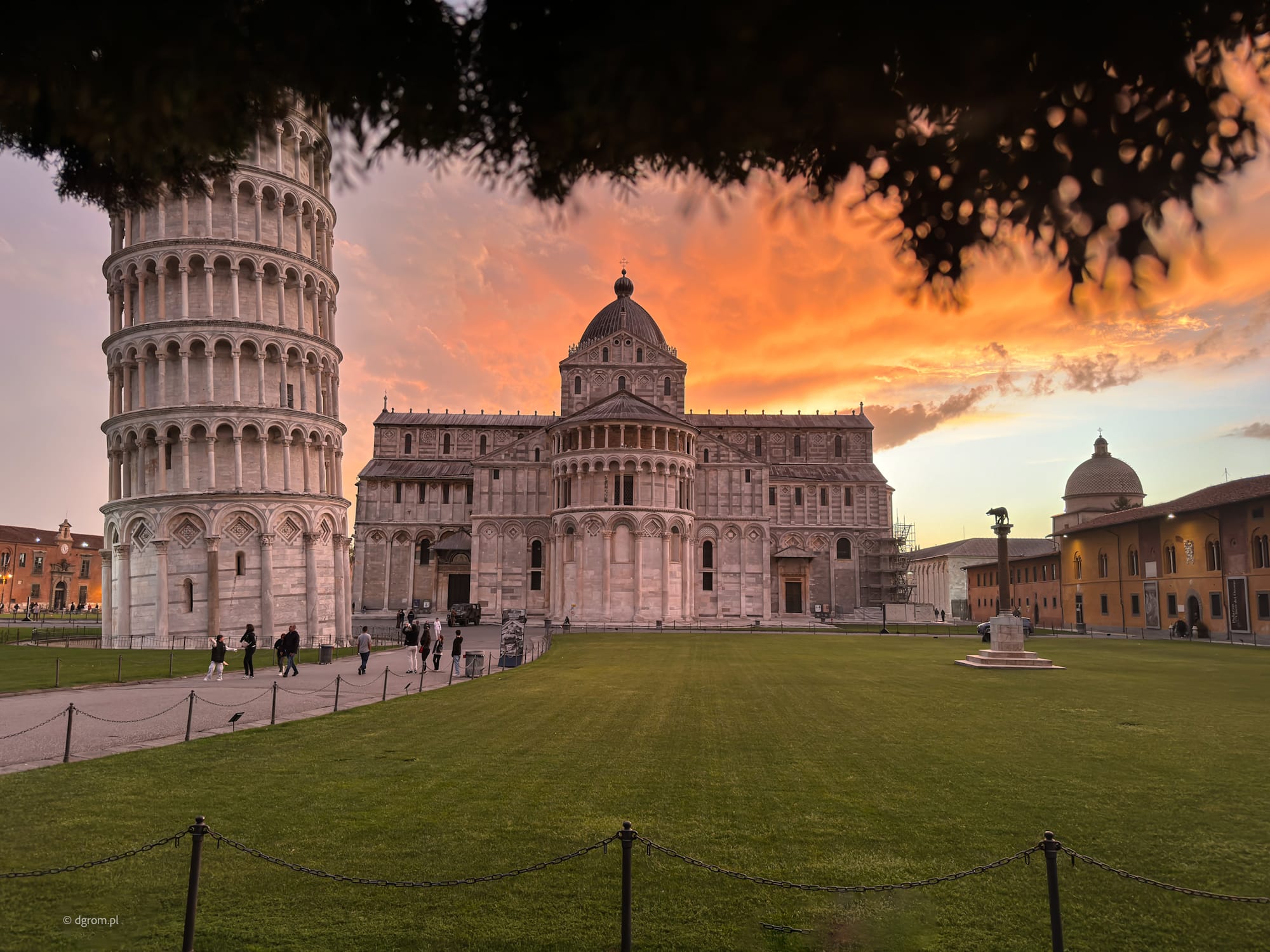
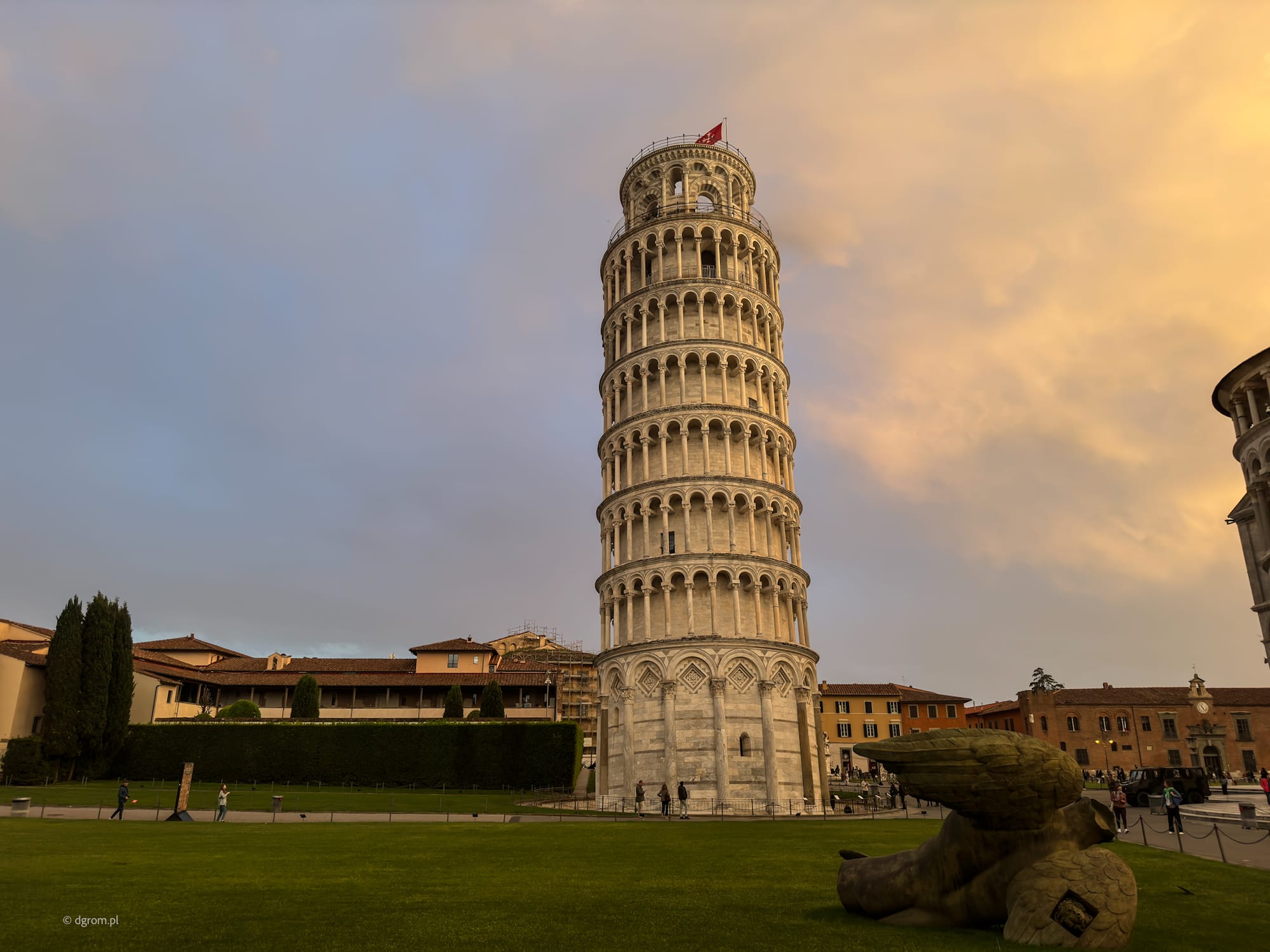
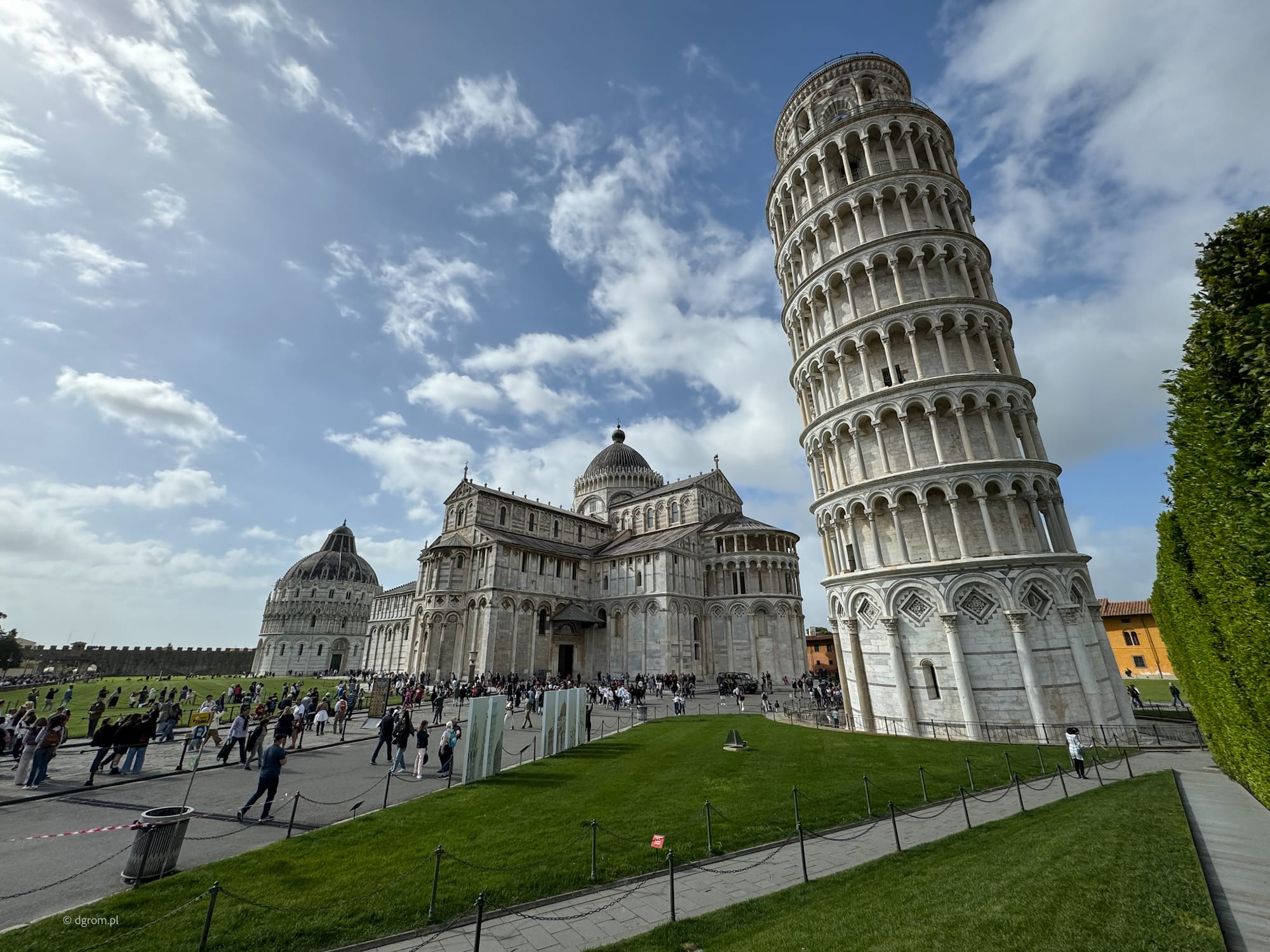
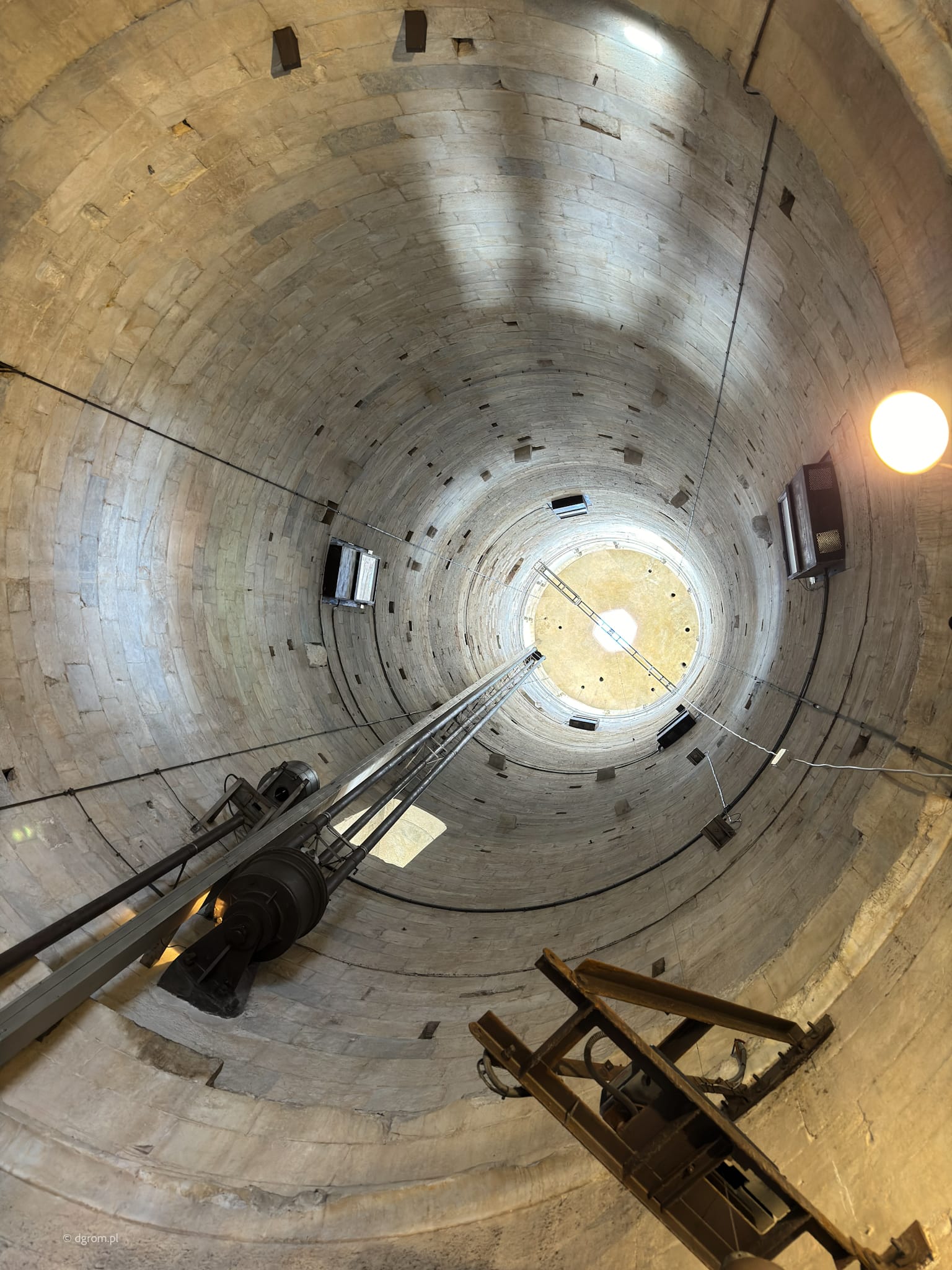
My impressions from visiting the Leaning Tower of Pisa were extremely positive. From afar you can see its impressive size and characteristic lean. Touring the interior of the tower is a fascinating experience, and the view from its top takes your breath away.
If you are planning a trip to Italy, the Leaning Tower of Pisa should definitely be on your list of places to visit. It is not only an impressive architectural monument, but also has a fascinating history full of challenges and innovative solutions.
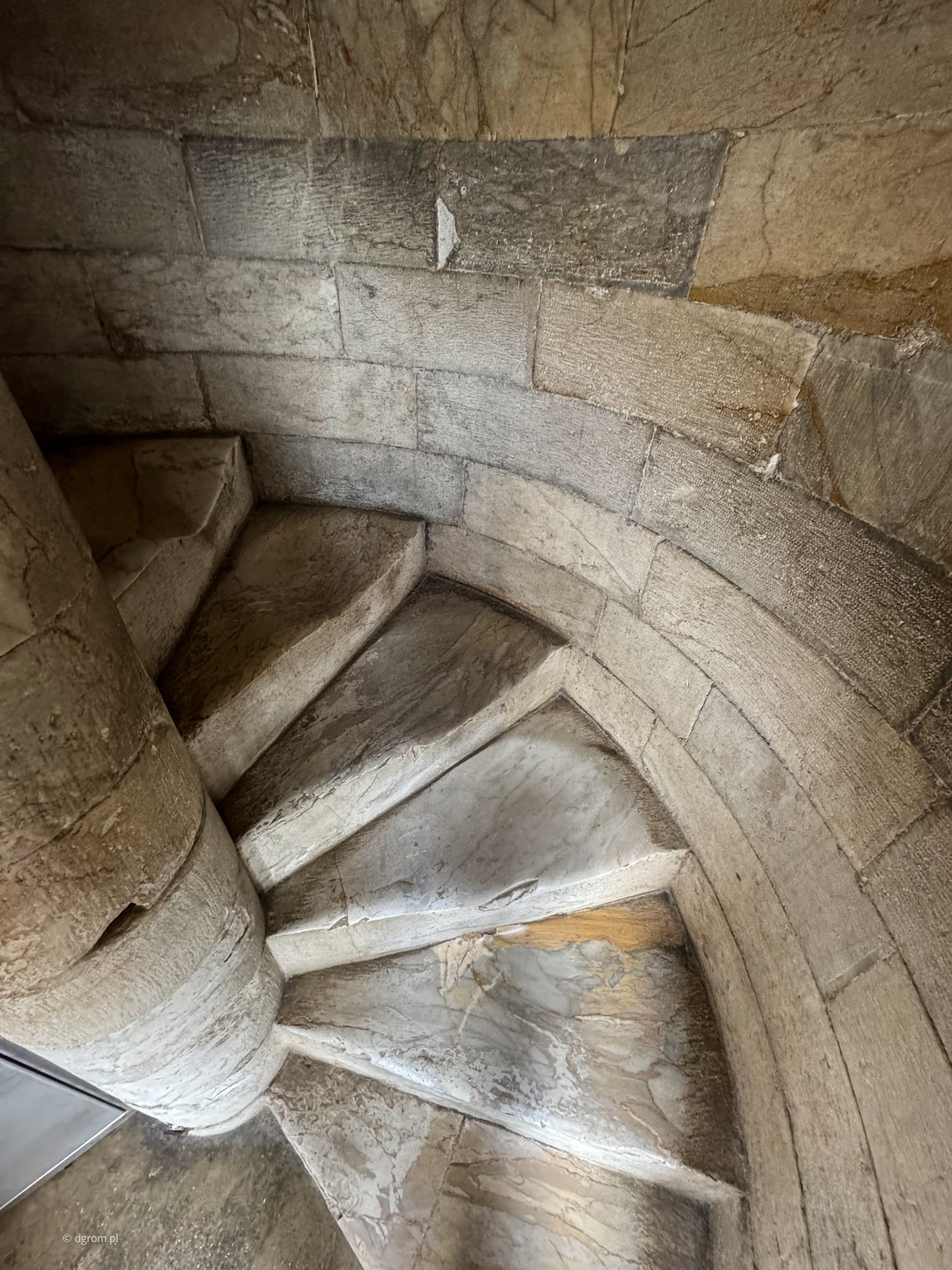
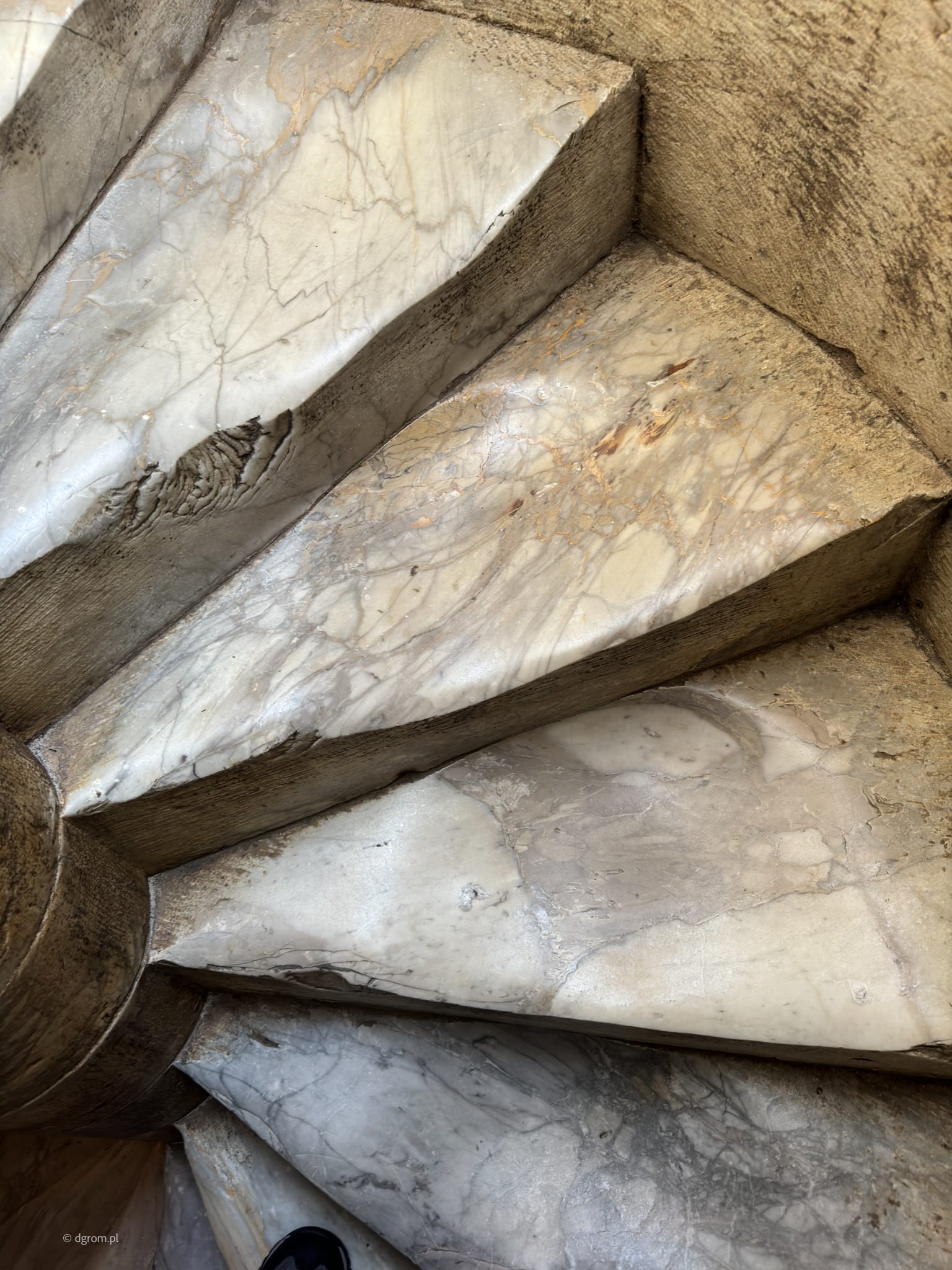
The Leaning Tower of Pisa has 251 steps that you have to climb to reach the top. The marble stairs spiral around the tower's eight storeys. There is no lift 🙃
Legends of the Leaning Tower of Pisa
The Leaning Tower of Pisa, in addition to its impressive architecture and turbulent history, has also become surrounded by many legends. Here are a few of them:
1. Bonanno Pisano and the Devil:
According to legend, Bonanno Pisano, the architect of the tower, made a pact with the devil to gain the knowledge and skills necessary to build such an impressive structure. The devil agreed to help him, but on the condition that Bonanno would fail to complete the construction within a specified time. As the deadline approached, Bonanno, in desperation, began to pray to God. An angel then appeared and helped him finish the construction. The enraged devil tried to topple the tower, but to no avail.
2. Galileo Galilei and falling objects:
One of the best-known legends says that it was from the Leaning Tower of Pisa that Galileo Galilei dropped objects of different weights to prove his theory of gravity. Although there is no historical evidence for this, the legend has become a symbol of Galileo's contribution to science.
3. Pisa and Venice:
According to legend, the Leaning Tower of Pisa and St. Mark's Campanile in Venice are locked in an endless duel. Both towers continually tilt, trying to outwit the other. It is said that if one falls, the other will fall as well.
4. Miraculous stabilization:
Some claim that the Leaning Tower of Pisa owes its stability to a miracle. According to legend, the Virgin Mary saved the tower from collapse by intervening in response to the prayers of Pisa's residents.
5. Bonanno Pisano's prophecy:
The legend says that Bonanno Pisano foretold that the Leaning Tower of Pisa would lean but never fall. So far his prophecy has held true, and the tower still stands, to the astonishment and delight of tourists from around the world.
Remember that legends are not just stories, but also a testament to past beliefs, values, and human imagination. Although they are not always true, they add charm and mystery to historical sites such as the Leaning Tower of Pisa.
Continue reading in this gallery
Italy
Sirmione and Desenzano del Garda
After Venice and Verona,our next stop in Italy took us towards Lake Garda.This part of the journey had a very different rhythm from the cities we had visited before.Venice was intense,beautiful and almost unreal.Verona felt elegant,romantic and full of history.
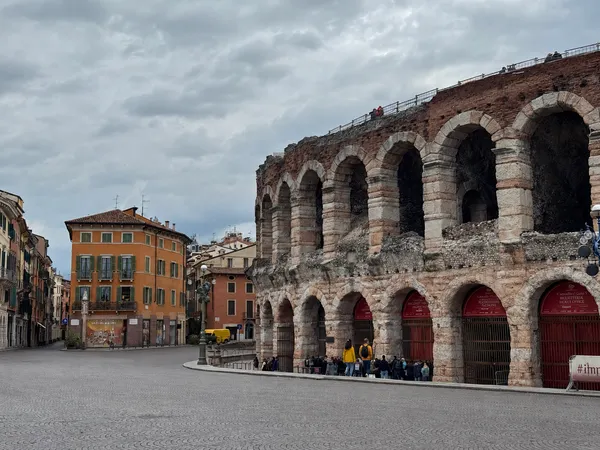
Italy
Verona:A Romantic City,but So Much More
After Venice,it was time for Verona.And I have to admit,I was very curious to see how I would feel about the city after visiting somewhere as extraordinary as Venice.Venice feels a little like a dream—a city built on water,filled with canals,bridges and narrow passageways.
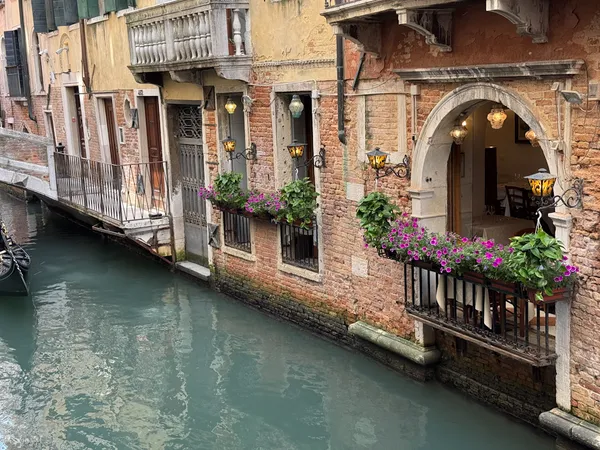
Italy
Venice, which I wanted to see with my own eyes
For a long time I dreamed of seeing Venice in person. Not just in photos, in films, on postcards or in short clips from travel shows. I wanted to step into the city, feel its rhythm, and see the water reflecting the light.
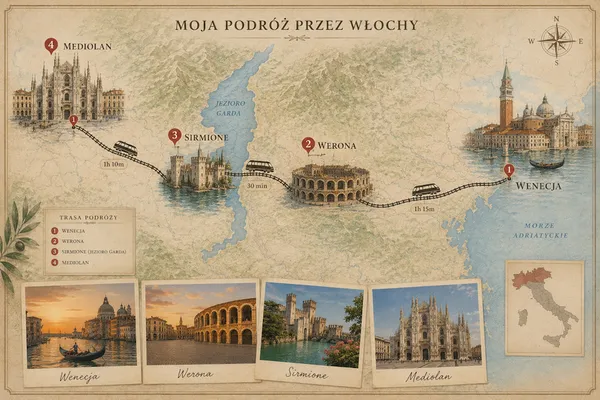
Italy
By Train Through Northern Italy
Some trips are planned for months. Others are born from a simple idea: to take a train and see a few remarkable places. That's how our journey through northern Italy began, taking us through Venice, Verona, Sirmione on Lake Garda and Milan.