
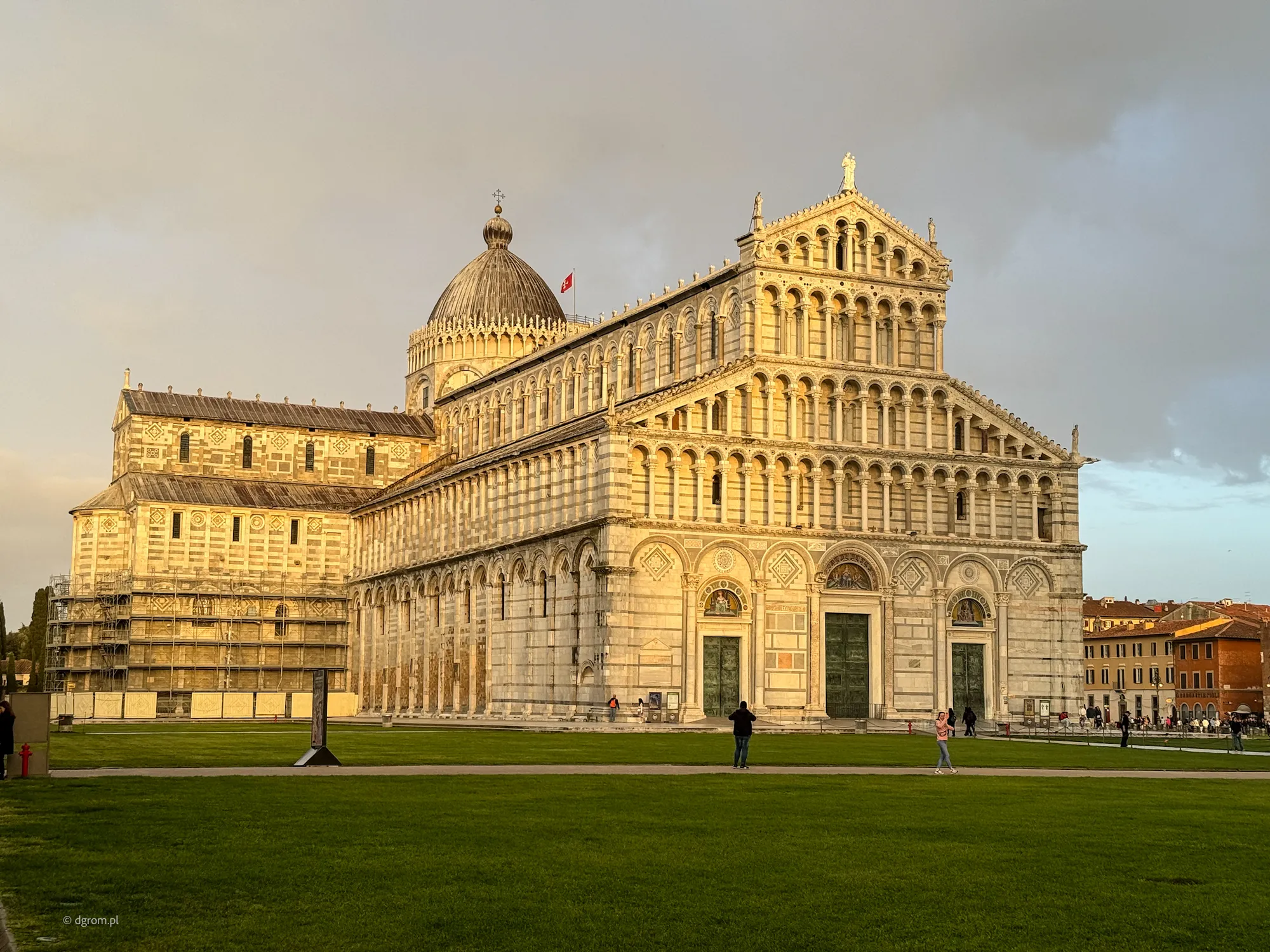
Piazza dei Miracoli (Square of Miracles)
The Cathedral (Duomo) in Pisa is an extraordinary structure that amazes with its monumentality and richness of detail. Built in the Pisan-Romanesque style, it represents one of the most important architectural achievements of that period in Italy.

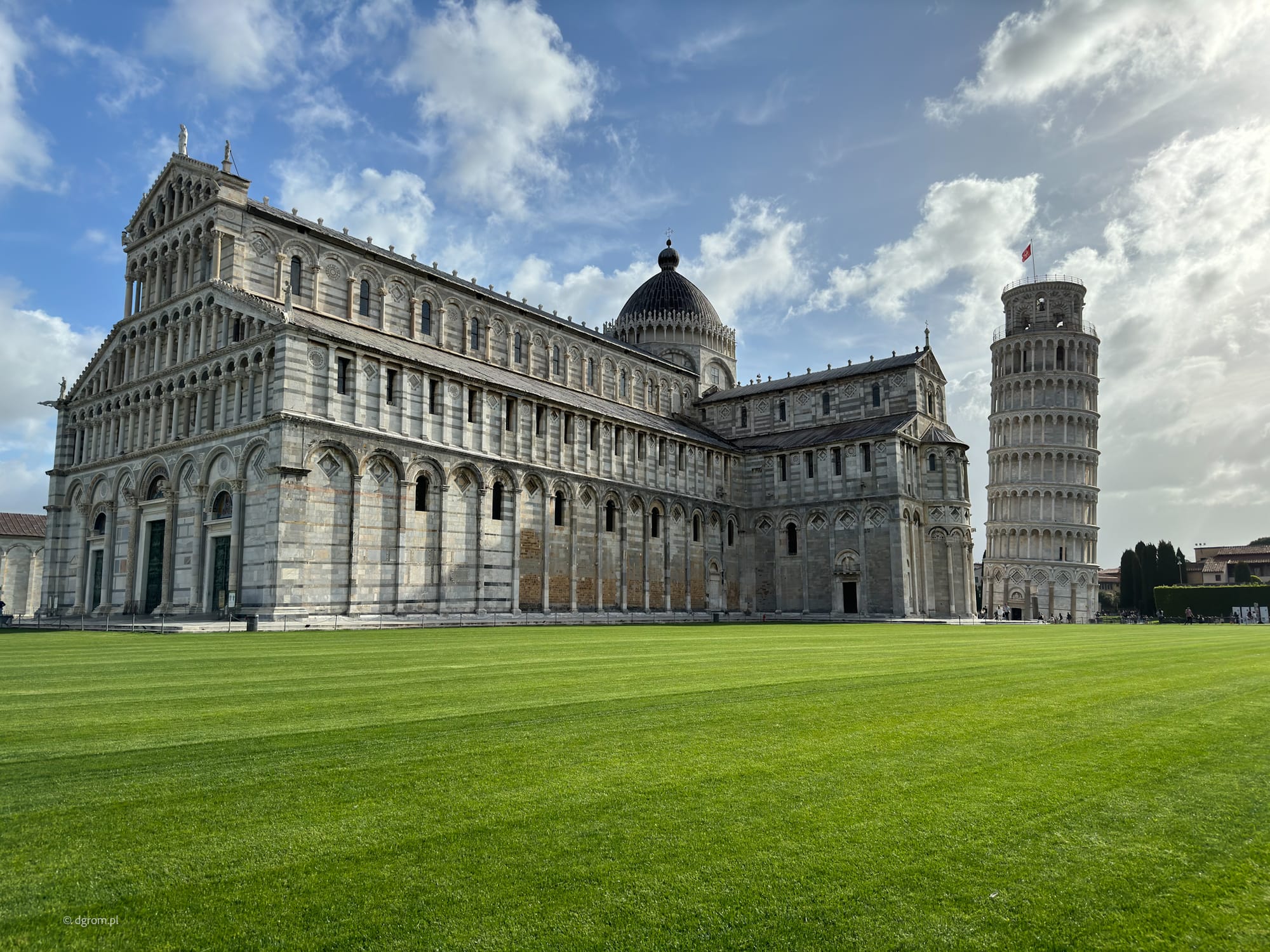
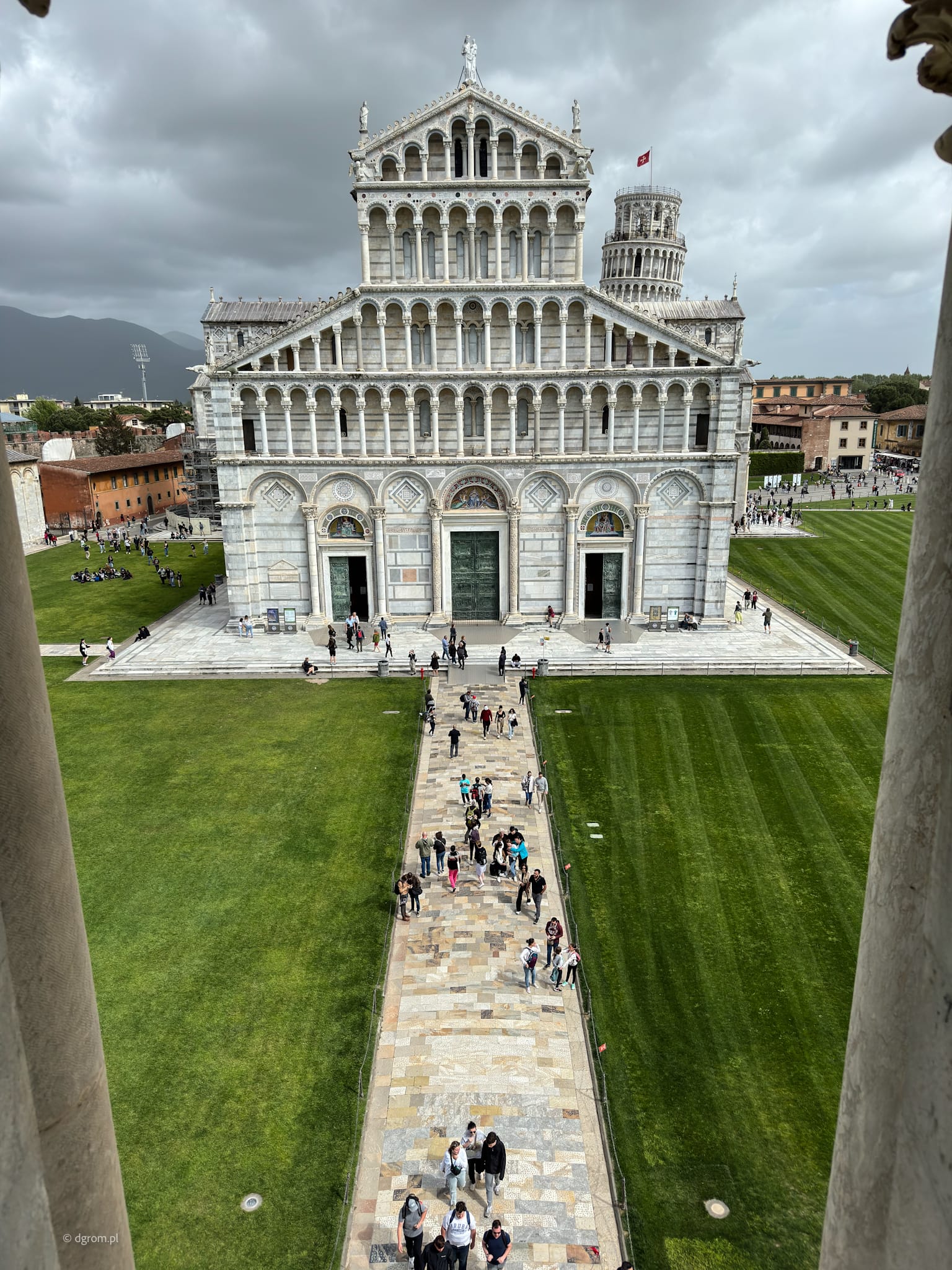
The Cathedral complex in Pisa, also known as Piazza dei Miracoli (Square of Miracles), is a stunning architectural ensemble located in the very heart of Pisa, Italy. It consists of four impressive religious buildings:
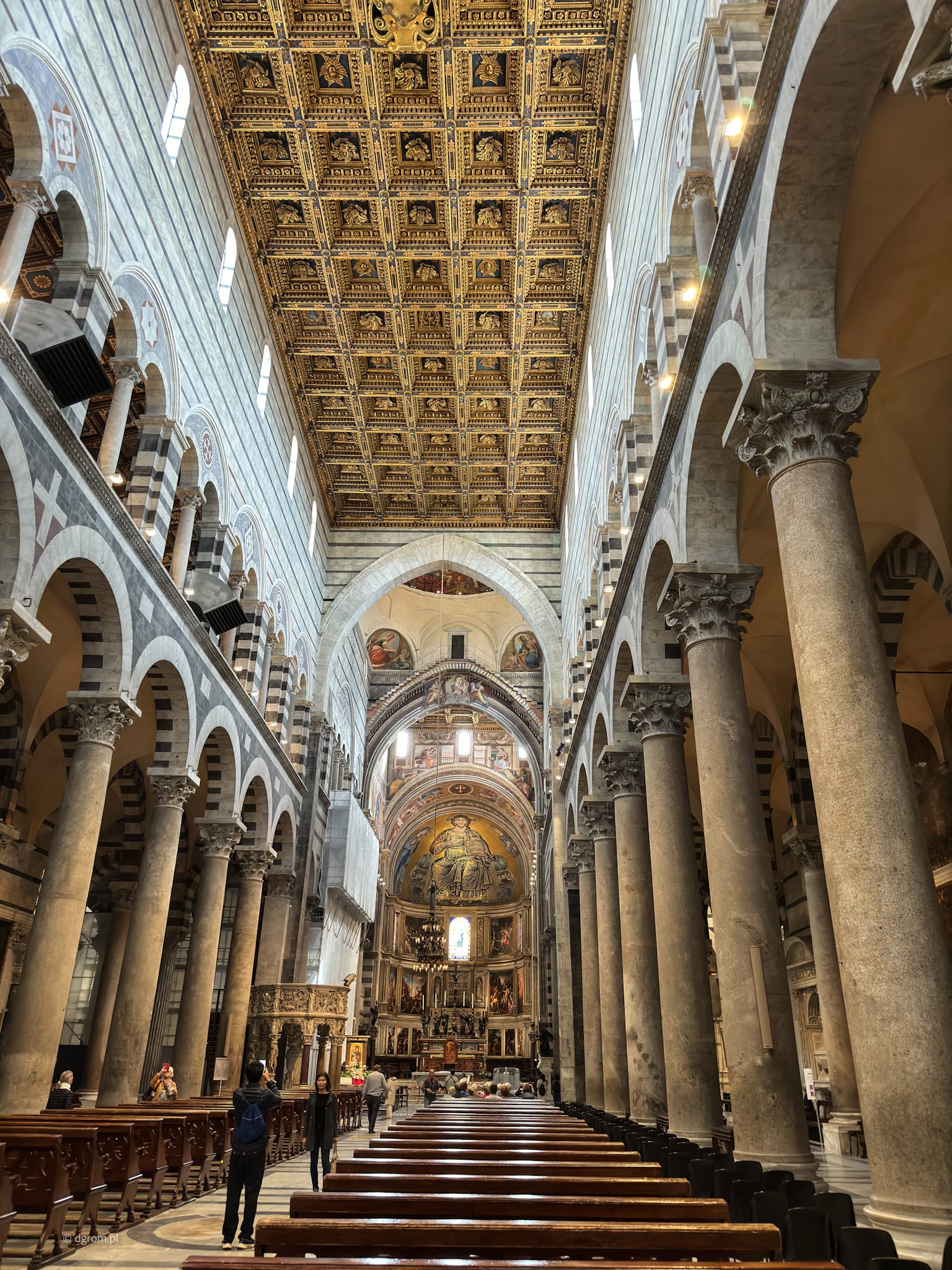
- The Cathedral (Duomo) in Pisa is an extraordinary structure that amazes with its monumentality and richness of detail. Built in the Pisan-Romanesque style, it represents one of the most important architectural achievements of that period in Italy. Dedicated to the Assumption of the Blessed Virgin Mary, the cathedral is not only a place of religious worship but also a masterpiece of art and a symbol of religious faith.
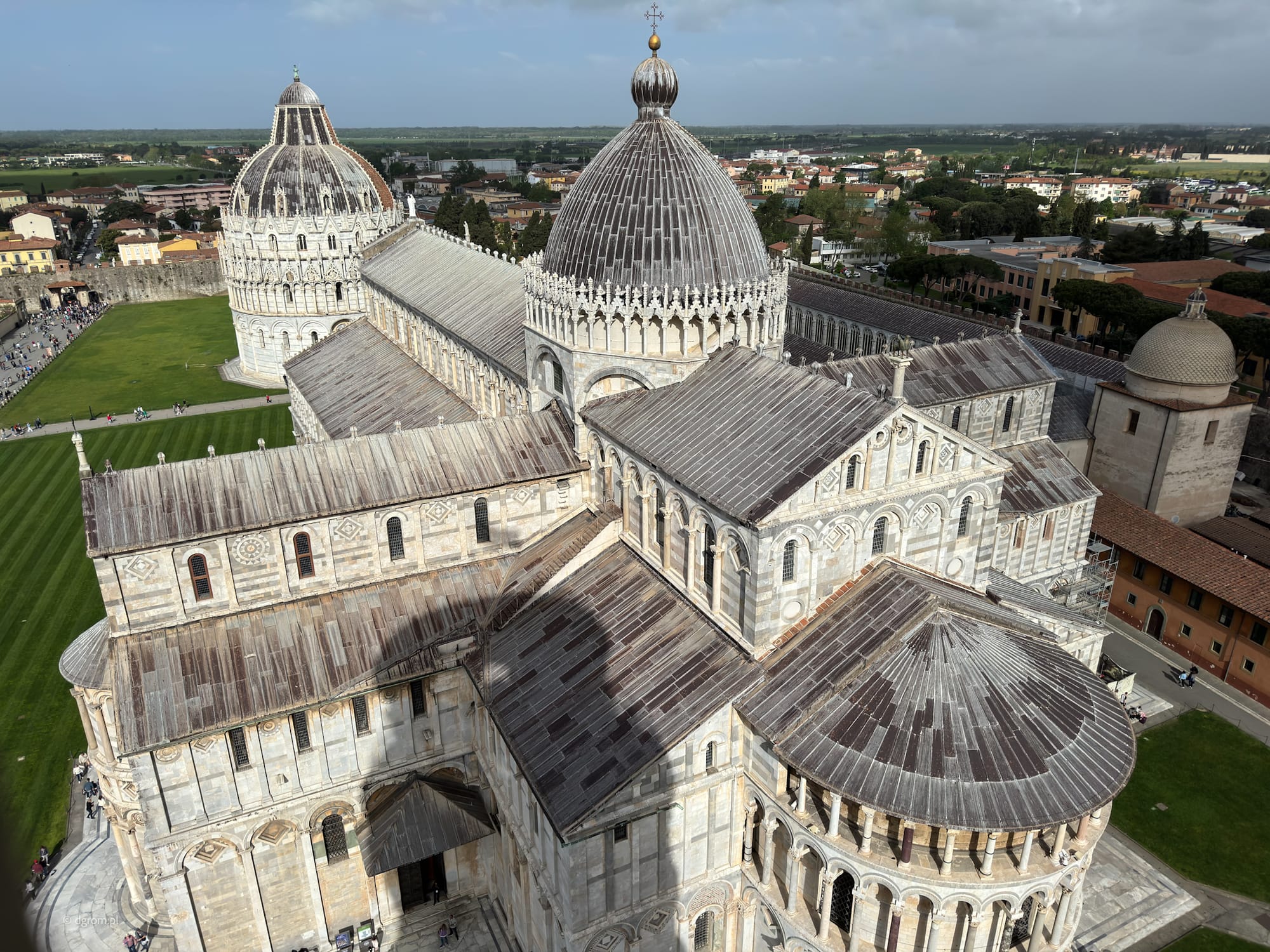
The cathedral's façade is undoubtedly one of the most impressive elements of the complex. It is decorated with marble slabs in varying shades, giving it unique depth and contrast. Details carved in marble form intricately composed arrangements depicting biblical scenes and symbolic religious motifs. Every detail of the façade is carefully executed, adding to its exceptional radiance and splendor.
The cathedral's interior continues this magnificent effect, displaying rich decoration and monumentality. Tall columns, arches and vaults give the interior a sense of space and majesty. Paintings, mosaics and frescoes adorning the cathedral's walls draw the eye and evoke an atmosphere of spiritual uplift.
One of the most prized elements of the cathedral's interior is the baptismal font of St. John. This marble sculptural masterpiece impresses with its refined form and details. The sculptures depicting biblical scenes and figures of saints are exceptionally realistic and expressive, making the baptismal font not only an object of worship but also a work of art of great aesthetic value.
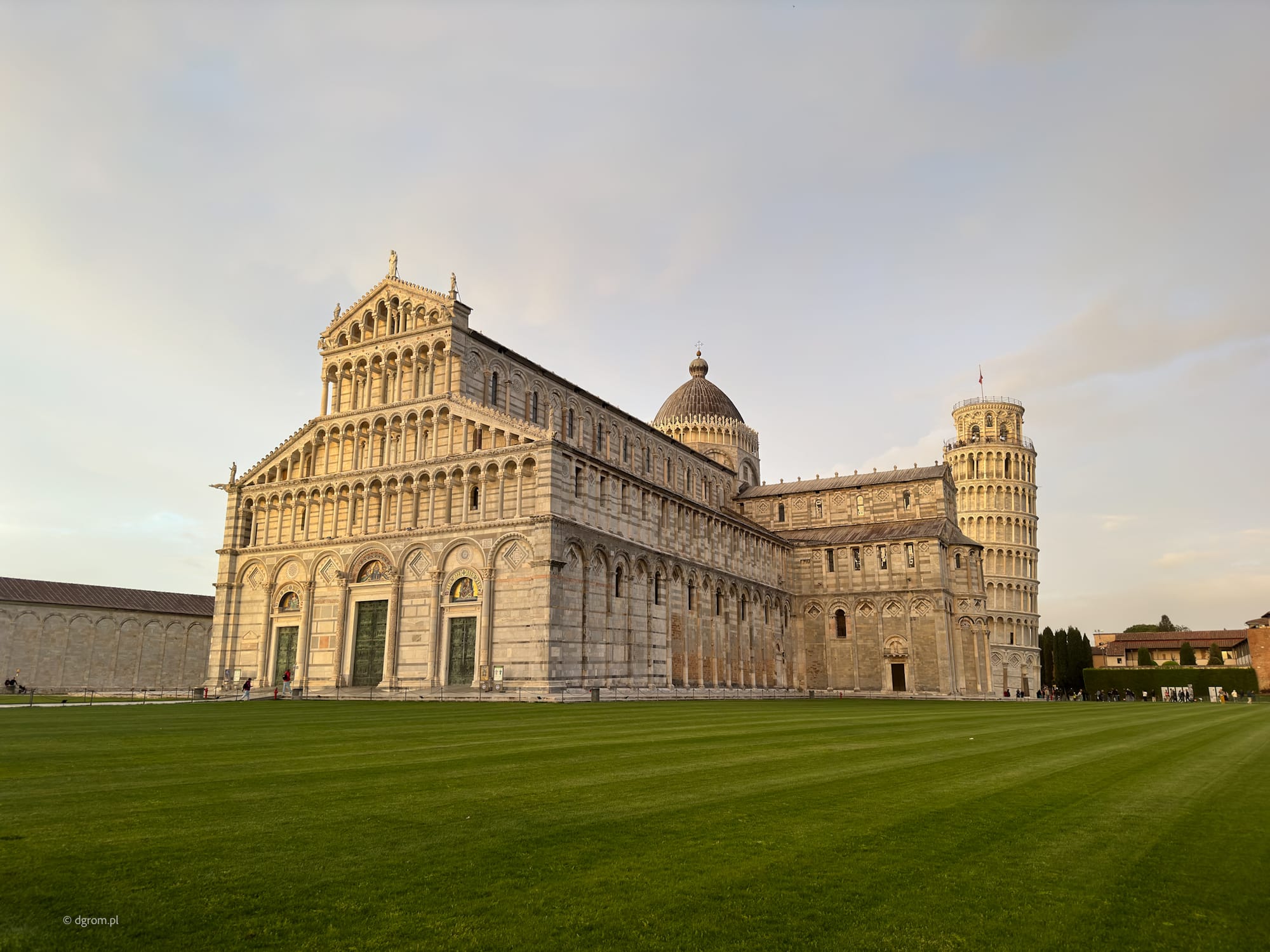
The Cathedral of Pisa, both exterior and interior, stands as an unmistakable testament to the genius and building knowledge of the master builders of its time. It is a place that not only inspires spiritually but also delights with its beauty and uniqueness, drawing many visitors from around the world.
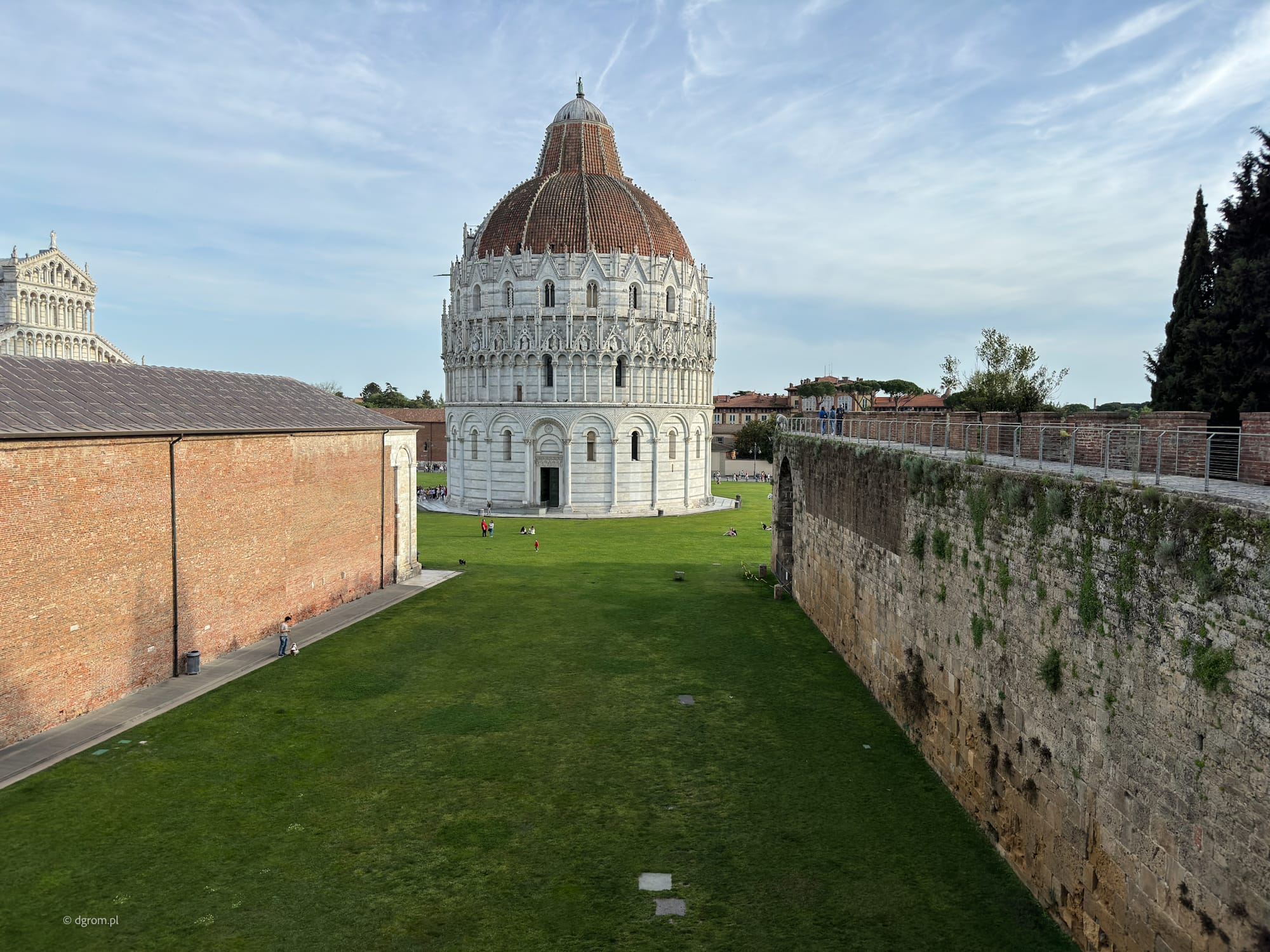
- Baptistery in Pisa, also known as the Baptistery of St. John, is one of the most recognizable buildings in Italy, located on the famous Piazza dei Miracoli (Square of Miracles) alongside other monuments such as the Cathedral in Pisa and the Leaning Tower.
Construction of the baptistery began in 1152 and continued for several centuries, finally completed in 1363. The architect who began the project was Diotisalvi, as documented by a stone bearing his signature placed on the façade. The structure, built mainly of white marble, combines elements of Romanesque, Gothic and early Renaissance styles, reflecting the long period of construction.
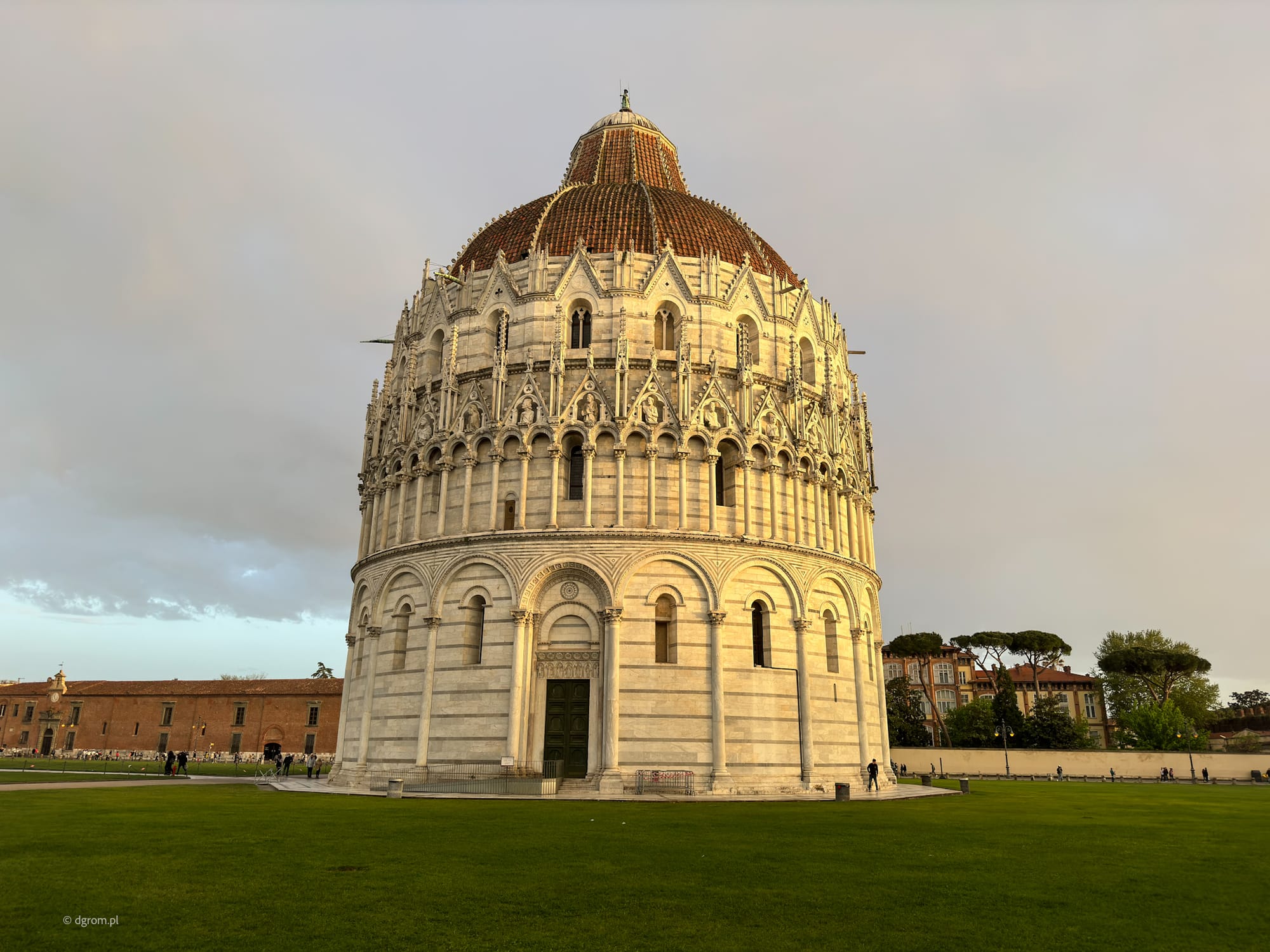
The baptistery has a diameter of about 34 meters and a height of about 55 meters, making it the largest baptistery in Italy. Its exterior form is circular, which is typical for baptisteries of this period, symbolizing wholeness and eternity.
Inside, the baptistery is known for its extraordinary acoustics, often demonstrated to visitors by singing or other sounds that are lengthened and amplified by the unique construction of the dome. There is also an exceptional 12th-century baptismal font inside, which was used to baptize the famous scientist Galileo Galilei in 1564.
The interior is also decorated with numerous sculptures and frescoes. One of the most impressive decorative elements is the pulpit designed by Niccolò Pisano, who is considered a forerunner of Renaissance sculpture. The pulpit depicts scenes from the life of Christ and is regarded as a masterpiece of medieval sculptural art.
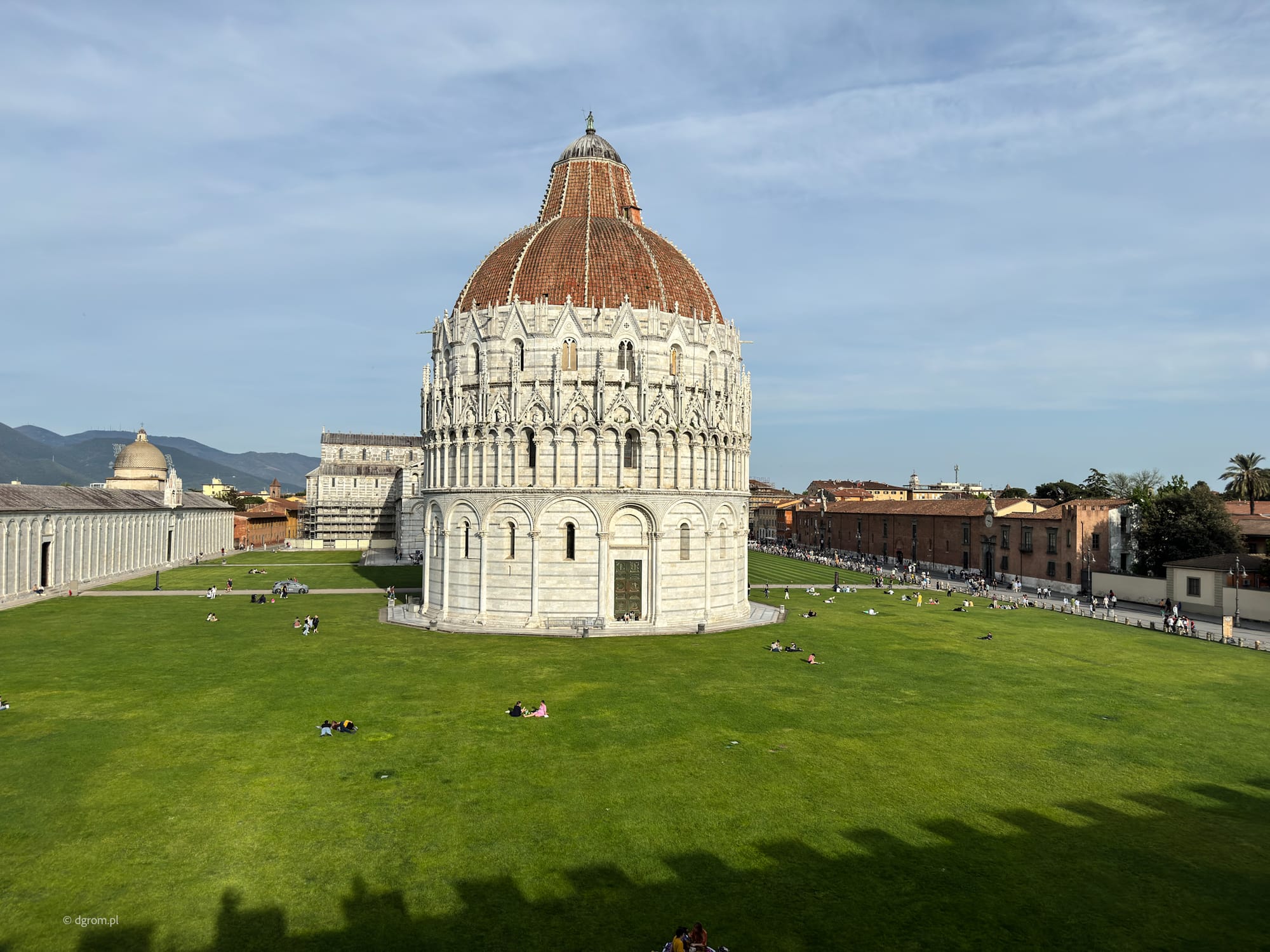
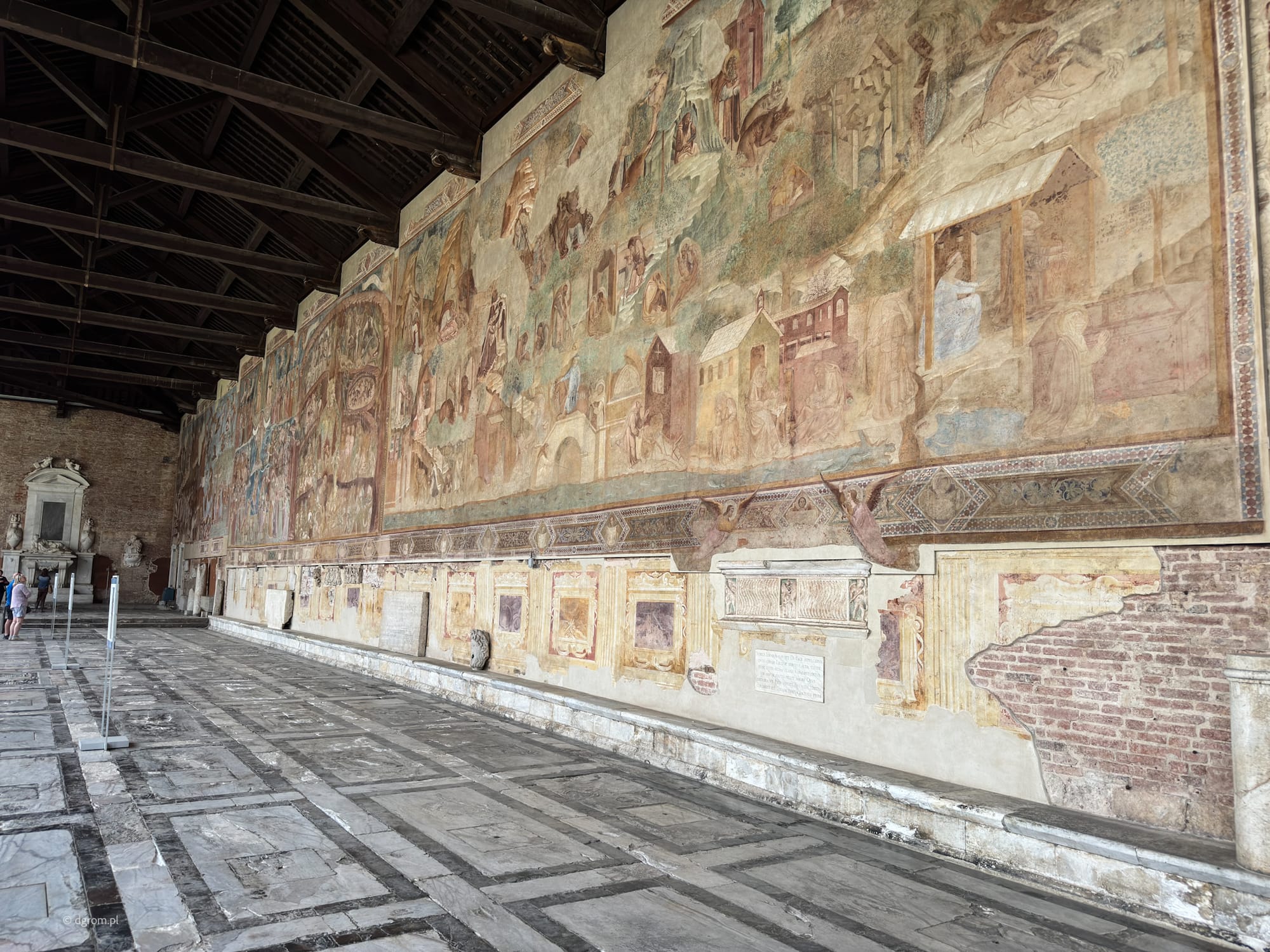
- Camposanto Monumentale, i.e., the Monumental Cemetery, is also located on the Piazza dei Miracoli in Pisa, right next to other historic buildings such as the Cathedral, the Baptistery and the Leaning Tower. It is one of the oldest cemeteries in Europe, and its remarkable architecture and history attract large numbers of tourists.
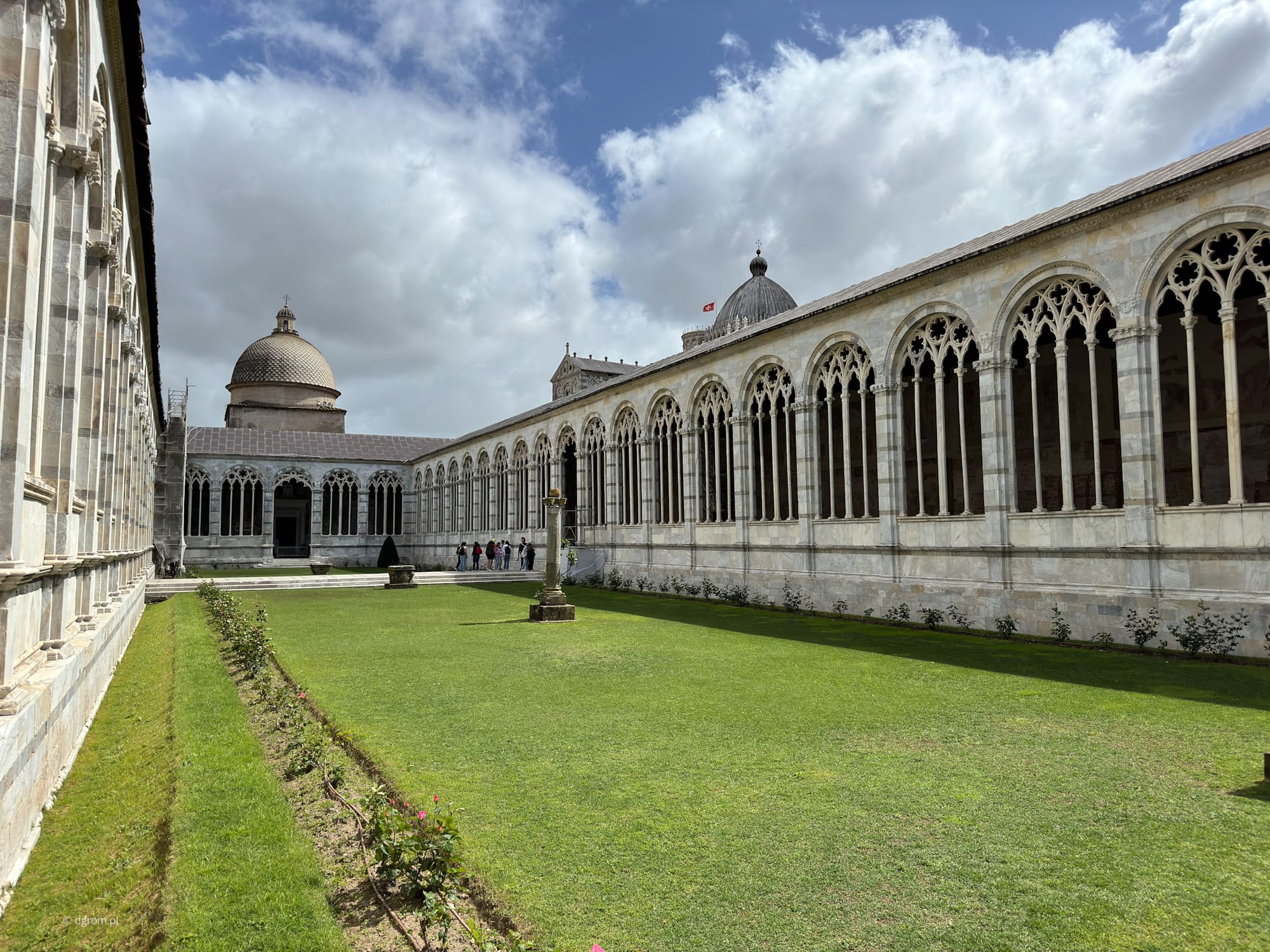
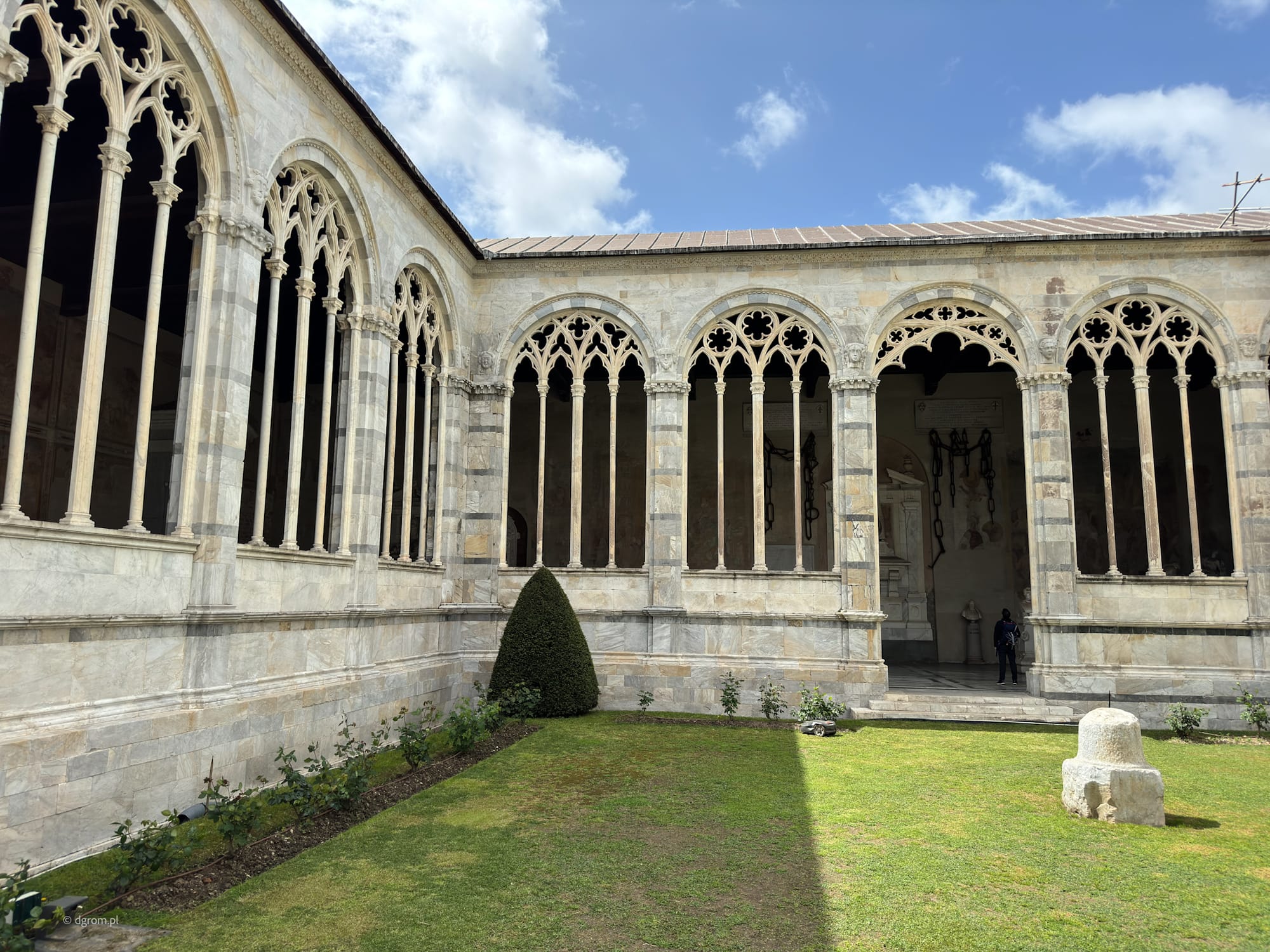
Construction of the Camposanto began in 1277 under the direction of the architect Giovanni di Simone. The cemetery was designed around sacred soil that, according to legend, was brought from Golgotha during the Fourth Crusade. It is a large, rectangular building surrounded by arcaded cloisters that form an internal courtyard.
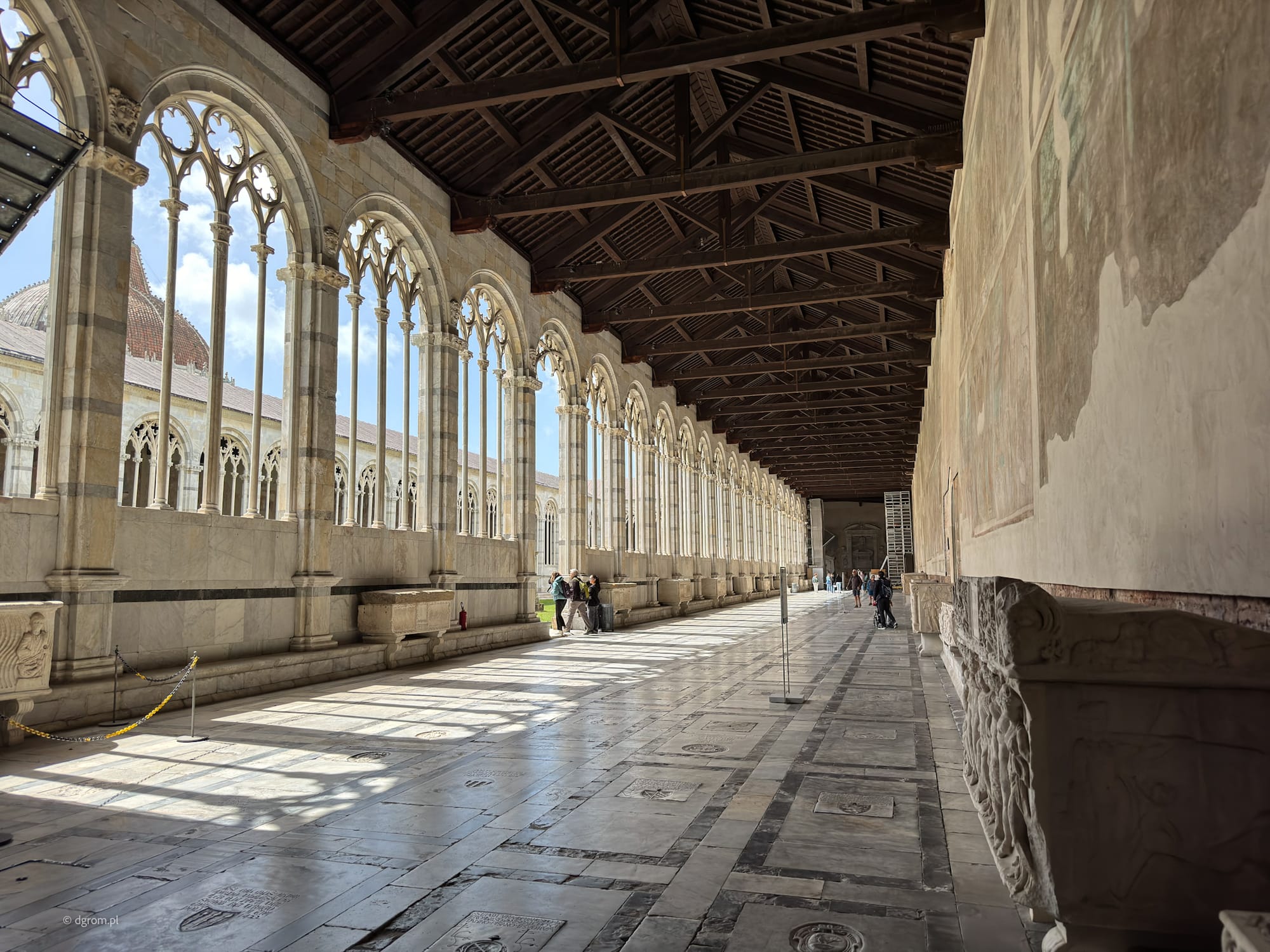
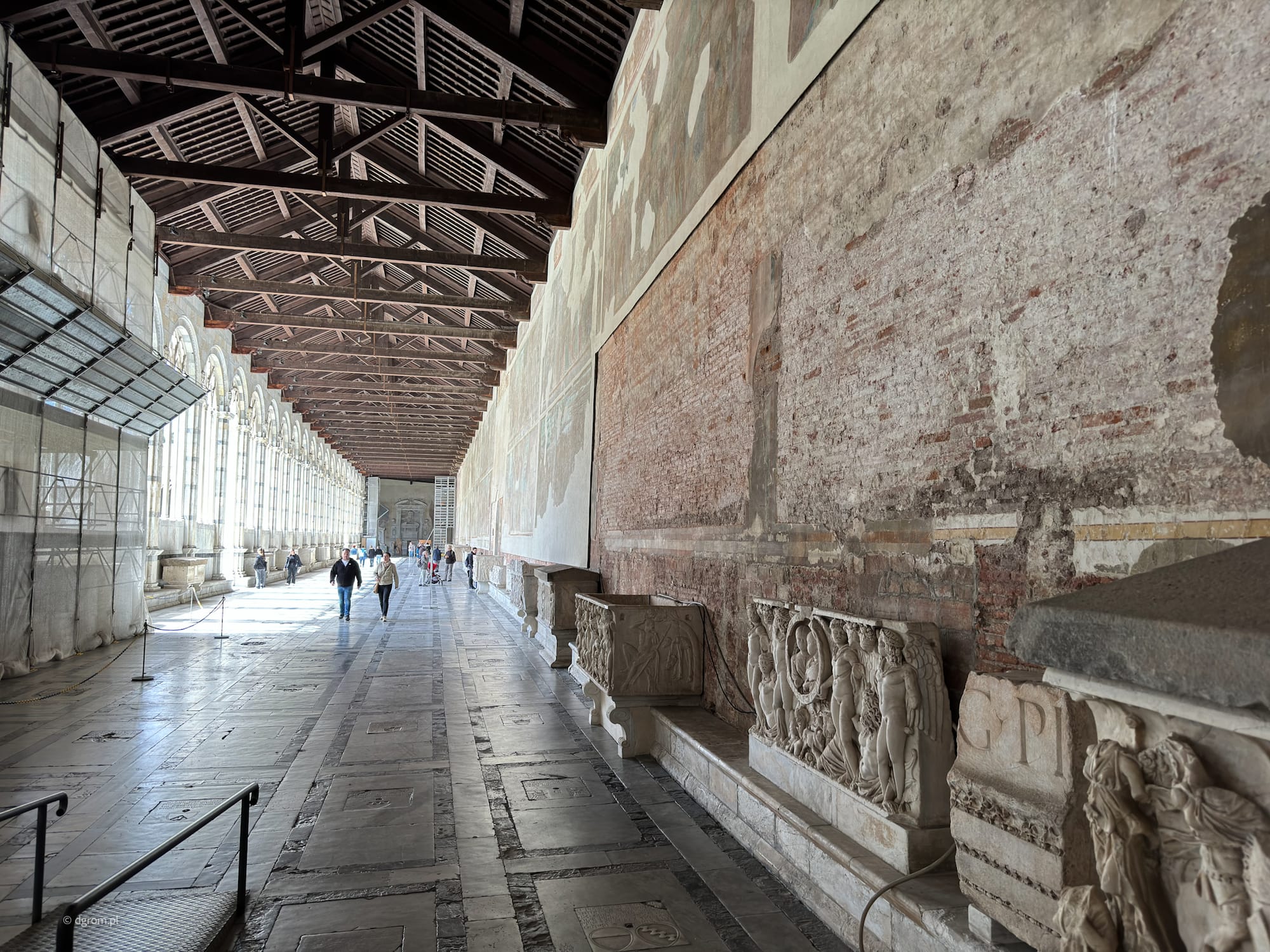
The architecture of the Camposanto combines Gothic and Romanesque elements, and the cloisters are an example of the mastery of Gothic art. The cloister columns are richly decorated, which gives the cemetery a monumental and majestic character. The spaces between the arcades are filled with numerous sarcophagi dating from different periods, from antiquity to the Middle Ages. Many of them are the work of outstanding artists and craftsmen of the time.
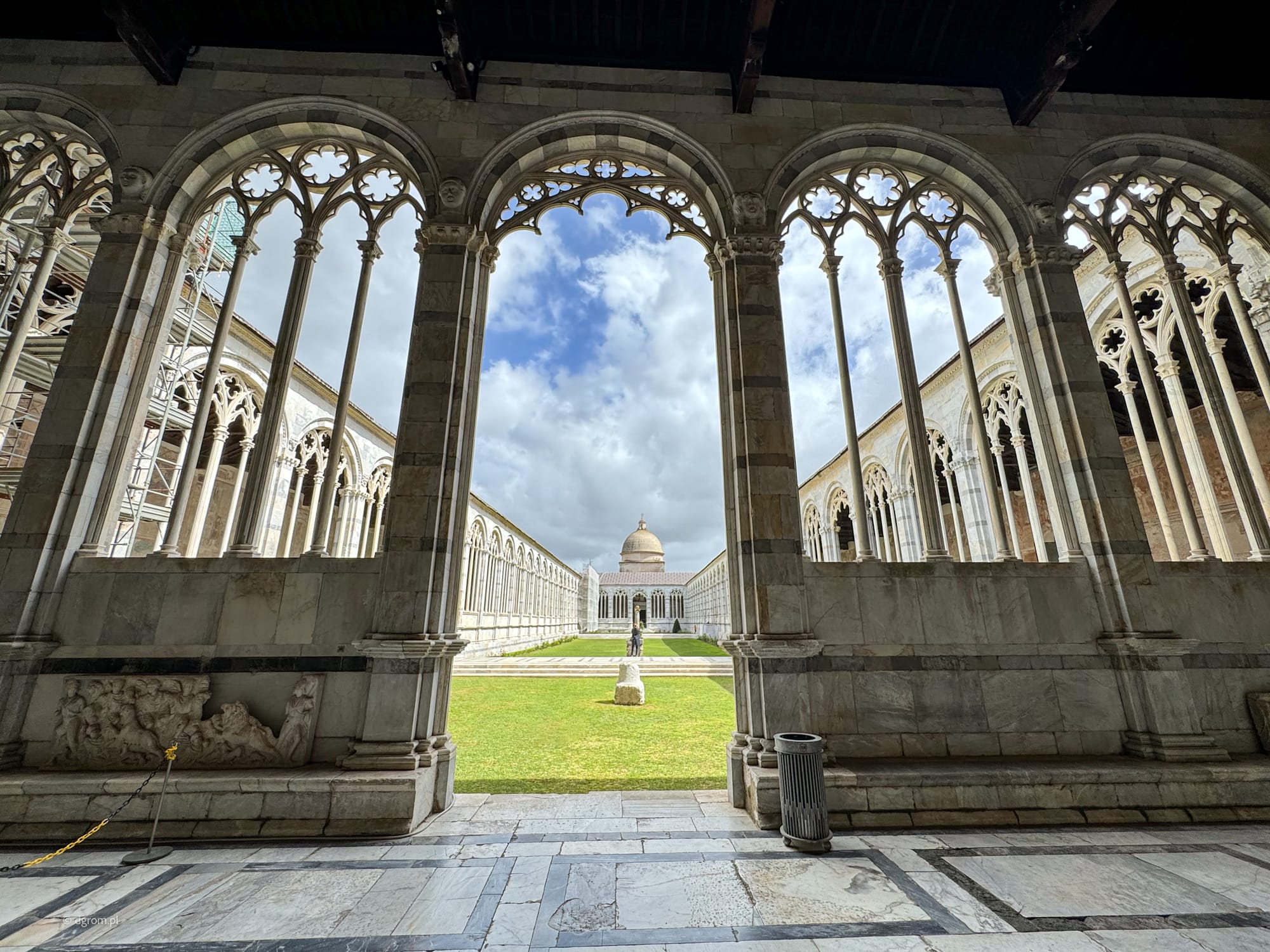
The Camposanto is also a well-known resting place for many notable citizens of Pisa, including several significant historical and artistic figures. Many of the graves and sarcophagi are richly decorated, reflecting the status and importance of the people buried there.
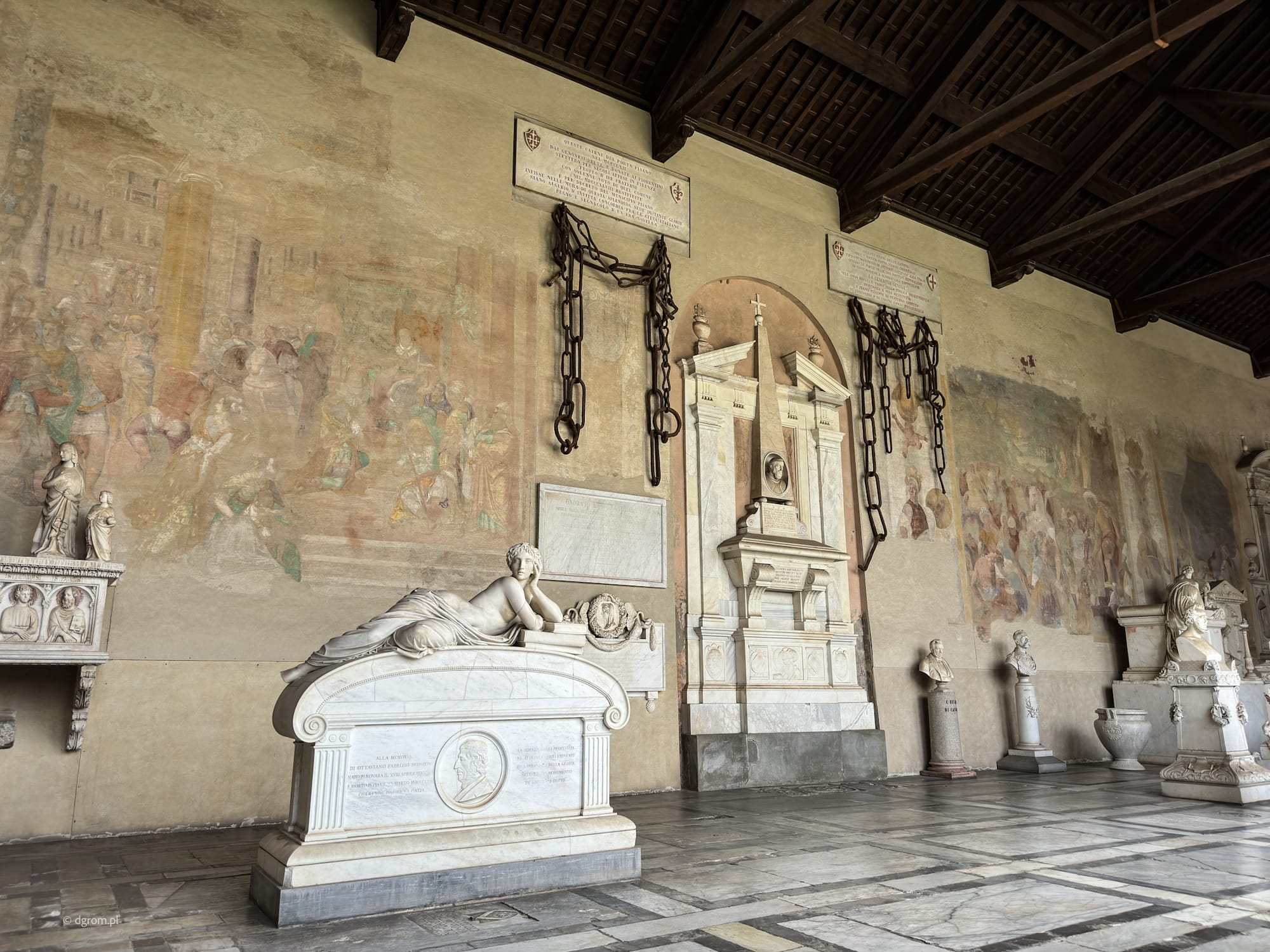
Before World War II the Camposanto was also famous for the extraordinary frescoes covering the cloister walls. Unfortunately, many of them were destroyed during the 1944 bombings, but restoration work has been ongoing since then. Some of the most significant frescoes that survived or have been restored are works by artists such as Benozzo Gozzoli and Francesco Traini.
Continue reading in this gallery
Italy
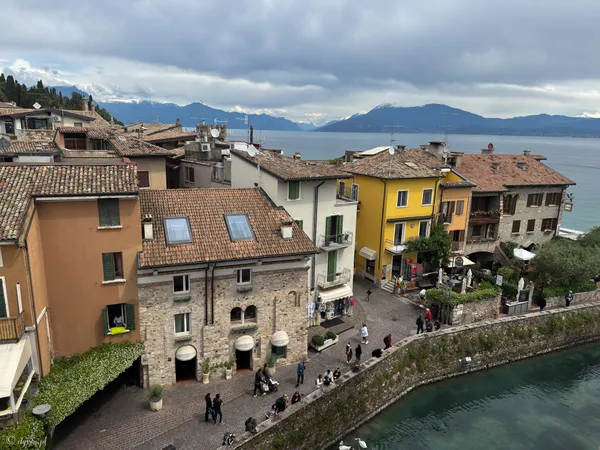
Sirmione and Desenzano del Garda
After Venice and Verona,our next stop in Italy took us towards Lake Garda.This part of the journey had a very different rhythm from the cities we had visited before.Venice was intense,beautiful and almost unreal.Verona felt elegant,romantic and full of history.
Italy
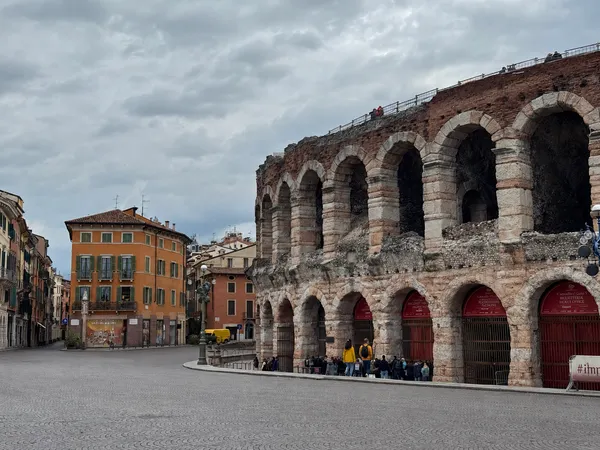
Verona:A Romantic City,but So Much More
After Venice,it was time for Verona.And I have to admit,I was very curious to see how I would feel about the city after visiting somewhere as extraordinary as Venice.Venice feels a little like a dream—a city built on water,filled with canals,bridges and narrow passageways.
Italy
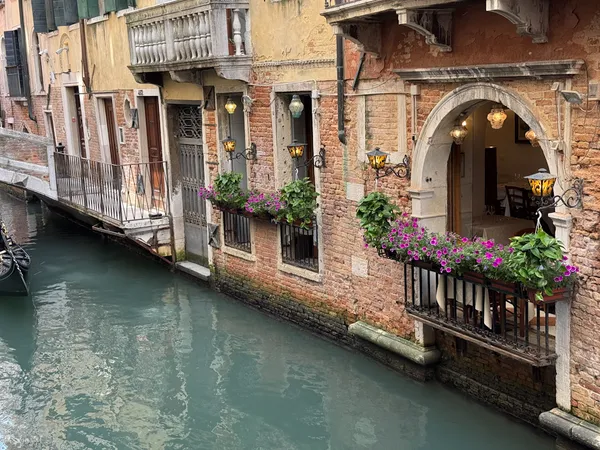
Venice, which I wanted to see with my own eyes
For a long time I dreamed of seeing Venice in person. Not just in photos, in films, on postcards or in short clips from travel shows. I wanted to step into the city, feel its rhythm, and see the water reflecting the light.
Italy
By Train Through Northern Italy
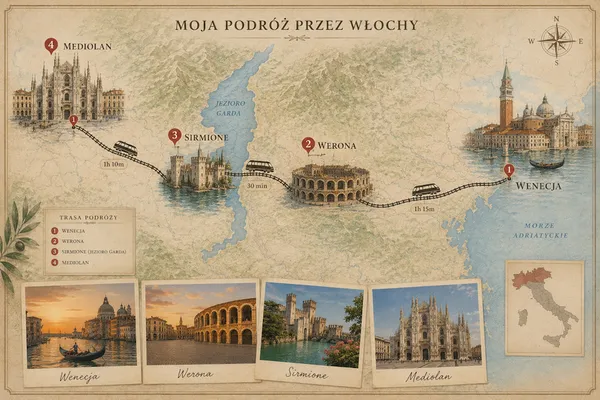
Some trips are planned for months. Others are born from a simple idea: to take a train and see a few remarkable places. That's how our journey through northern Italy began, taking us through Venice, Verona, Sirmione on Lake Garda and Milan.