
Gladstone’s Land
There’s something about Edinburgh’s Royal Mile that always draws me back. The crowds, the tartan shops, the sound of bagpipes, and the old stone buildings that seem as though they’ve stood here forever. Most of them have been altered so many times over the centuries that very little of the original

Gladstone’s Land – The House That Refused to Disappear
There’s something about Edinburgh’s Royal Mile that always draws me back. The crowds, the tartan shops, the sound of bagpipes, and the old stone buildings that seem as though they’ve stood here forever. Most of them have been altered so many times over the centuries that very little of the original remains. Gladstone’s Land is one of the rare exceptions.
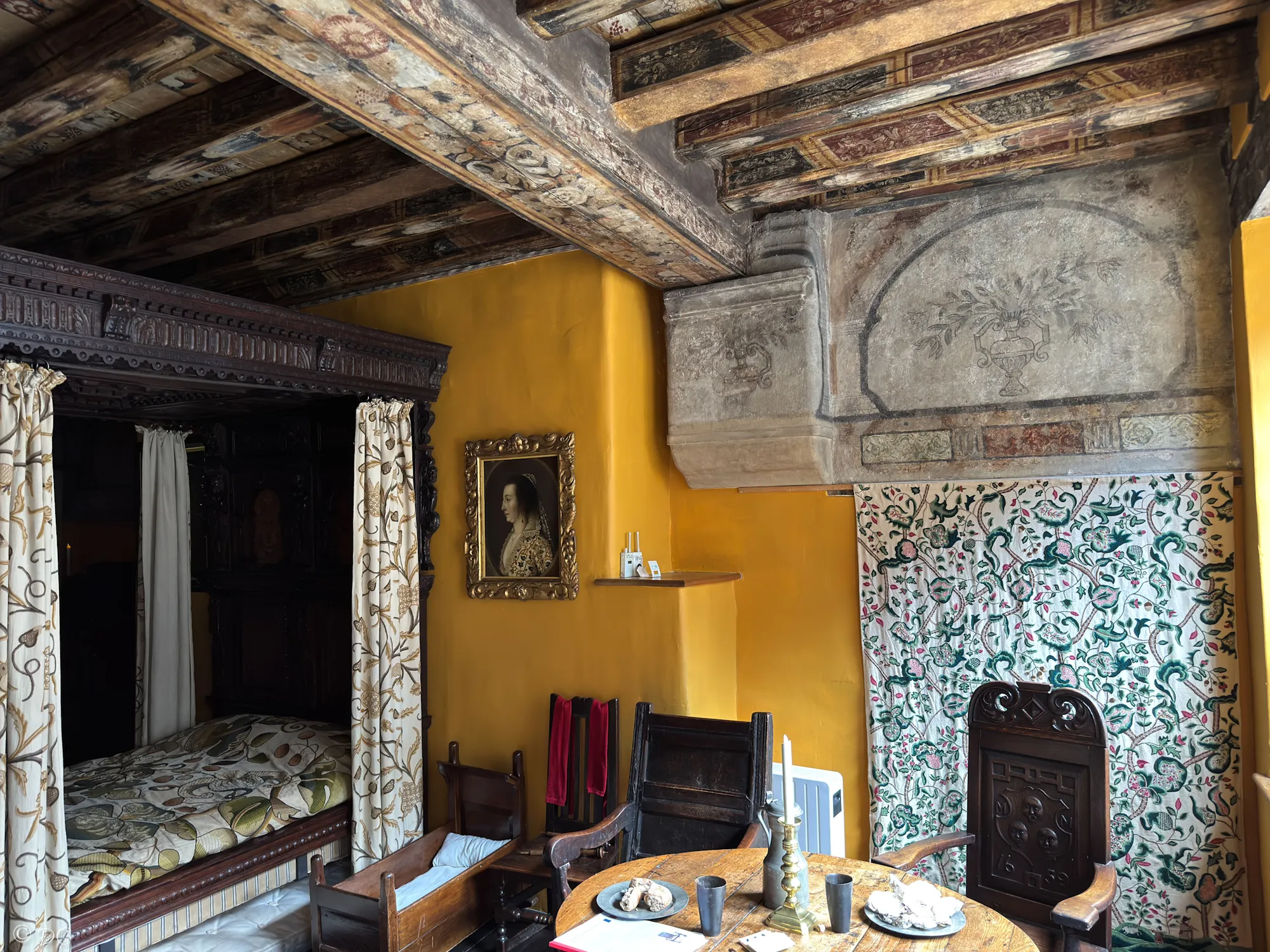
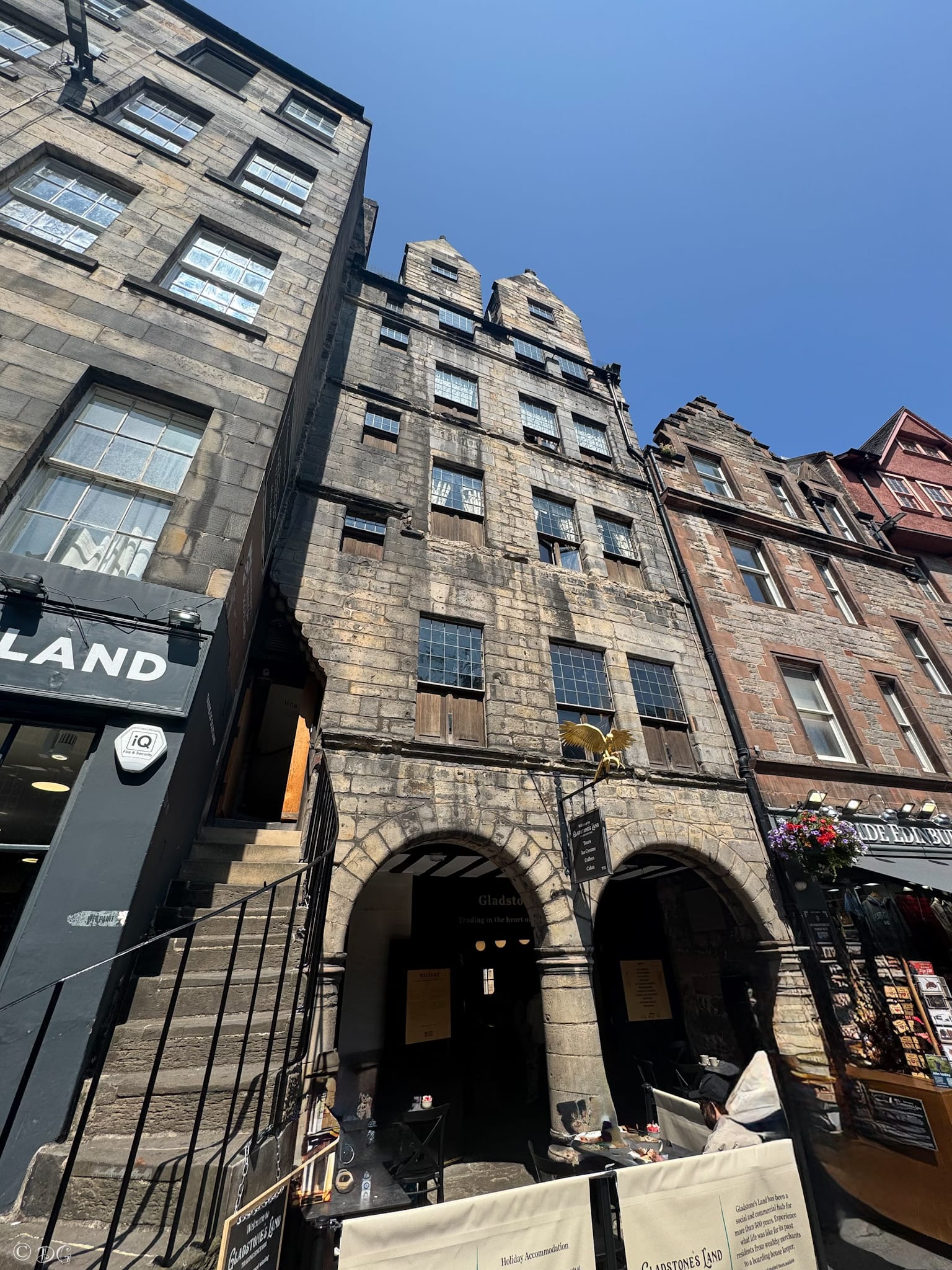
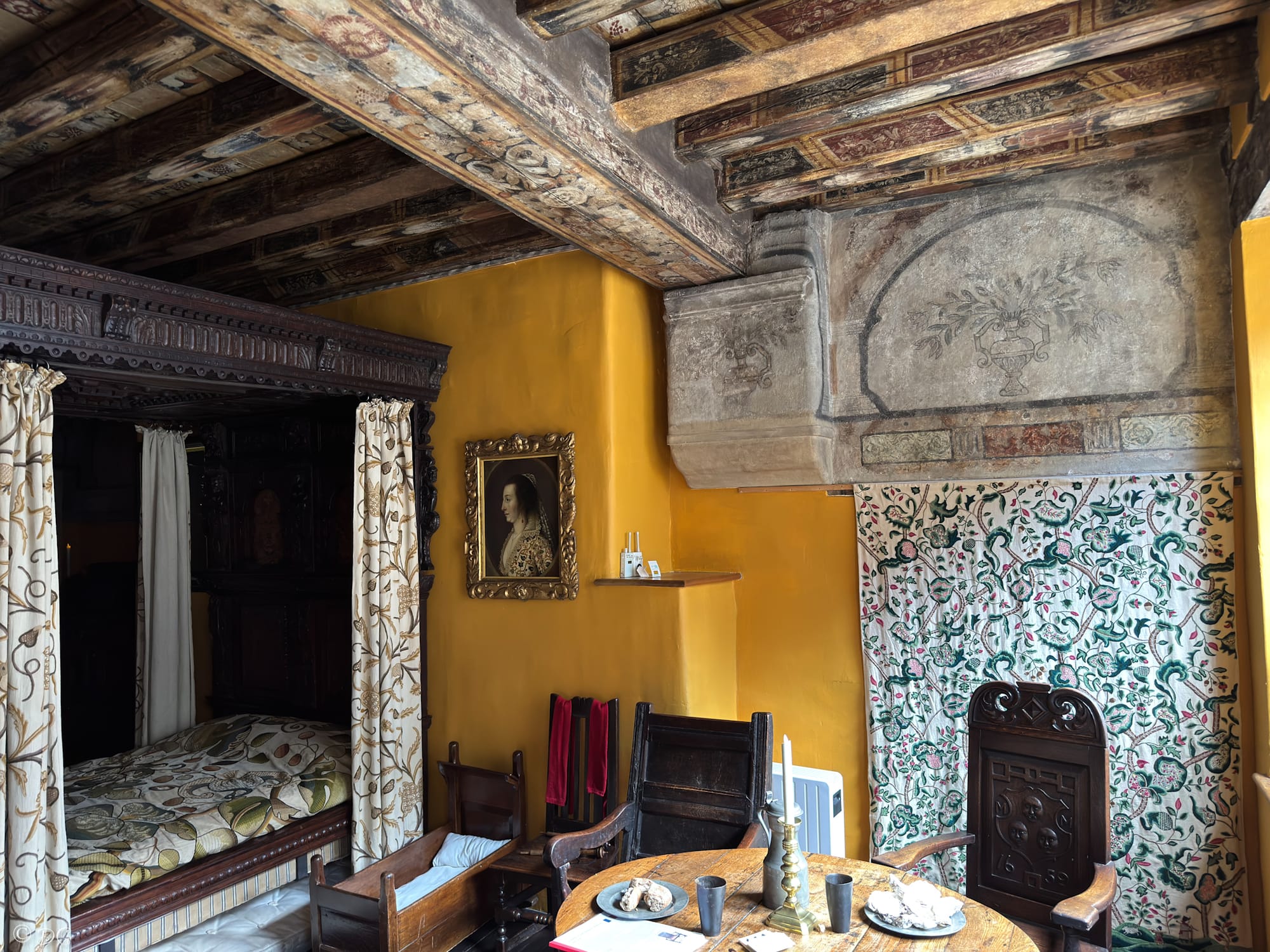
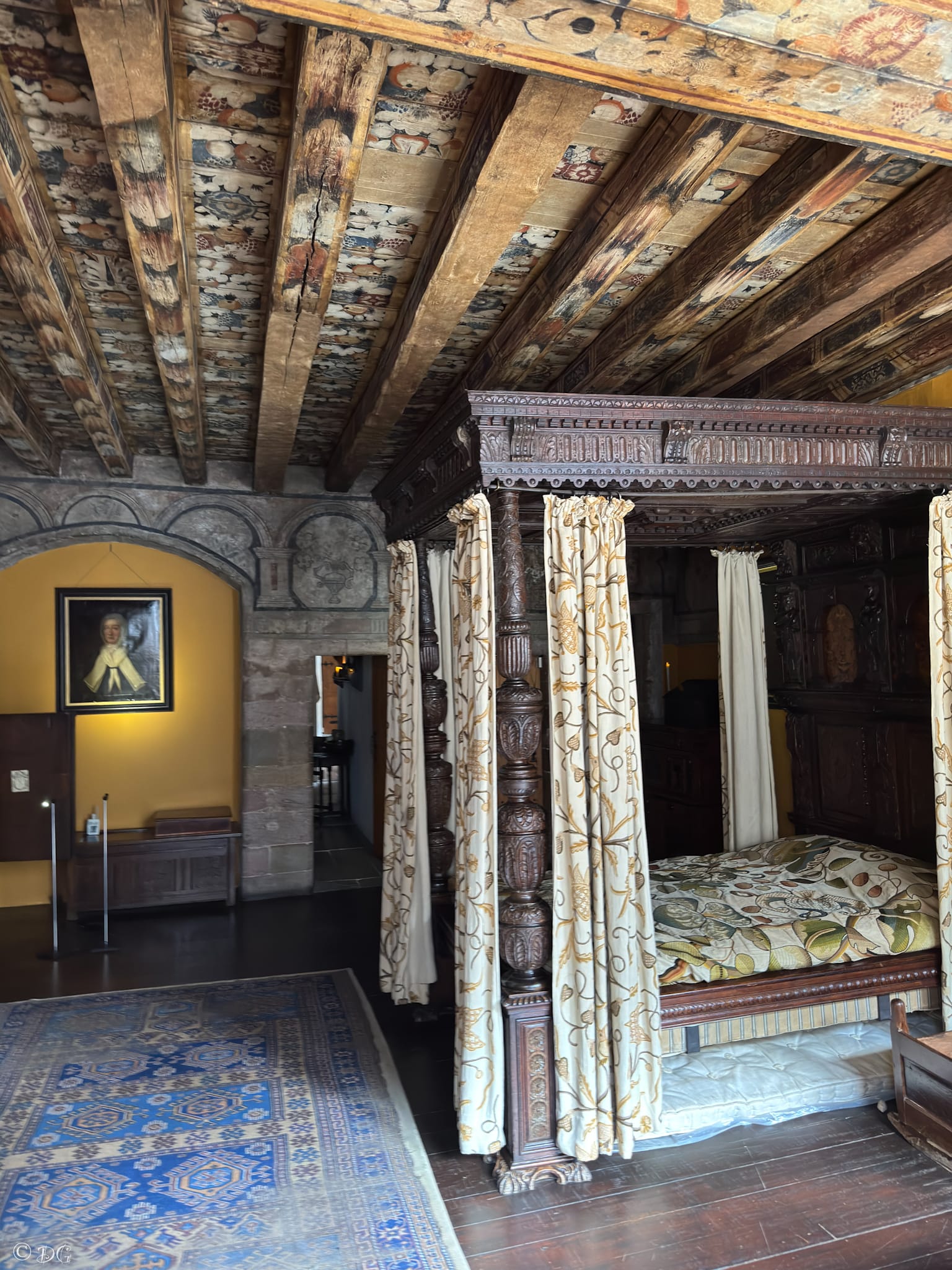
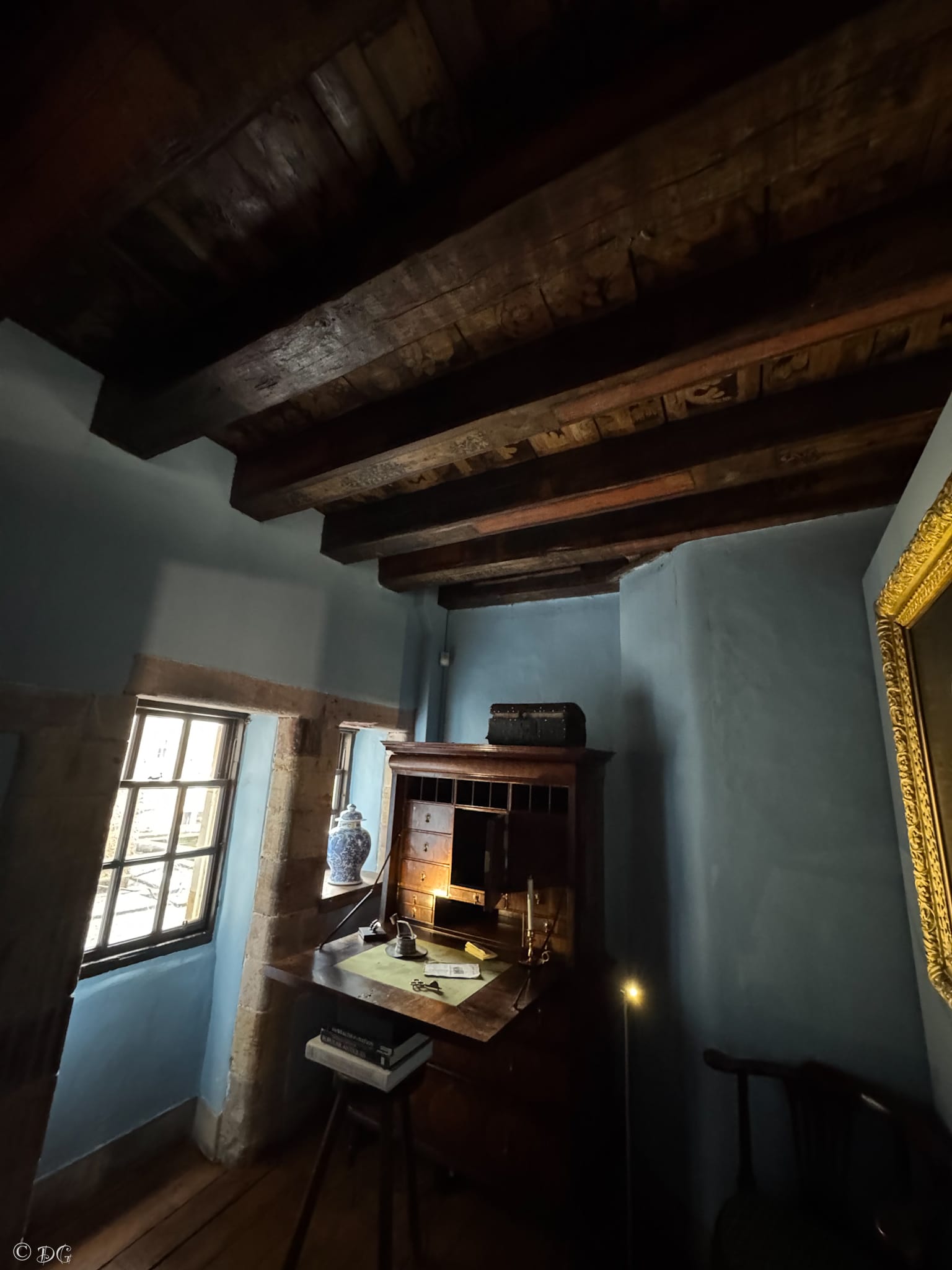
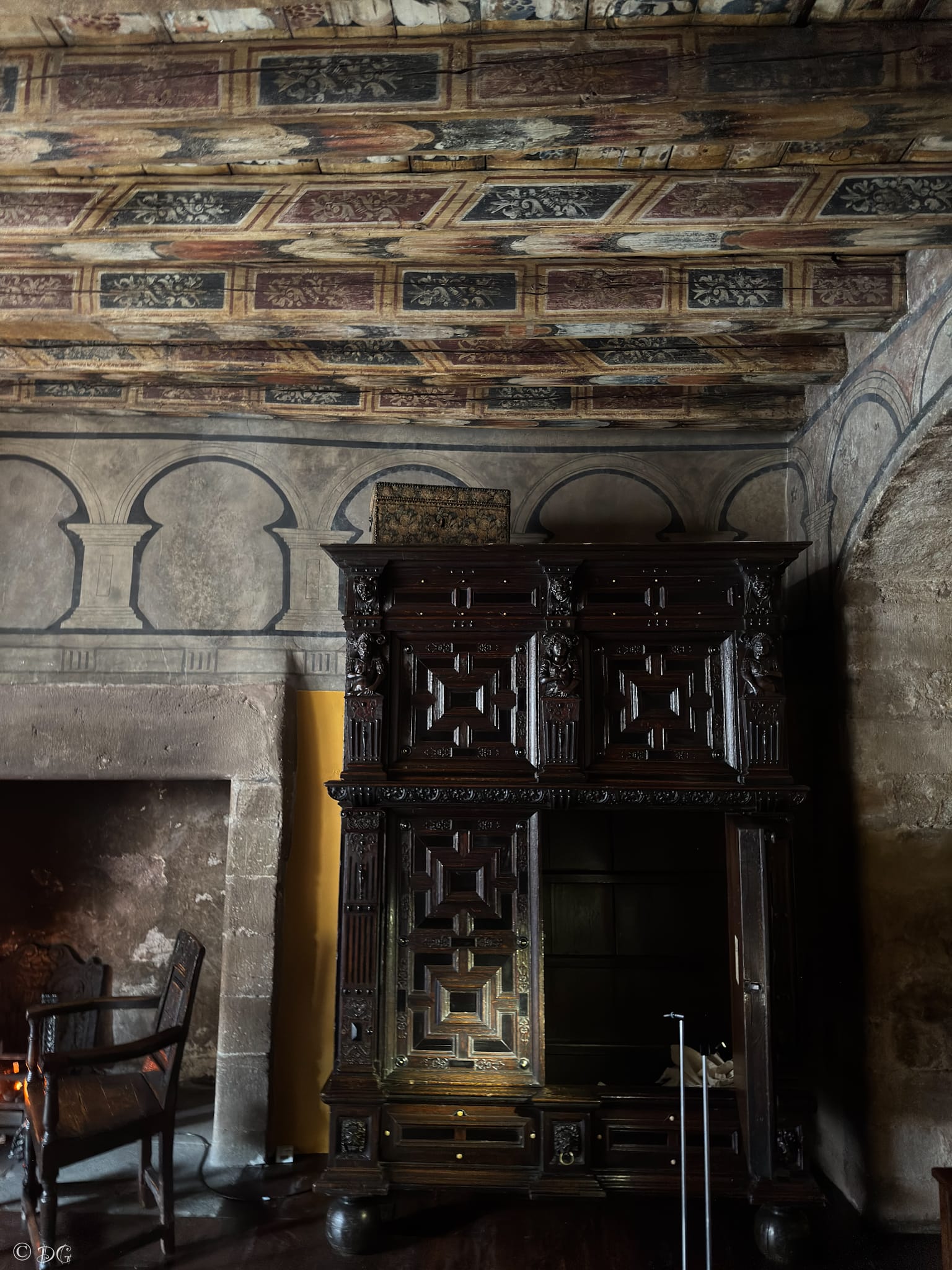
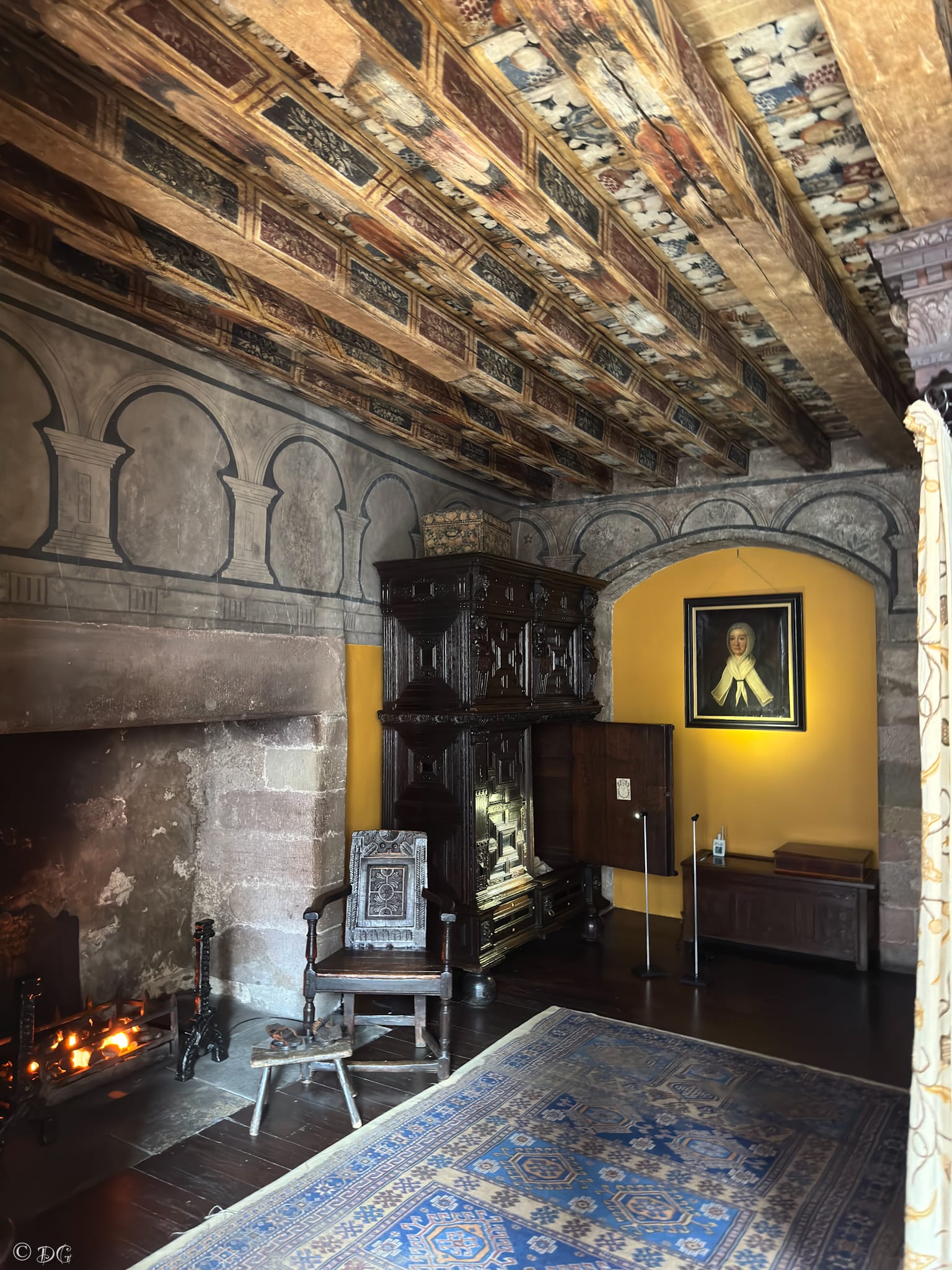
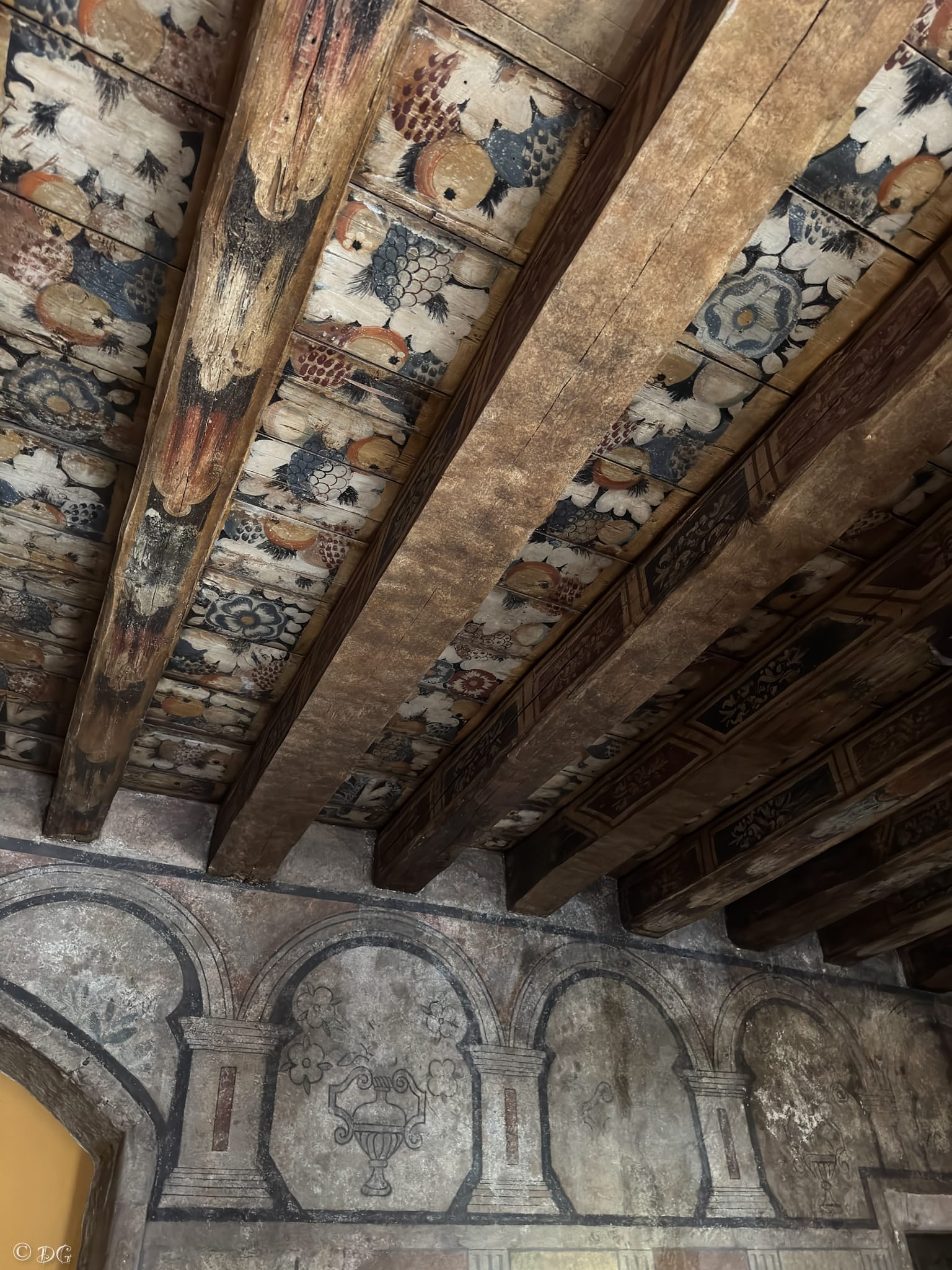
Standing on the Lawnmarket, just a short walk from Edinburgh Castle, Gladstone’s Land is a classic Edinburgh tenement built around 1550. With six storeys squeezed onto a narrow plot, it reflects how the city had nowhere to expand except upwards. In 1617, the wealthy merchant Thomas Gledstanes bought the property and transformed it into an impressive townhouse. He added elegant front rooms and commissioned beautifully painted wooden ceilings. Those ceilings have survived for more than four centuries and are one of the main reasons to step inside today.
The entrance leads up a narrow spiral turnpike staircase, one of the defining features of Edinburgh's historic tenements. The steps are steep, uneven, and in places surprisingly narrow. Before you've even reached the first floor, you already have a sense of what everyday life must have felt like here hundreds of years ago. Thick stone walls, limited natural light, and cool interiors make it easy to forget that the busy Royal Mile is only a few metres away.
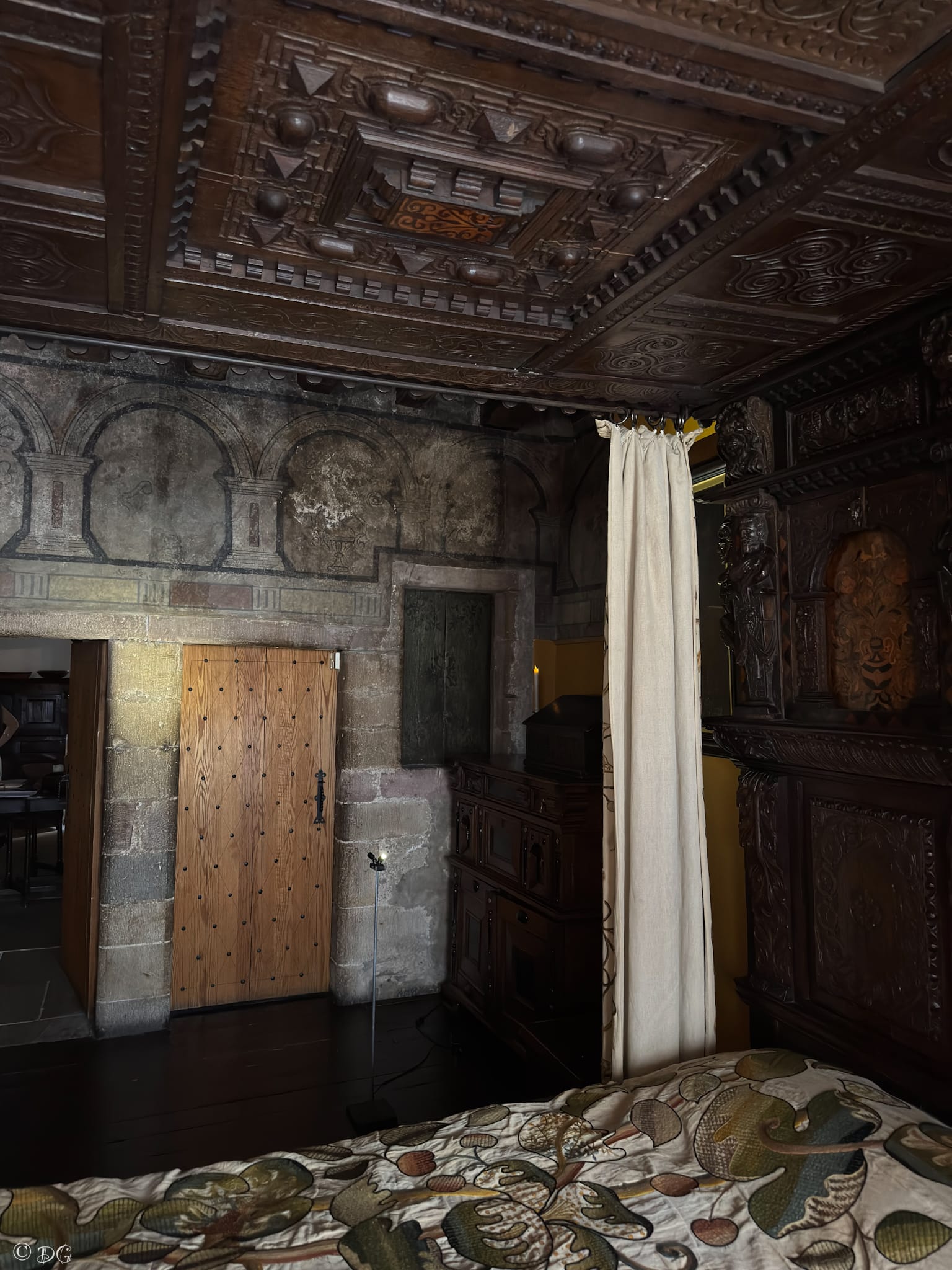
The first and second floors have been carefully restored by the National Trust for Scotland to recreate life in the building across several centuries. It doesn't feel like a traditional museum filled with display cases. Instead, you walk through a series of furnished rooms where the furniture, the timber, and the architecture tell the story for themselves.
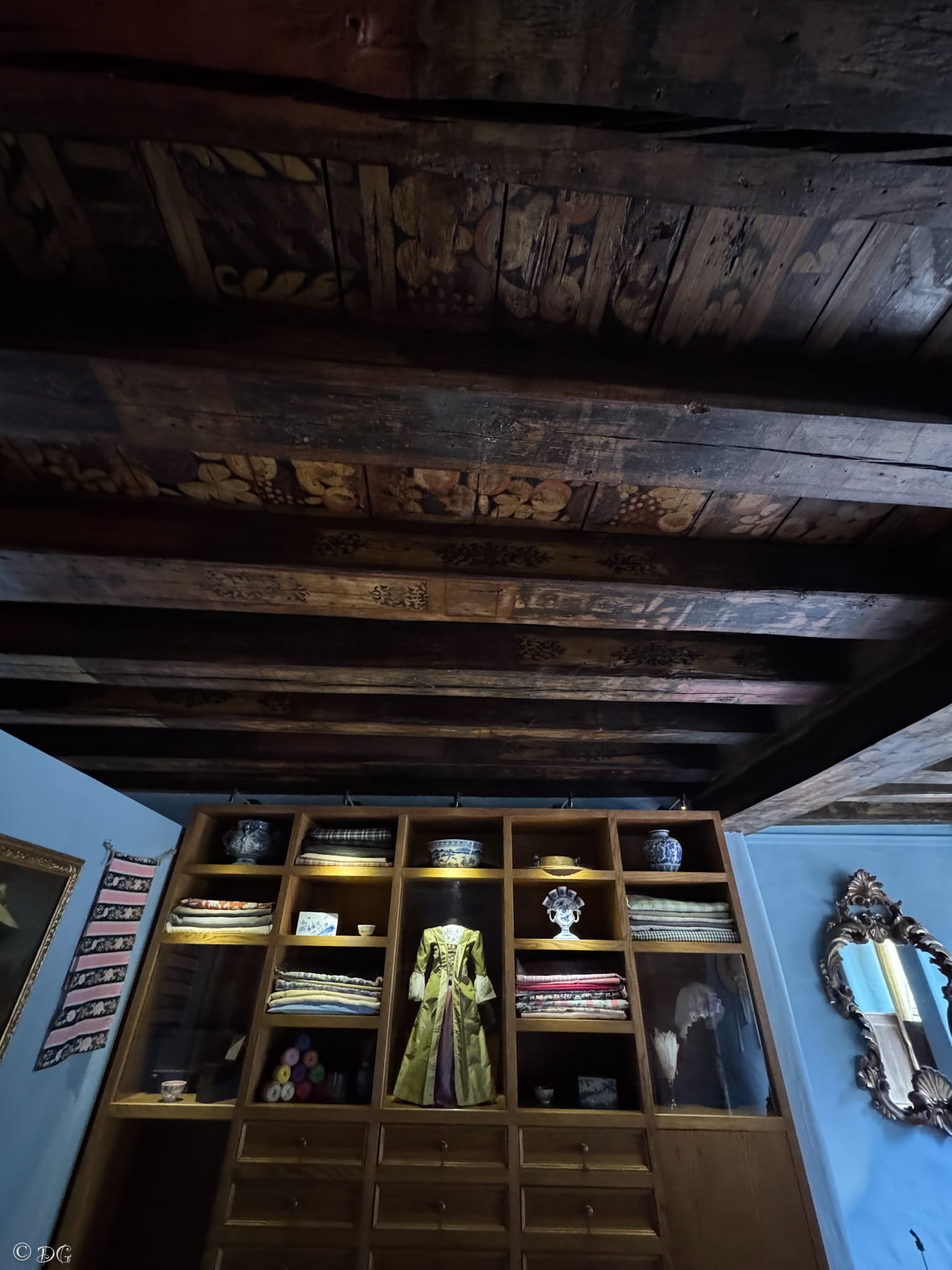
The feature I remember most is the painted ceilings dating from around 1620. Hidden inside oval panels are a collection of animals, including something I never expected to find — a monkey. A monkey painted on the ceiling of a merchant's house on Edinburgh's Royal Mile. Apparently someone in the seventeenth century thought that was a perfectly reasonable decorating choice.
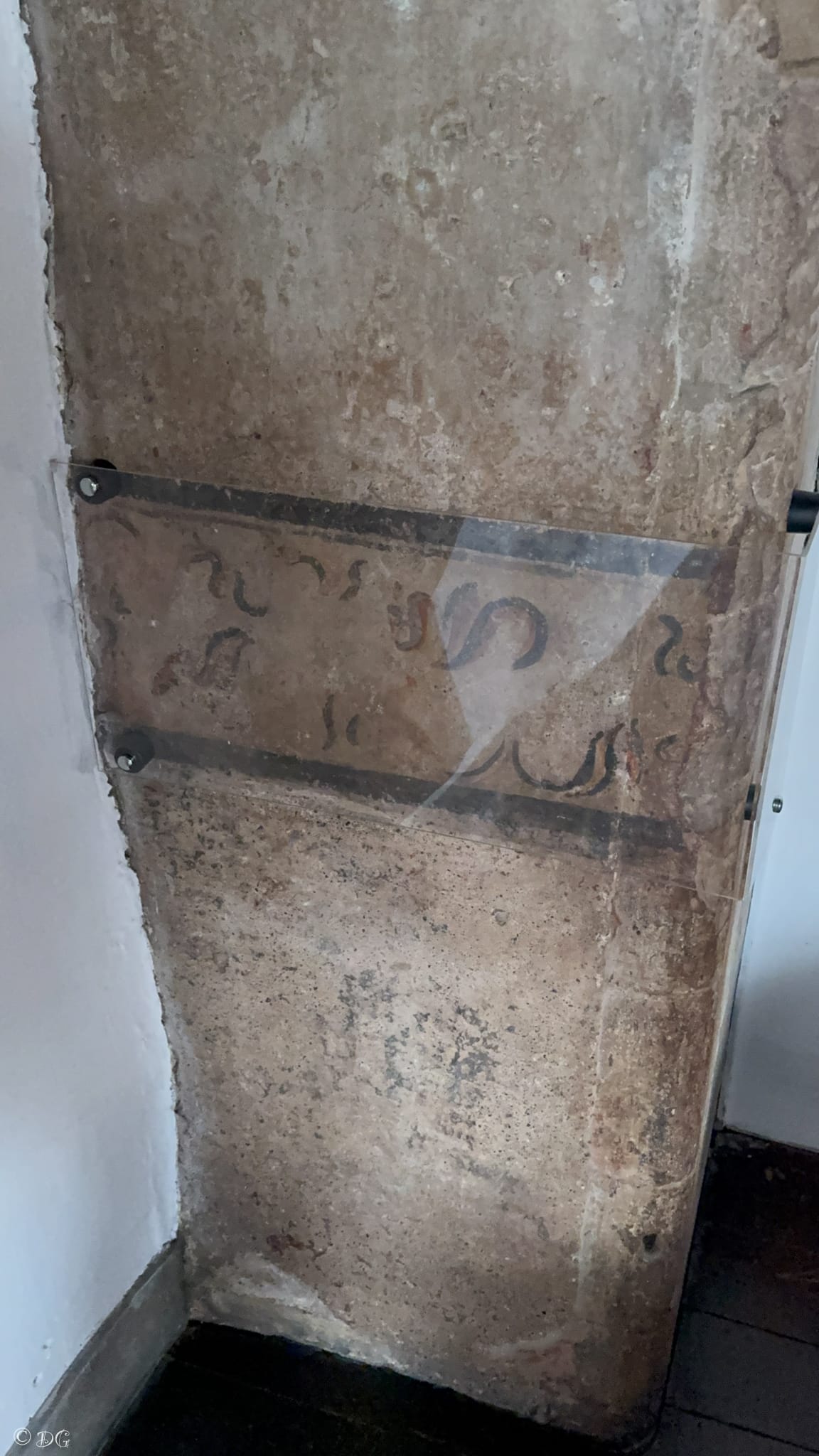
The paintings are simple, almost childlike, but that's exactly what gives them so much character. For centuries they were hidden beneath layers of plaster and paint before being rediscovered during restoration work. It makes me wonder how many more forgotten artworks are still waiting to be uncovered inside the old buildings of Edinburgh's Old Town.
Today, the ground floor is home to a café and an ice cream shop. Somehow it feels completely appropriate. Gladstone's Land has always been a place of business. Merchants, workshops, taverns and shops have occupied this address for hundreds of years. Sitting by the front window and watching people walk along the Royal Mile, it's easy to imagine that the biggest difference between now and the seventeenth century is what people carry in their hands. Back then it was leather purses. Today it's smartphones.
The spiral staircase became one of my favourite subjects. On my way back down, I stopped to photograph nothing more than the curve of the stairs and a section of the stone wall. Looking at those images later, they could easily have been taken in another century.
Gladstone's Land isn't one of Edinburgh's headline attractions. There are no crowds waiting outside as there are at Edinburgh Castle. Instead, you can explore the rooms at your own pace and leave with the feeling that you've experienced something genuinely authentic.
The building very nearly disappeared. In 1934 it was scheduled for demolition, but the National Trust for Scotland purchased it and began the long process of restoring and preserving it. I often wonder how many similar buildings were lost before anyone realised they were worth saving.
For me, Gladstone's Land is one of those places I always return to. Not because it's spectacular, but because it feels real. In the middle of the tourist crowds on the Royal Mile stands a house that still smells of history.
And somewhere above your head, on one of its ceilings, a merchant from four hundred years ago thought a monkey belonged there.
Gladstone’s Land
Continue reading in this gallery
Scotland
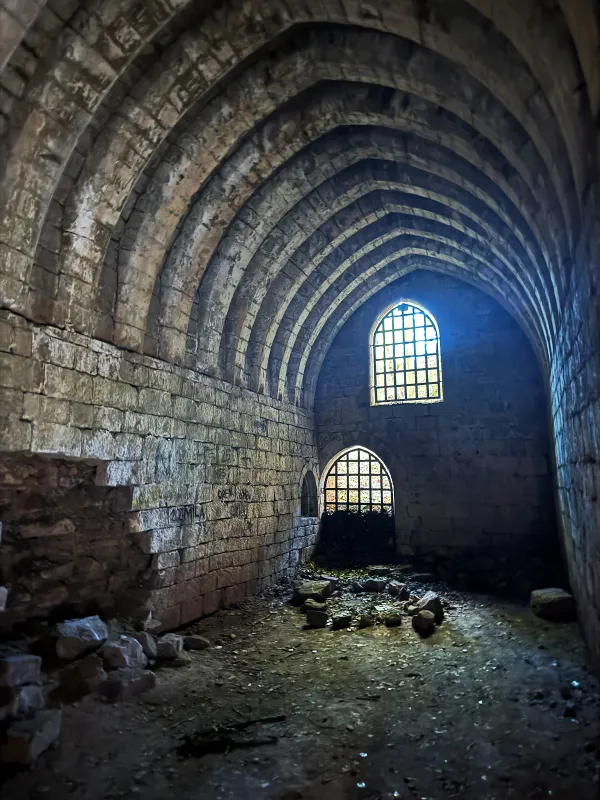
Goblin Hall
Deep within a Scottish woodland lies an extraordinary medieval chamber. According to legend, it was not built by human hands but by demons summoned by a powerful wizard. The place is known as Goblin Hall, and for nearly eight centuries, its story has captured people's imaginations.
Scotland
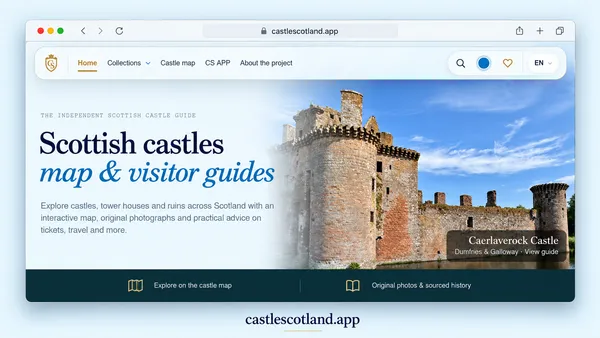
Scottish Castles-new website
Castles have featured in my photos and here on the blog for a long time. Eventually, I felt I wanted to give them more space and a place of their own, beyond individual blog posts.
Scotland
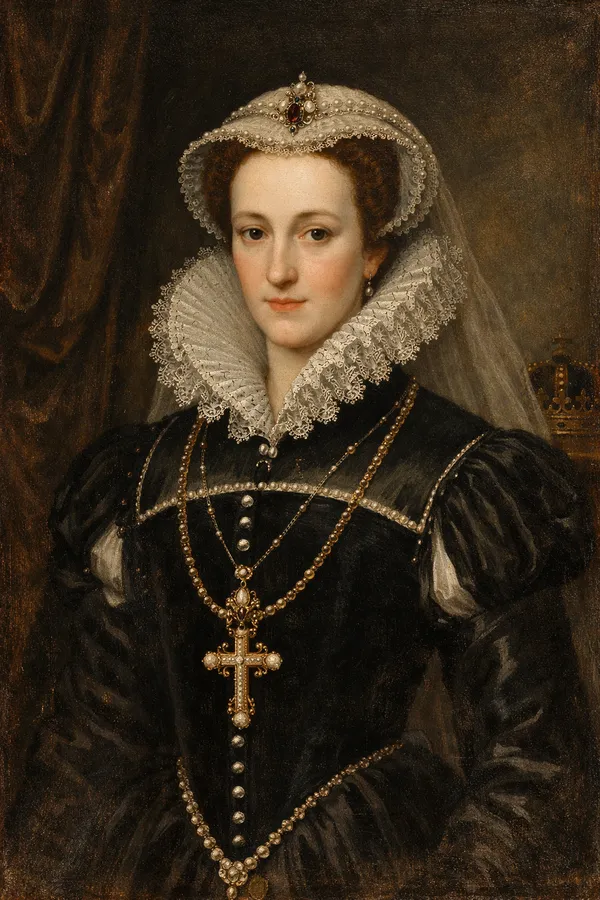
In the Footsteps of Mary, Queen of Scots
Scotland has something magical about it. Mists, castles, hills – and of course legends. One of the most fascinating figures in Scottish history is Mary Stuart, better known as Mary, Queen of Scots.
Scotland
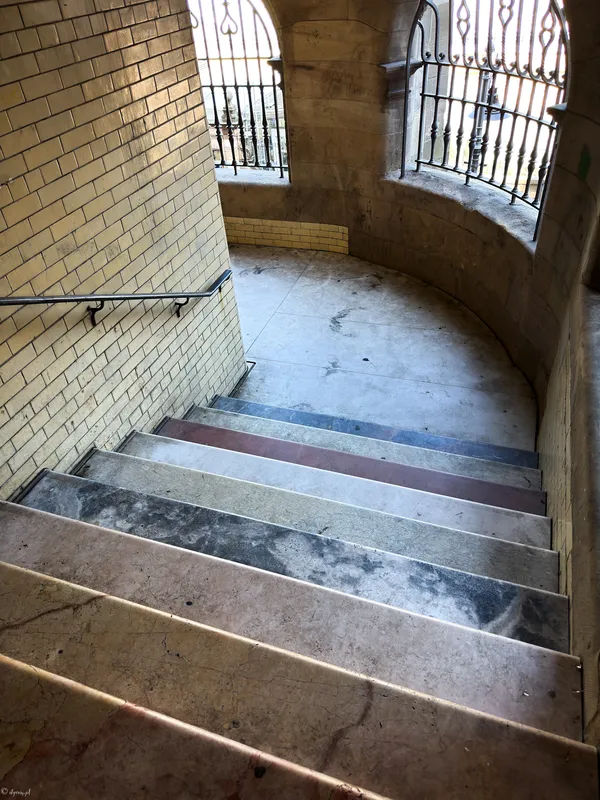
Scotsman Steps, Edinburgh
In the very heart of Edinburgh, right next to the prestigious Scotsman Hotel and the city's main railway station, Edinburgh Waverley, you will find one of the most unusual and photogenic spots in the city – the Scotsman Steps.