
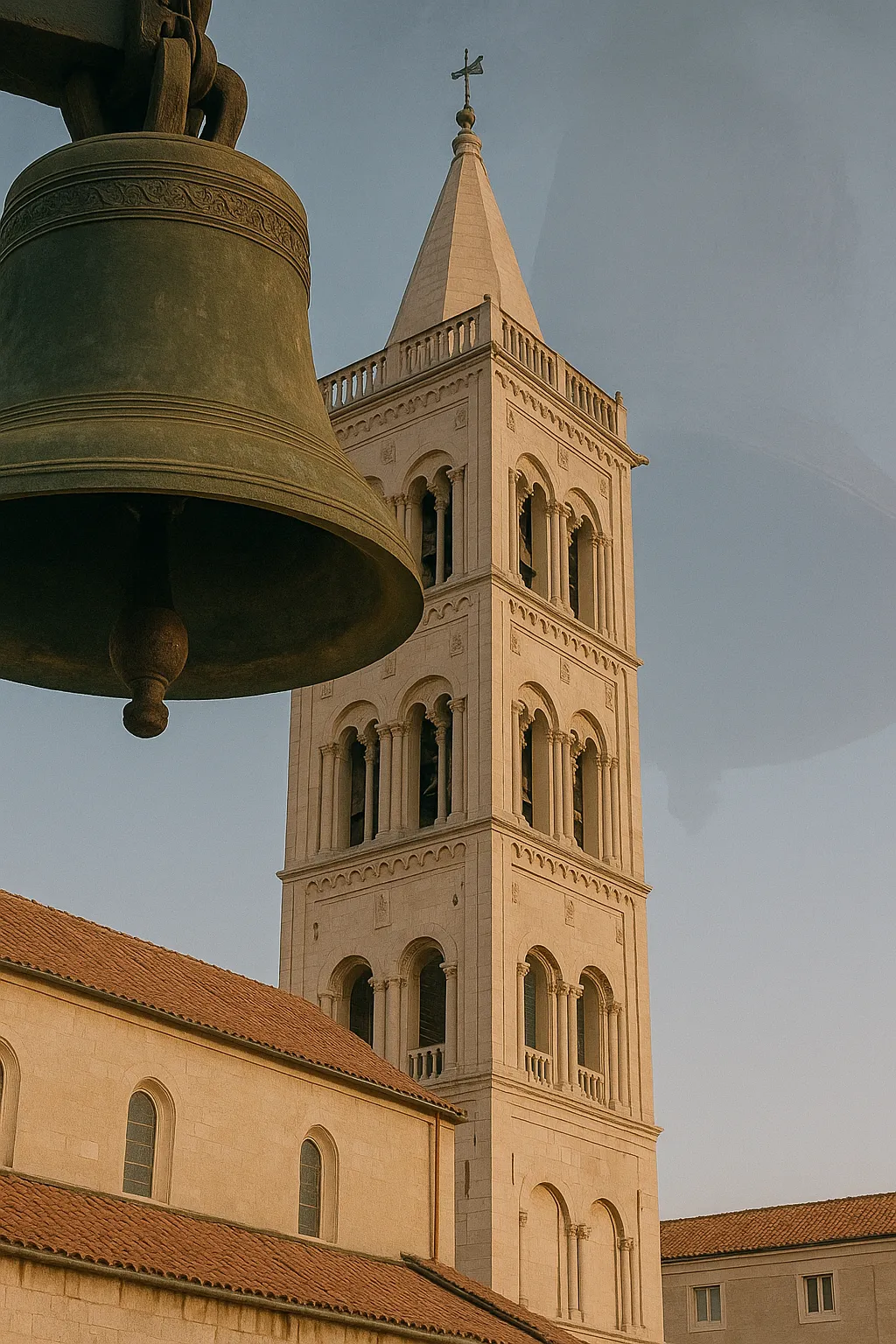
The sounds of bells
The rhythm of the strikes, the long reverberation and the space of the place create a sense of order and breath. In tradition, bells have for centuries accompanied moments of focus, prayer and important events. Their sound carries far beyond the walls of churches, connecting people regardless of wh…

A sound that stops time – a few minutes with church bells
The rhythm of the strikes, the long reverberation and the space of the place create a sense of order and breath. In tradition, bells have for centuries accompanied moments of focus, prayer and significant events. Their sound carries far beyond the walls of churches, connecting people regardless of where they are. For some they are a symbol of faith, for others part of the cultural landscape, but perhaps everyone has paused at least once upon hearing their distinctive sound.
During one of my walks I heard the tolling of church bells. There was nothing unusual about it, yet something made me stop. The sound spread through the neighborhood slowly and majestically. Each successive strike echoed off the buildings, trees and surrounding space. For a moment I felt as if the everyday rush had vanished. Phones, notifications, duties and the endless lists of things to do stopped mattering.
The bells began to toll and I had the impression that time stopped for a moment. That deep, penetrating sound acted as more than just a signal. It was like a breath that allows you to slow down. Like a cleansing of the mind from the overload of thoughts. I felt peace. Real, genuine peace. The kind we often search for in various places, not realizing that sometimes it is right beside us.
For centuries bells have served many functions. They announced important events, summoned residents to services, warned of dangers or proclaimed special moments in the life of the local community. In times when there were no phones, internet or radio, it was their sound that served as one of the most important means of communication. Despite technological development their role has not disappeared. They can still capture attention and remind us of something that is easy to lose in the modern world — the present moment.
It's worth knowing that sounds at certain frequencies can affect our well-being. Some researchers working in sound therapy point out that repetitive, resonant tones help calm the body and reduce stress levels. While one shouldn't ascribe miraculous properties to them, many people notice that listening to calm, regular sounds promotes relaxation. This applies not only to music but also to sounds of nature, the sound of waves, wind rustling or, indeed, church bells.
Perhaps something very simple is at work here. Our minds are constantly bombarded with information. We live quickly, often performing several tasks at once. When a single, deep sound appears that resonates for a few seconds, it forces us to stop. You cannot speed it up or rewind it. You just have to listen to it. Maybe that's why it works so well on the psyche.
In many cultures around the world sound has been used as a tool to support concentration and meditation. Tibetan singing bowls, gongs or temple bells have a similar purpose — they help direct attention inward. Church bells fit into the same idea. Regardless of religious beliefs, they can offer the listener a moment of reflection and detachment from everyday life.
We often look for peace in distant travels, in beautiful landscapes, or in special relaxation techniques. Meanwhile, sometimes it's enough to go for a walk, stop for a few minutes, and listen to your surroundings. The world around us is full of sounds we usually don't notice. The song of birds, the rustle of leaves, the sound of rain, or the tolling of bells can become a small pause from the daily hustle and bustle.
The recording I prepared lasts just three minutes. It's only three minutes of church bells. No background music, no added effects, and no unnecessary words. Just the natural sound of a moment captured in a specific place and time. Yet I feel there's something more to it. It's a reminder that we don't always need more stimuli. Sometimes we actually need their absence.
Perhaps that's why silence is most important after the last tone fades. That brief moment that follows the sound. It's then that we can truly hear our own thoughts. It's then that space for breath and reflection appears.
I know people talk about the therapeutic effects of sounds — and there's something to that. I'm not claiming that three minutes of bells will solve every problem. They can, however, become a short moment of pause. A moment of calm amid everyday noise. And sometimes that's exactly what we need most.
Three minutes of church bells. Nothing more. Or perhaps that's exactly enough. In a world that is constantly accelerating, such a simple sound can remind us of something extremely important — that it's worth slowing down sometimes, taking a deep breath, and simply being here and now.
Wrocław
 DG
DG
Continue reading in this gallery

Various
Towards the past.
An unplanned visit to my family’s hometown that wasn't supposed to happen. It was meant to be an ordinary week, away from the past, away from memories. Unfortunately, fate had other plans. A phone call came that changed the course of the day, and sometimes even of life.

Various
The early days of the blog
Recently, while tidying up files on my computer, I came across screenshots of archival versions of my website — a project I've been working on for many years.

Scotland
Transport Museum - Glasgow
The Transport Museum in Glasgow (Riverside Museum) is a transport and technology museum in Glasgow, Scotland. The museum is located near the River Kelvin and the River Clyde, and it opened in 2011.

AI Gallery
Reflections
We are temporarily staying on this planet — on a cosmic scale we are here only for a brief moment. We are very lucky, because the Earth is an extraordinarily beautiful place that gives us everything we need to live in health and harmony.